
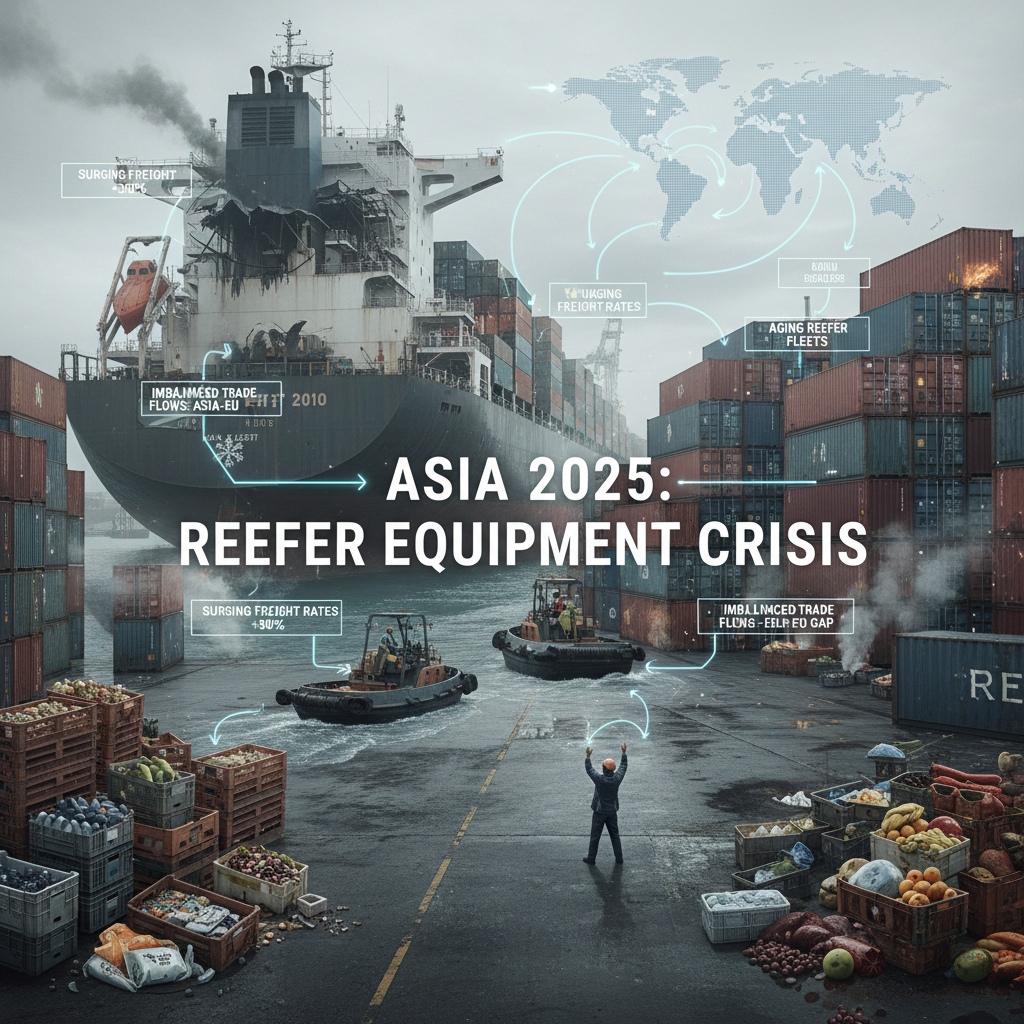
The global supply chain is currently grappling with a severe Asia reefer equipment shortage, creating substantial bottlenecks for logistics and shipping experts moving temperature-sensitive cargo. Despite global refrigerated container production hitting 93,000 TEUs in Q1 2025—a 145% year-over-year increase—availability remains heavily constrained. This paradox is primarily driven by an aging global fleet, where a significant portion of the 3.7 million TEUs is now 11 to 14 years old, prompting widespread retirements.
Several compounding factors are exacerbating this deficit across the Asia-Pacific region:
- Imbalanced Trade Flows: Slower import volumes returning to Asian ports mean empty reefer containers are not being repositioned fast enough, hampered further by vessel space limitations and ongoing Red Sea routing diversions.
- Aging Infrastructure: High maintenance downtime and extreme weather conditions are pushing older units to the brink of failure, restricting active fleet capacity.
- Surging Demand: Driven by e-commerce, pharmaceuticals, and fresh produce, global reefer container volumes are projected to grow to 7.1 million TEU by 2030.
The operational squeeze has led to stark financial repercussions. Freight rates for refrigerated containers from Asia to the U.S. have surged by 25% to 30% since mid-2024. Shippers currently face booking delays of one to two weeks simply to secure a unit, as carriers prioritize high-value freight and full-container loads. Additionally, lead times for ordering new 40-foot reefers from Chinese manufacturers have doubled to approximately four months.
To mitigate the risks of the ongoing equipment deficit, logistics professionals must optimize forecasting and embrace supply chain digitalization. Utilizing IoT for real-time tracking can improve turnaround times, offering a crucial buffer against unpredictable capacity limits. Proactive capacity booking will remain essential throughout 2026.
References
- yescontainers.com
- dhl.com
- globalf.com