

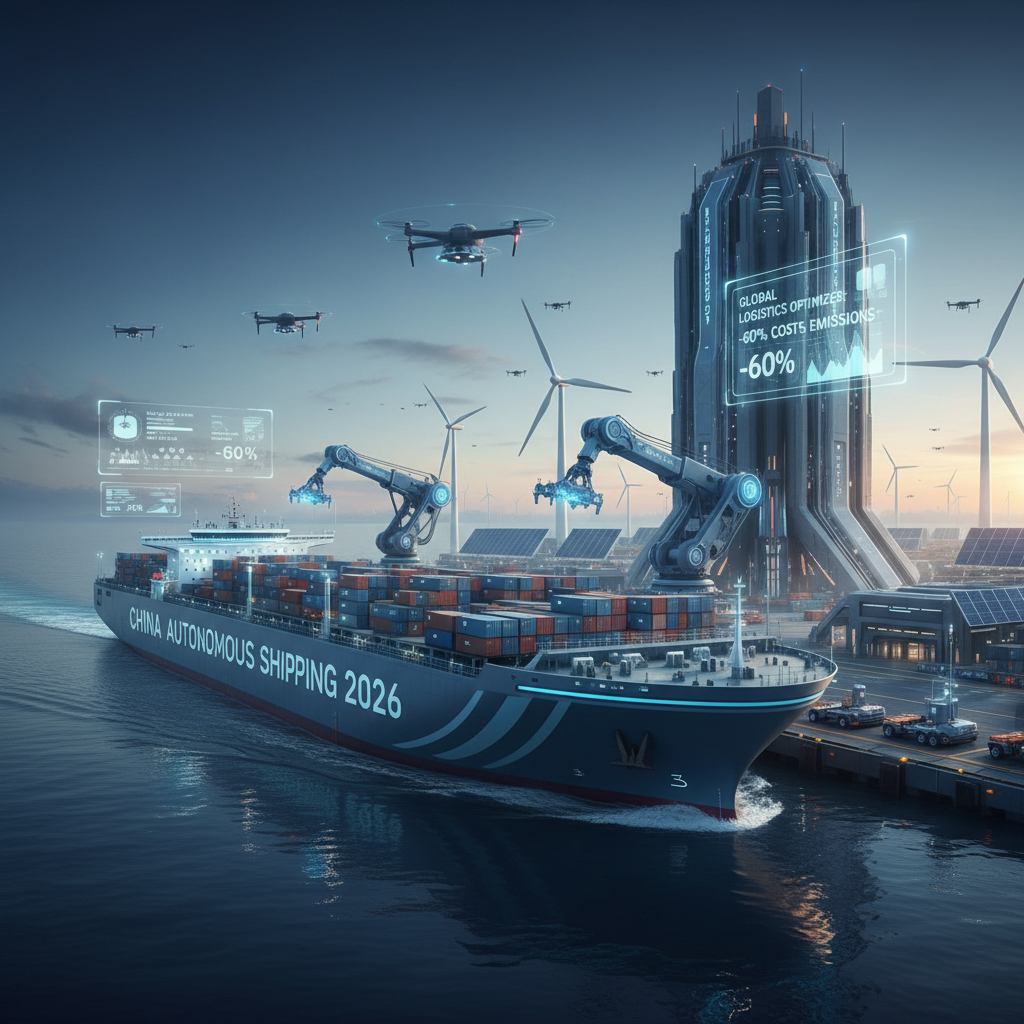
As global supply chains demand greater efficiency, China autonomous maritime technology has emerged as a disruptive force in 2026. Driven by artificial intelligence, the world’s largest shipping nation is pivoting toward smart shipping to optimize international logistics [1]. Experts confirm this structural upgrade is essential for improving safety, operational efficiency, and environmental sustainability across the entire maritime sector.
Recent months have seen unprecedented activity as theoretical frameworks reach open waters. A new action plan from China’s Ministry of Transport targets the deployment of over 100 smart vessels and multiple comprehensive smart shipping pilot zones by 2027 [2]. Key operational breakthroughs include:
- The April 2026 launch of the Ning Yuan Dian Kun, the world’s first 10,000-tonne-class pure electric intelligent container ship operating at Ningbo-Zhoushan Port [1].
- Advanced automated terminals at Yangshan Port, utilizing 130 electric autonomous vehicles to process up to 8 million containers annually [3].
- A reduction in national logistics costs to a record low of 13.9 percent of GDP in 2025, largely attributed to AI integration [4].
The real-world deployment of China autonomous maritime technology is actively transforming international trade routes. The intelligent routing of the Ning Yuan Dian Kun alone will save 580 tonnes of fuel and reduce CO2 emissions by 1,400 tonnes annually, setting a green logistics benchmark [1]. For shipping professionals, these advancements signal a critical shift toward an era where AI-driven vessel autonomy and digital infrastructure dictate the pace of global freight.
References
[1] China.org.cn, China’s shipping industry shift toward intelligence (2026). [2] Ministry of Transport, Smart shipping action plan (2026). [3] CPG, China’s automated sea terminals (2026). [4] Global Times, AI powers China’s logistics (2026).