

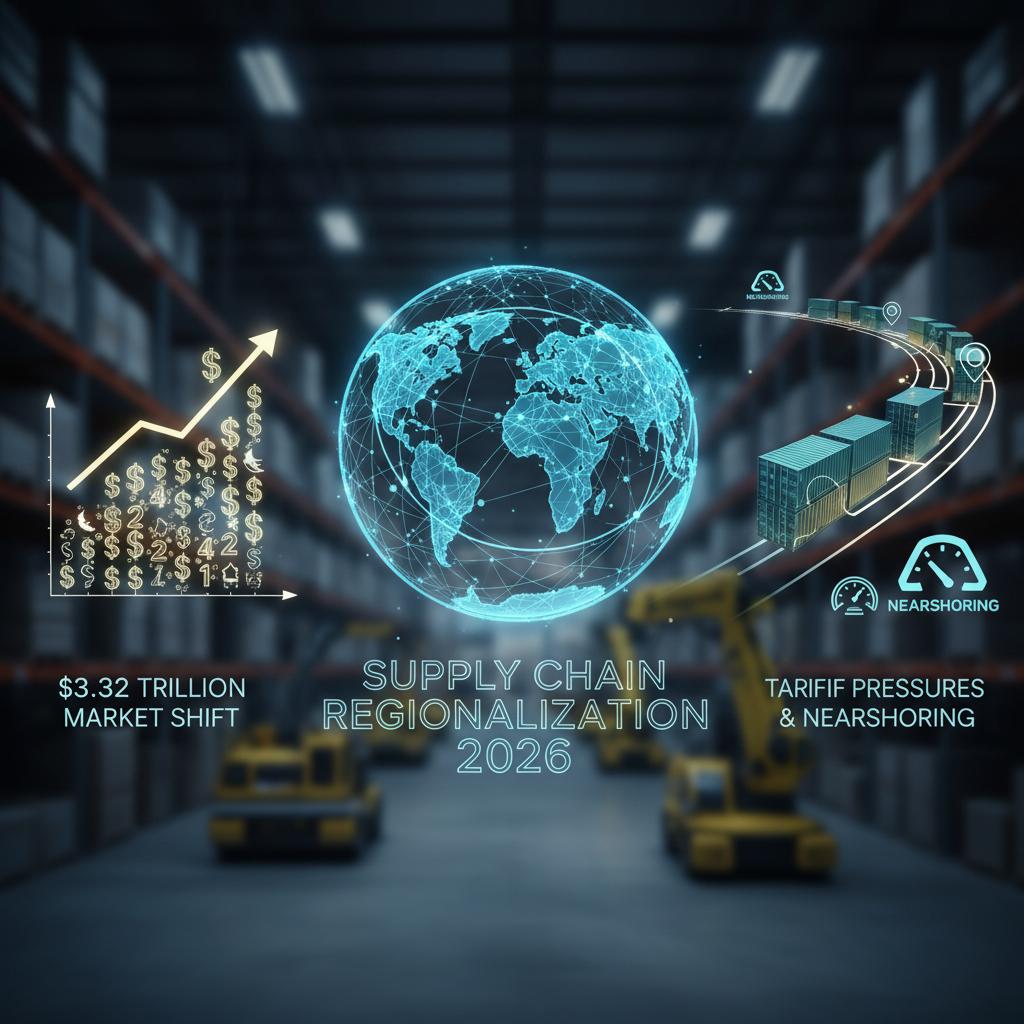
The transition from sprawling global networks to concentrated regional hubs has fundamentally redefined modern trade routes. Driven by geopolitical volatility and rising trade tariffs, Supply Chain Regionalization has rapidly evolved from a temporary risk-mitigation strategy to a permanent structural shift for logistics experts in 2026.
Recent market data underscores the urgency of this transition. The Nearshoring Growth Index has surged from a baseline of 100 in 2019 to over 250 by 2026, indicating massive capital reallocation toward regionalized networks. Concurrently, the global outbound logistics market is projected to reach $3.32 trillion in 2026, fueled by e-commerce acceleration and supply chain restructuring. For logistics leaders, relying solely on single-corridor, distant manufacturing centers is no longer viable due to recurring maritime disruptions and tariff uncertainties.
Several catalysts are forcing forwarders and shippers to aggressively adopt Supply Chain Regionalization strategies:
- Tariff Pressures: Tariffs and shifting regional trade frameworks make cross-bloc global sourcing increasingly cost-prohibitive.
- Geographic Pivot: Manufacturing investments are pivoting heavily toward Mexico, Southeast Asia, and Eastern Europe to serve regional consumption markets efficiently.
- Integrated Capacity: Leading shipping lines are expanding multimodal inland logistics and investing in digital freight marketplaces to connect localized supply ecosystems.
To remain competitive, freight firms must pivot from single-rate ocean transport to comprehensive, localized service capabilities. Integrating predictive analytics and digital risk sensing allows operators to manage highly fragmented regional networks closer to the end consumer. The new imperative is clear: robust operational viability within regionalized trade blocs will dictate logistics profitability for the remainder of the decade.
References
Vivek Anand, The Global Supply Chain Just Broke (2026). Market Data Forecast, Global Logistics Market Trends (2026). FMI, Outbound Logistics Market Analysis (2026). Regional Trade Integration Reshapes Global Supply Chains (2026). The Martec Group, Supply Chain Diversification (2026). Better Technologies, Nearshoring Supply Chains (2026). Sea Gate Logistics, Key Trends of Container Transportation (2026).