

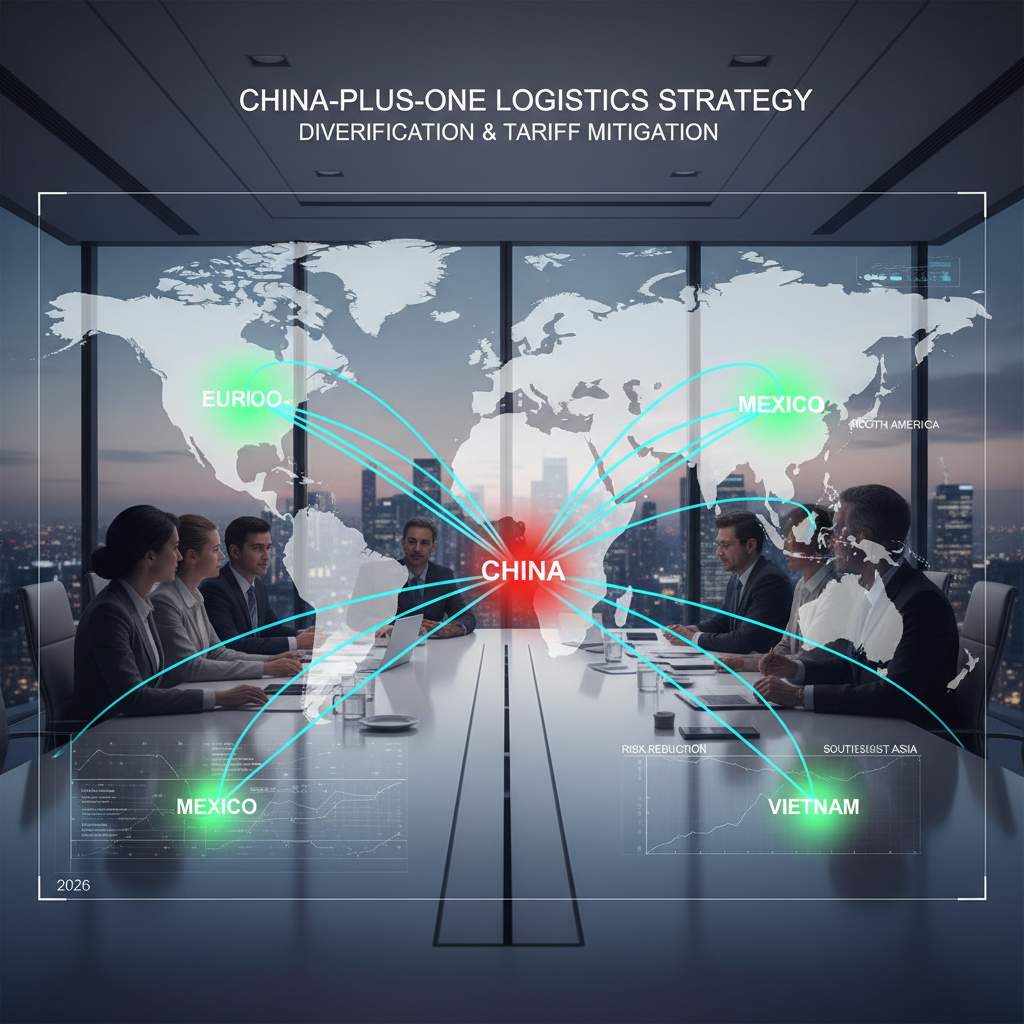
In the wake of escalating trade tensions and unpredictable port disruptions, the China-Plus-One Logistics Strategy has transitioned from an optional contingency plan to a mainstream operational necessity in 2026. For logistics and shipping experts, depending on a single manufacturing hub is now widely recognized as a critical strategic liability rather than an efficiency gain.
Recent developments have accelerated this global supply chain rebalancing. The reinstatement of substantial U.S. tariffs on Chinese imports in 2025, which saw import duties on strategic categories like electronics and EV components rise dramatically, has forced companies to rethink their sourcing. Coupled with Chinese manufacturing wages tripling since 2010, businesses are aggressively deploying the China-Plus-One Logistics Strategy to manage costs and geopolitical risks.
Instead of completely abandoning China, multinational corporations are retaining their primary footprint while developing supplementary regional networks. This strategic shift highlights three main alternative destinations:
- Southeast Asia (Vietnam and Malaysia): Becoming prime locations for electronics and consumer goods due to competitive labor costs and mature export infrastructures.
- Mexico: Highly favored for nearshoring automotive parts and heavy machinery, prioritizing proximity to the U.S. market and rapid logistics.
- India: Emerging as a massive alternative manufacturing powerhouse with strong government incentives.
For procurement and logistics leaders, successful implementation requires renewed evaluations of freight costs, compliance tracking, and supply risk management. While diversification effectively mitigates tariff exposure, it demands more sophisticated, multi-nodal logistics networks to maintain long-term resilience.
References
DHL ID, 5 Logistics Trends Reshaping Asia in 2026. Z2Data, Everything You Need to Know About China Plus One. ISM, The Year Ahead for Supply Chain Management. DocShipper, 2026 China Plus One. ET2C International, China Plus One Strategy: Hidden Risks of Global Sourcing.