

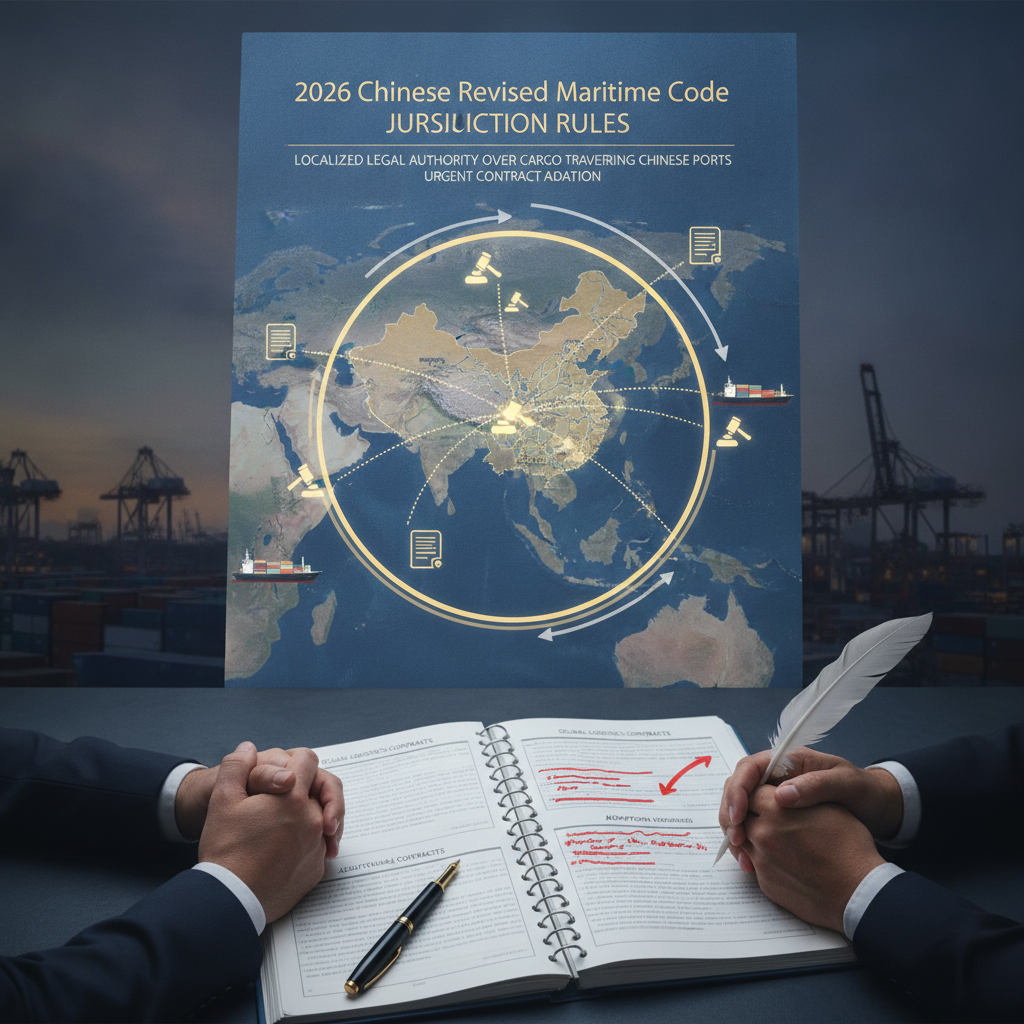
Effective May 1, 2026, the sweeping updates to the Chinese Revised Maritime Code Jurisdiction represent the first comprehensive overhaul of China’s shipping laws since 1993. This regulatory shift fundamentally alters how international logistics and shipping experts must approach cargo dispute resolution and contract enforcement.
The most critical update lies in Article 295, which establishes mandatory choice-of-law rules. Under the new Chinese Revised Maritime Code Jurisdiction framework, if a shipment’s port of loading or discharge is in China, Chinese maritime law applies compulsorily to the contract of carriage. Key operational changes include:
- Overrides of foreign governing law (e.g., English law) previously standard in international bills of lading.
- Harmonization of liability rules across domestic and international coastal carriage, establishing a unified legal standard.
- Expansion of carrier obligations to encompass the full receipt and delivery of goods, replacing outdated tackle-to-tackle limitations.
With domestic courts now empowered to assert stronger authority over cargo claims, global freight forwarders must immediately review standard-form contracts. Adapting to the Chinese Revised Maritime Code Jurisdiction requires recalibrating risk management protocols, updating claims-notice templates, and verifying compulsory liability insurance thresholds to ensure full compliance.
References
Japan P&I Club: China’s Maritime Code Revised (Effective 1 May 2026) (https://www.piclub.or.jp)
Ashurst: Revised PRC Maritime Code Impact (https://www.ashurst.com)
Global Law Experts: China Maritime Code (https://www.globallawexperts.com)
Reed Smith LLP: China adopts major amendments (https://www.reedsmith.com)
China’s Maritime Code 2026 – sea of change (https://www.google.com)
The Loadstar: China’s maritime code revision (https://theloadstar.com)