

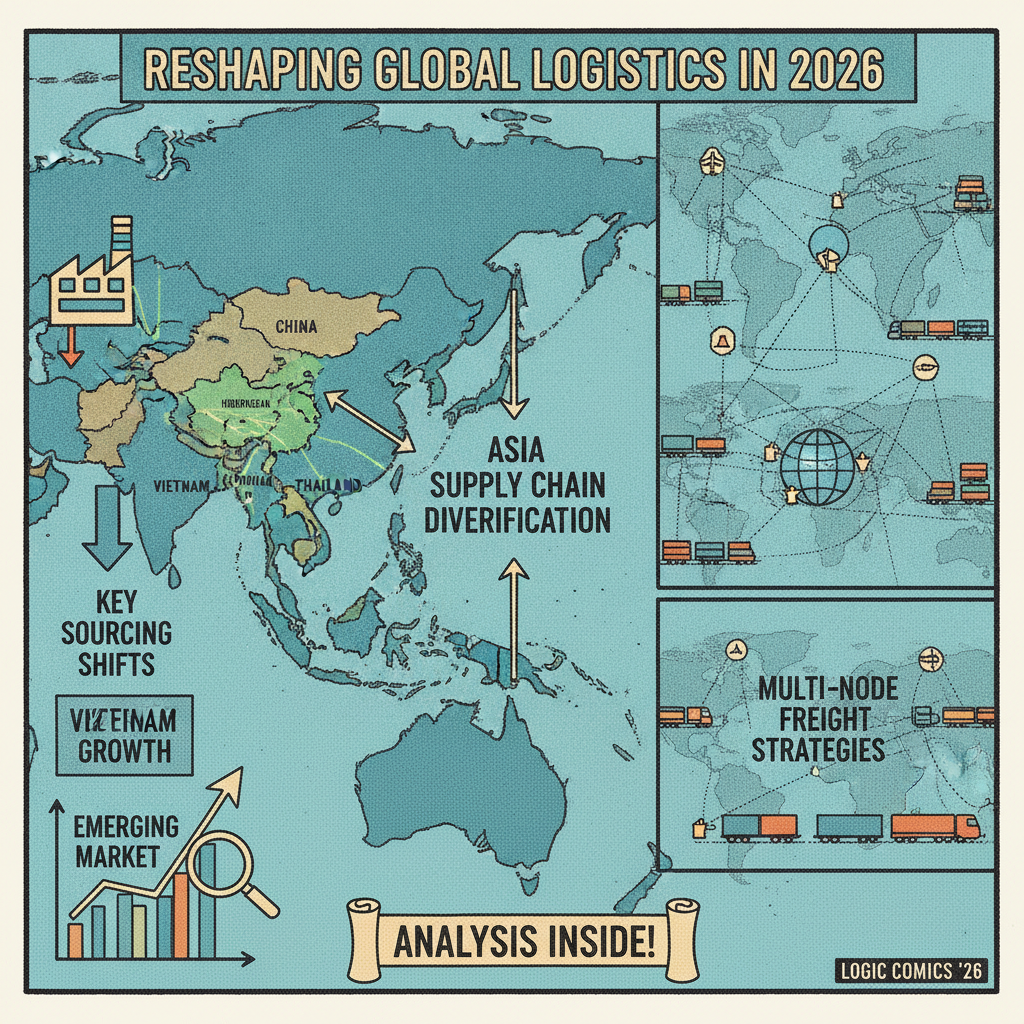
In 2026, global logistics networks are undergoing a profound transformation as Asia Supply Chain Diversification accelerates beyond the traditional China-centric model. Driven by geopolitical tensions, shifting tariff policies, and the need for operational resilience, multinational corporations are rapidly embracing a multi-node manufacturing strategy across the Asia-Pacific region. This transition is fundamentally altering trade routes, ocean freight capacity, and regional investment patterns for shipping professionals.
Recent industry data highlights the sheer scale of this geographic realignment. According to QIMA’s 2026 supply chain barometer, sourcing concentration has hit record lows, with North American buyers seeing their reliance on the top three supplier nations drop from 61% to 54% in a single year. Consequently, logistics providers are expanding their footprint to accommodate surging demand in alternative hubs.
- India’s Ascendance: A prime beneficiary of this shift, India has captured massive foreign direct investment, including an $11 billion commitment from major automakers to expand manufacturing capacity.
- Southeast Asia’s Boom: Vietnam and Indonesia are rapidly absorbing redirected trade volumes, particularly in electronics, necessitating upgraded port infrastructures and multi-country consolidation services.
For shipping experts, managing Asia Supply Chain Diversification requires sophisticated freight strategies and agile inventory positioning. The shift from just-in-time to just-in-case inventory models has fortified the demand for sustainable, high-quality warehousing across emerging economic zones. Moving forward, successful logistics operations will depend on integrating advanced visibility tools and establishing resilient, multi-regional supplier networks to mitigate risks in an increasingly volatile global market.
References
- Mingtiandi (2025). Trade War Spurs Asia Supply Chain Diversification.
- Prateek Vishwakarma (2025). Reshaping Asia Supply Chains.
- IIM Bangalore (2025). Volume 5 Issue 4 December 2025.
- QIMA (2026). Q1 2026 Supply Chain Barometer.
- Macroeconomic Team (2024). Implications for Key ASEAN Countries.