
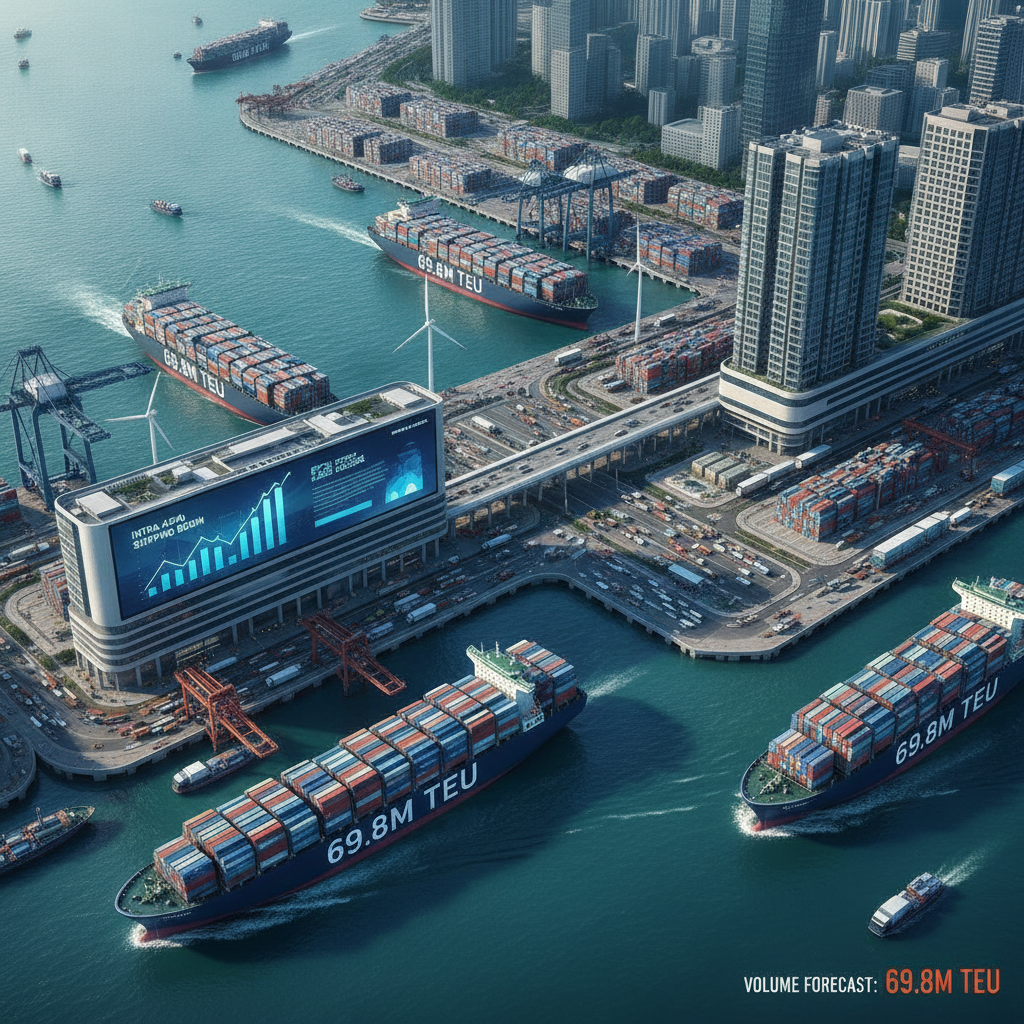
The logistics landscape is transforming, with Intra-Asia shipping emerging as the dominant engine of maritime trade. Driven by shifting supply chains and resilient consumer demand, regional corridors are steadily outpacing long-haul Western routes. Clarkson Research projects Intra-Asia transport volume will reach 69.8 million TEU in 2026, building on a robust 67.8 million TEU in 2025.
Several critical factors are accelerating the dominance of Intra-Asia shipping lanes this year:
- Supply Chain Diversification: The adoption of ‘China Plus One’ strategies has boosted raw material and finished goods trade between China and ASEAN nations like Vietnam.
- Infrastructure Investments: Port operators are increasing regional capacity. DP World recently extended its Laem Chabang terminal concession in Thailand through 2031 to accommodate rising cargo volumes.
- Carrier Repositioning: Global carriers are strategically deploying assets. Maersk’s May 2026 expansion of the FI2 Ocean Service enhances direct connectivity between India, China, and Southeast Asia.
Despite steady volume growth, the Intra-Asia shipping market faces persistent rate volatility. While 2025 saw rate hikes of 8-15% on key lanes due to capacity constraints, early 2026 brought localized corrections linked to seasonal manufacturing dips. For logistics professionals, optimizing secondary trade loops and maintaining regional agility will be essential to mitigating supply chain disruptions. Embracing these localized dynamics is the key to unlocking profitability in today’s most promising shipping sector.
References
Supreme Freight (2025). Cargo Facts (2025). Logistics News (2026). Trade News (2026). Shippio (2025). ALS (2026).