
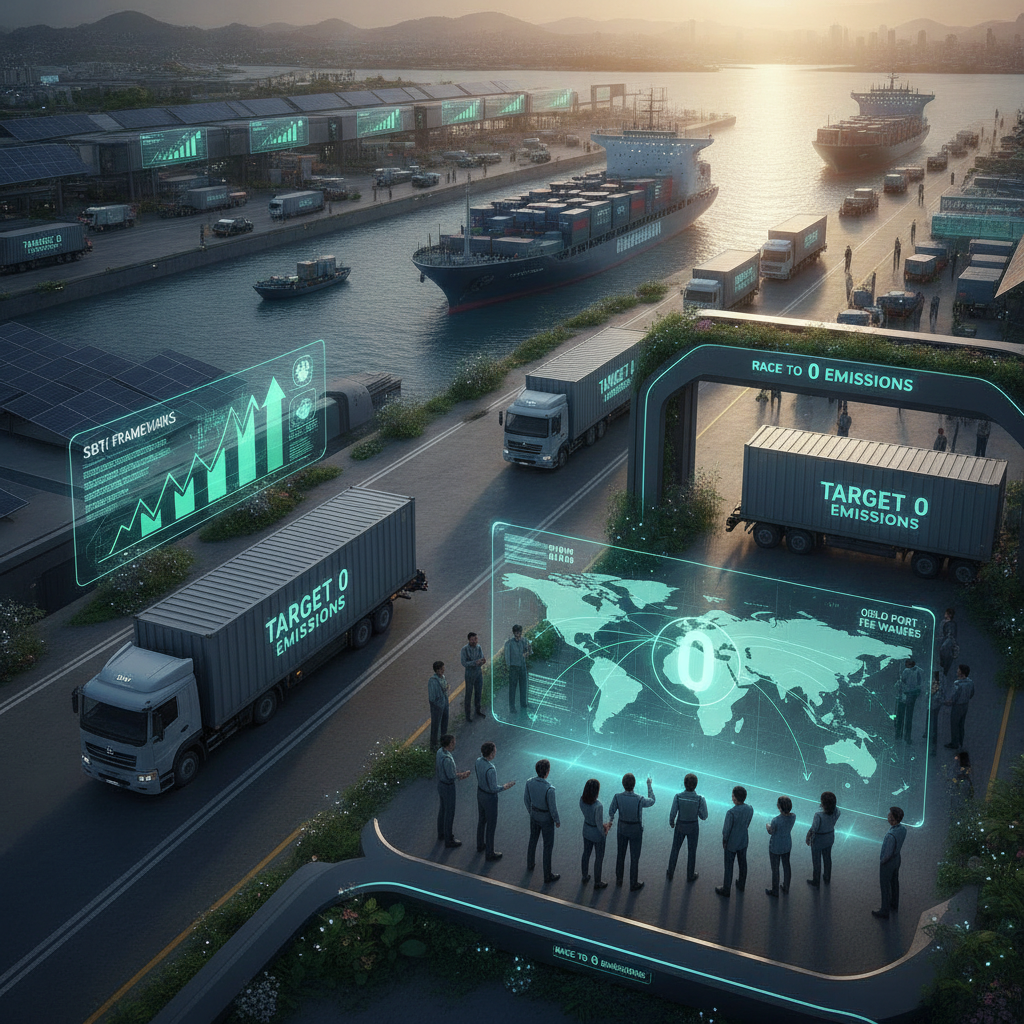
In 2026, the global shipping and logistics industry is aggressively pivoting toward a singular, uncompromising goal: absolute 0 environmental impact. Often referred to as “Target 0” or Net-Zero, the push to eliminate greenhouse gas emissions has shifted from theoretical ambition to strict compliance. In June 2026, the Science Based Targets initiative (SBTi) released the Corporate Net-Zero Standard V2.0, providing companies with an actionable framework to move from setting goals to real-world implementation. Concurrently, the International Maritime Organization (IMO) is preparing mandatory emissions pricing and limits set to take effect by 2027, forcing supply chains to act now to hit 0 in the coming decades.
Attaining 0 emissions requires a multi-faceted approach across all transport modes. To hit these targets, logistics experts are adopting several core tactics:
- Upgrading overland networks with zero-emission truck fleets and advanced charging grids.
- Utilizing book-and-claim systems to access verified lower-carbon fuels when direct green fuel is scarce.
- Capitalizing on port incentives, such as the Port of Oslo’s early 2026 “Zero-Invoice” model that waives berthing fees for zero-emission transit.
These innovative strategies highlight how financial rewards are accelerating the global transition to 0 carbon output.
Transitioning to 0 is not just an environmental imperative; it is an economic necessity. Major corporations like Kawasaki Kisen Kaisha (“K” LINE) have expanded their use of bio-LNG fuels in 2026 as an intermediate step to drastically cut CO2 output. As regulatory pressures mount, logistics professionals must embrace digital route optimization and alternative fuels to secure a competitive edge in the high-stakes race to 0.
References
Drive to Zero Newsletter, Jan 2026. The Oslo Effect: Port of Oslo. Shell Global Freight Decarbonization. Maersk IMO Net Zero Framework. SBTi Corporate Net-Zero Standard V2.0. “K” LINE Bio-LNG Initiatives.