

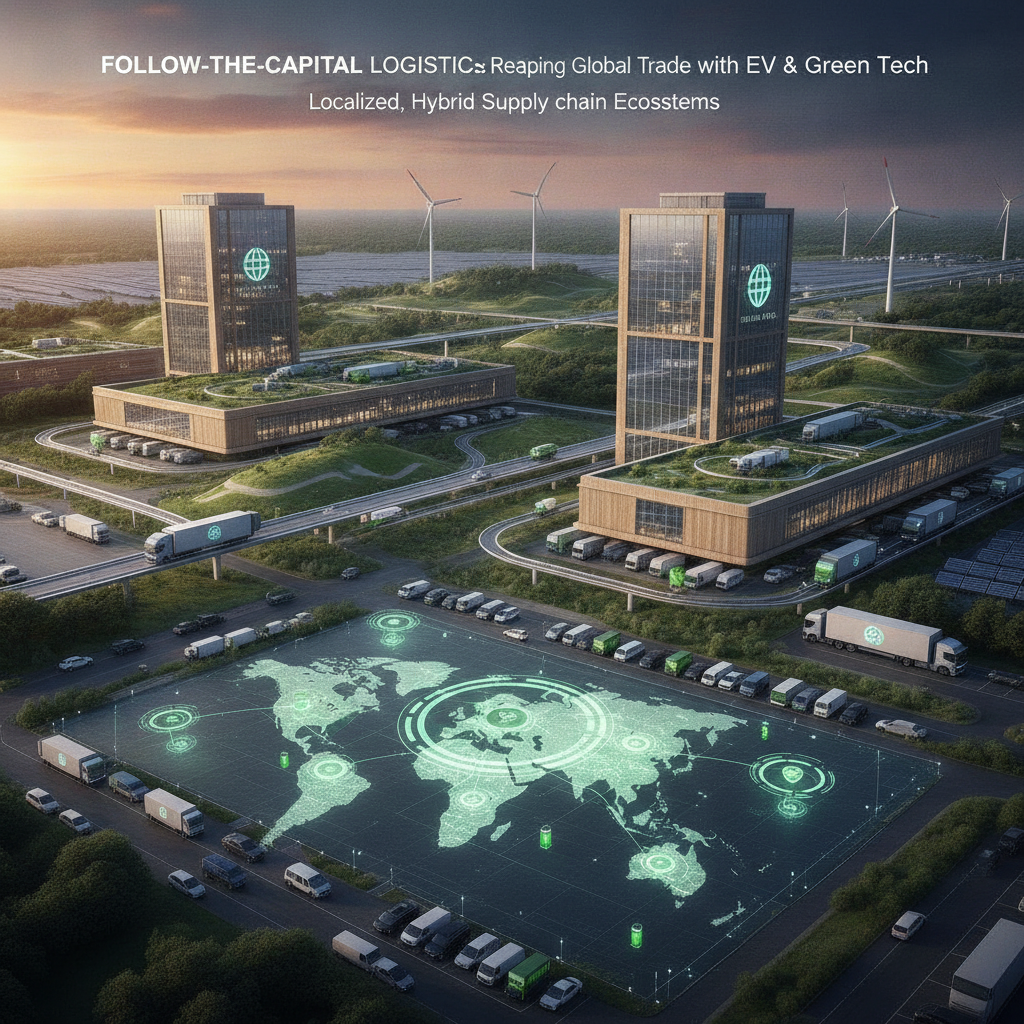
The global supply chain landscape is undergoing a massive structural transformation, shifting from simple transactional freight transport to integrated, localized ecosystems. At the center of this shift is the Follow-the-capital logistics expansion model. As multinational industrial giants deploy billions in foreign direct investment—particularly in the electric vehicle (EV) and renewable energy sectors—logistics providers are building sophisticated infrastructure directly in the wake of this funding. This strategy demands complex end-to-end solutions, encompassing precise production-line feeding and comprehensive after-sales service networks.
Driven by this strategic expansion, cross-border trade is no longer just about shipping parcels; it is about exporting entire supply chain capabilities. As battery and EV manufacturers establish localized European production hubs, they catalyze a massive surge in hybrid logistics demand.
- Explosive Market Growth: The market size for hybrid logistics in Europe, driven by this capital-following trend, is projected to hit $30 billion by 2026, marking a 100% increase from 2024.
- Investment Surges: Direct investment in these localized logistics frameworks is estimated to reach $25 billion by 2026.
- New Winning Formulas: Operators are adopting hybrid models that blend overseas warehousing, dedicated shipping lines, and hyper-local delivery to meet the rapid responsiveness that local consumers and manufacturers demand.
To successfully execute a Follow-the-capital logistics expansion, companies must navigate the localization gap. The primary friction point for providers in 2026 is no longer crossing oceans, but landing effectively. Differences in labor laws, digital infrastructure, and business pacing require profound local adaptation. High-performing organizations are shifting logistics from an operational afterthought to a strategic, financial decision-making mechanism integrated directly with capital allocation.
References
China Logistics & Supply Chain 2026: Strategic Implications for European Stakeholders.
Navigating China’s Logistics Evolution in 2026: Supply Chain Resilience, Hybrid Models, and the Global Ecosystem Shift.
Trends in Logistics, Foreign Trade and Supply Chain for 2026 – Cargo Sapiens.