

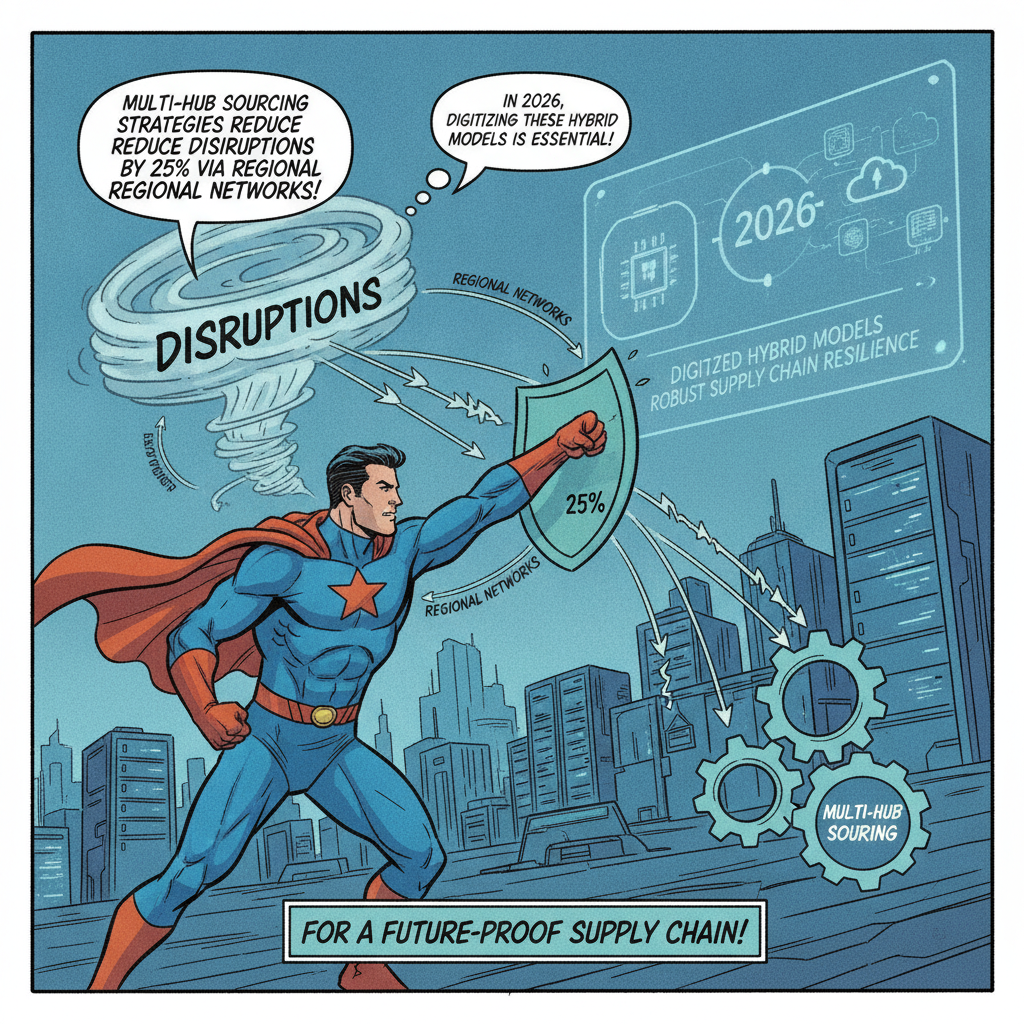
In today’s volatile trade landscape, logistics and supply chain experts are moving away from linear procurement. Instead of relying on single-origin models, industry leaders are rapidly adopting multi-hub sourcing strategies to ensure operational resilience and reduce lead times. Recent data from the 2026 QIMA Sourcing Survey reveals that 43% of global supply chains made significant geographical changes in 2025 to mitigate tariff impacts and geopolitical risks.
The transition toward regionalized multi-hub network structures is fundamentally changing risk management. Studies indicate that companies deploying multi-hub sourcing strategies experience 25% fewer supply chain disruptions compared to those relying on a single manufacturing region. This hybrid approach combines global scale with regional agility, allowing retailers and pharmaceutical companies alike to pivot faster during unforeseen climate or geopolitical disruptions. Nearshoring to regions like Mexico, Southeast Asia, and South Asia has accelerated, pushing production closer to key markets and reducing long-haul logistics risks.
Managing the complexity of a diversified supplier base requires advanced visibility. Current supply chain reports show that 60% of top-performing respondents have fully mapped their sourcing networks, while 74% plan aggressive investments in supply chain digitization throughout 2026. By integrating real-time data streams and predictive analytics, logistics control towers can coordinate multi-hub sourcing strategies proactively, adjusting true landed costs on the fly. As businesses prioritize resilience over pure cost efficiency, flexible, multi-node procurement is proving to be the ultimate competitive differentiator.
References
1. Global Supply Chain Trends: Sourcing Shifts (Inbound Logistics, June 2026). 2. Is your sourcing strategy ready for the next global disruption? (Maersk, May 2025).