

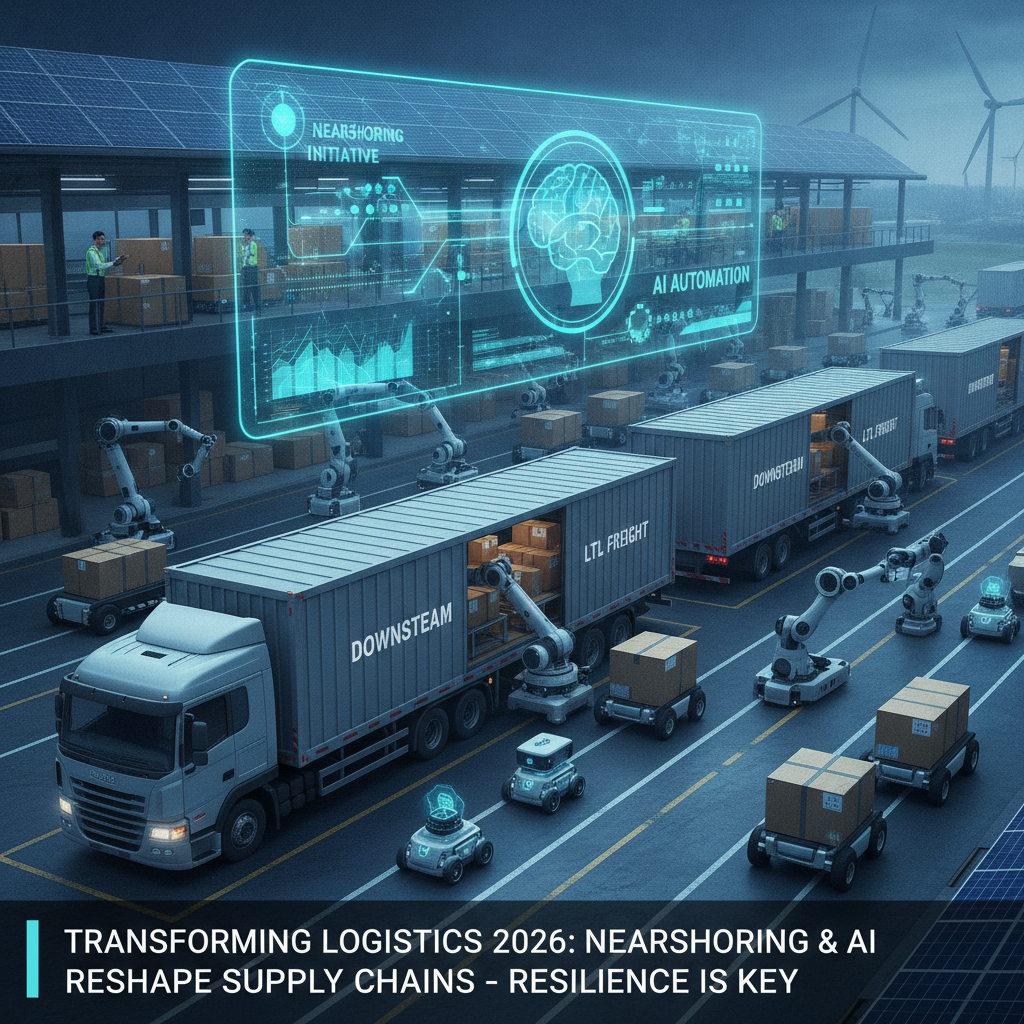
The transportation sector is witnessing a profound transformation as downstream LTL freight shifting alters traditional supply chain dynamics. In 2026, the logistics industry is adapting to new consumer demands and regionalization trends, forcing shippers to rethink how they distribute goods. According to the 37th State of Logistics report released in July 2026, the less-than-truckload (LTL) market is rapidly gaining momentum as industrial activity improves and capacity tightens. This downstream LTL freight shifting is primarily driven by the need for faster, highly responsive regional delivery networks.
Several critical factors are accelerating the transition of freight into and out of LTL networks. With the surge in nearshoring, Mexican exports to the U.S. have run approximately 15 percent above prior-year levels recently, generating massive structural shifts. Supply chain planners are heavily focusing on optimizing downstream LTL freight shifting to maintain competitive margins.
- Intermodal Competition: FTI Consulting’s 2026 Transportation Outlook notes that for lanes exceeding 750 miles, intermodal freight is offering meaningful discounts compared to long-haul LTL.
- Density-Based Pricing: The mid-2025 National Motor Freight Classification (NMFC) overhaul shifted shipments to a 13-level density scale, pushing shippers to re-evaluate load packaging.
- AI Automation: Upgraded transportation management systems are utilizing AI to capture dimension data instantly, intercepting billing discrepancies before they cascade downstream.
To successfully navigate downstream LTL freight shifting, businesses must integrate advanced technological solutions. Companies are widely adopting real-time terminal monitoring and automated load matching to prevent bottlenecks. As truckload rates climb and e-commerce demands localized inventory, mastering downstream LTL freight shifting will remain essential for achieving supply chain resilience in 2026.
References
- Atlantic Logistics – Big Changes Are Coming to LTL Shipments (2025)
- LTL Freight in 2026: Trends, Rates, and Market Outlook
- 37th State of Logistics: LTL (July 2026)