

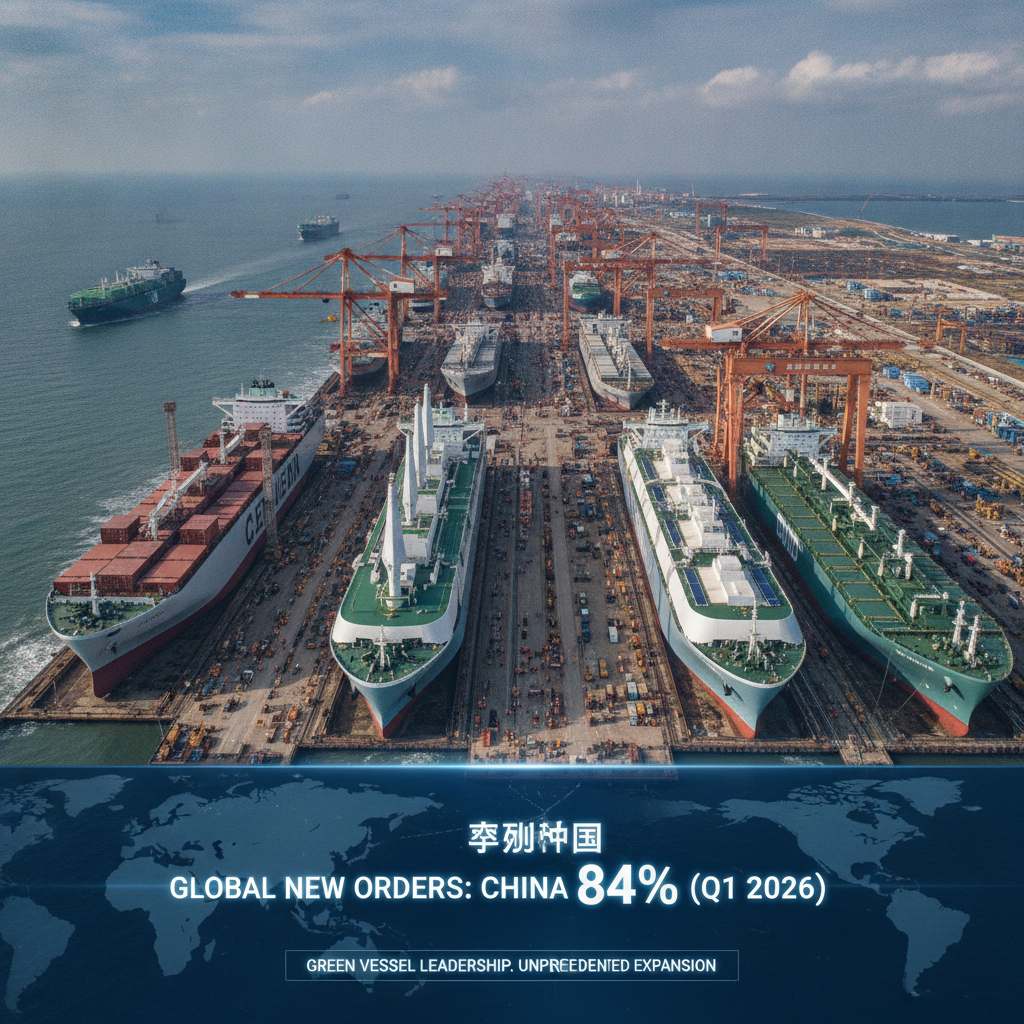
The trajectory of Chinese Shipbuilding Output Expansion has reached unprecedented levels in 2026, fundamentally restructuring global maritime supply chains. By late 2025, China commanded 70.9% of the global orderbook. This aggressive growth continued into Q1 2026, with Chinese yards securing an overwhelming 84.9% of global new orders (59.53 million DWT), representing a 195.2% year-on-year increase. For logistics experts and fleet operators, this consolidation of manufacturing power signals a permanent shift in maritime dependency.
Unlike previous cycles, the current Chinese Shipbuilding Output Expansion is defined by mega-expansions and the strategic reactivation of dormant shipyards. Key trends driving this market dominance include:
- Green Technology: Over 80.2% of new orders in early 2026 were for green vessels, including advanced methanol-ready megaships.
- Infrastructure Upgrades: Facilities like the new Yangzi Hongyuan yard are adding vast, highly automated annual capacity.
- Unmatched Production Scale: China delivered 53.7 million DWT in 2025, capturing roughly two-thirds of all new global maritime contracts.
Chinese shipbuilders offer unparalleled scale and a persistent price advantage over OECD competitors. While South Korean yards pivot defensively toward niche LNG carriers, China’s comprehensive capabilities ensure it remains the undisputed anchor of global maritime logistics. As green fleet mandates accelerate globally, reliance on Chinese manufacturing will remain a structural feature of international trade.
References
Naftemporiki (2026) Chinese shipyards aggressive production expansion. BRS Report (2026) Mega expansions signal long-term hegemony. Ministry of Industry and Information Technology Data (2026). Andaman Partners (2026) Global Shipbuilding Output Surges. Clarksons First Half Report (2026). Xinhua News (2026) Greener and smarter course.