
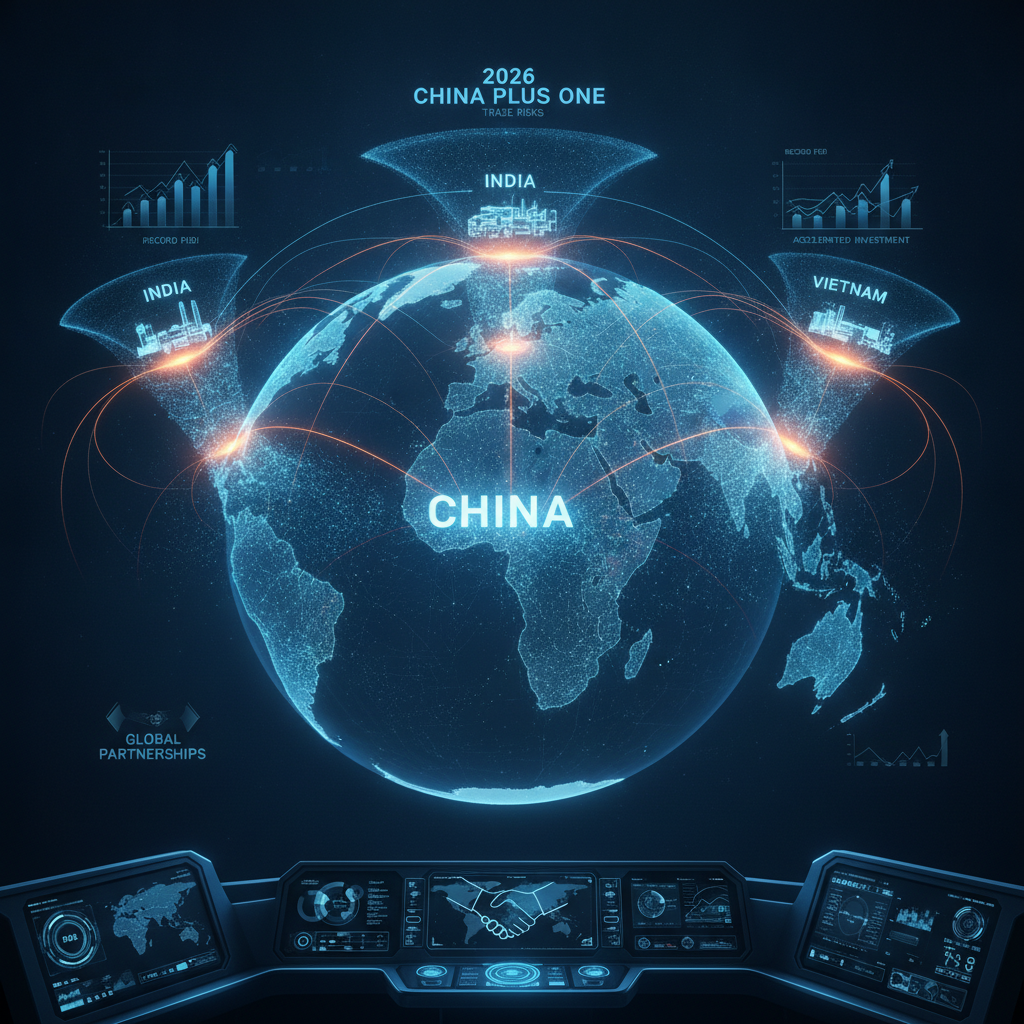
The “China Plus One Supply Chain” mandate has evolved from a basic risk-mitigation concept into an intensive, data-driven restructuring movement. Facing volatile trade policies and escalating geopolitical friction, global logistics executives are aggressively decentralizing their manufacturing footprints. This structural shift requires robust multi-node networks, aiming to bypass sole-source reliance without entirely abandoning established Chinese manufacturing ecosystems.
Three regions dominate the 2026 diversification landscape: India, Vietnam, and Mexico. In FY2024-2025, India recorded provisional foreign direct investment (FDI) inflows of $81.04 billion, driven heavily by government incentives like the Production Linked Incentive (PLI) scheme. Vietnam remains a powerhouse alternative due to its proximity to Shenzhen and low manufacturing wages, despite brief exposure to U.S. reciprocal tariffs in 2025. Concurrently, Mexico has emerged as a critical nearshoring node, particularly for the automotive and heavy machinery sectors targeting rapid U.S. market access.
Despite rapid investment, logistics leaders warn against the “illusion of diversification”—merely relocating final assembly while remaining dependent on upstream Chinese raw materials. True resilience requires deep sub-tier mapping and embedded artificial intelligence in transportation management systems (TMS).
- Sub-tier Visibility: True risk mitigation demands tracking components past tier-1 suppliers to ensure raw materials are also diversified.
- Infrastructure Planning: While hubs like India and Mexico offer vast potential, varying maturity in port infrastructure and outbound freight capacity requires sophisticated risk management.
References
TwinCore: 2026 Logistics Trends. Dimerco: Logistics Challenges. ISM: 2026 Supply Chain Management. IMARC: China+1 Strategy in India. SVI Global: 2025 Tariff Shock. SupplyChainBrain: Why China Plus One Alone Doesn’t Reduce Risk. Cargo Clan: Impact of China+1. IJRCMS: Assessing the Impact of China Plus One. SVI Global: Is Your Supply Chain Ready.