

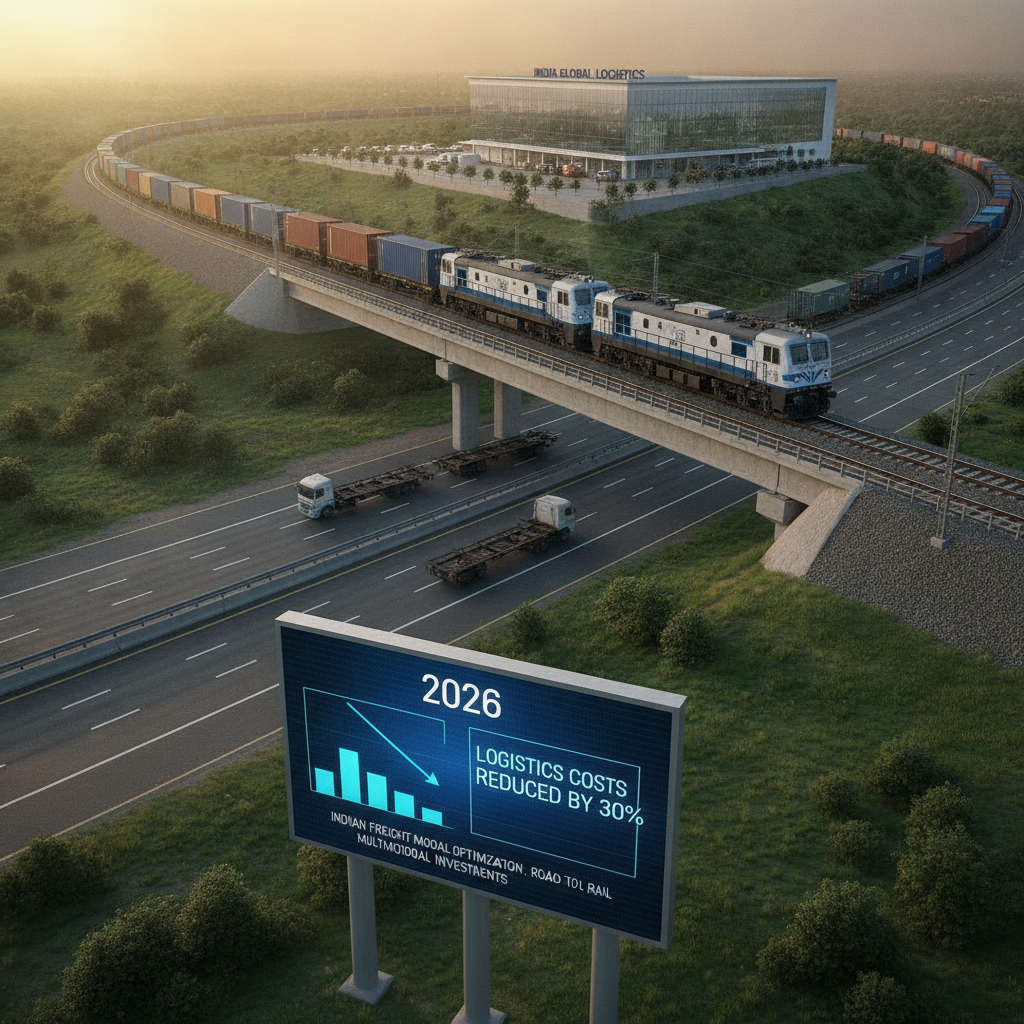
India’s logistics sector is undergoing a massive structural transformation, driven by an urgent need for Indian Freight Modal Optimization. Historically, the nation’s freight landscape has been heavily imbalanced, with nearly 70% of cargo moving by road and only about 25% by rail. This skew creates significant economic inefficiencies, as road transport costs approximately INR 3.78 per tonne-km compared to just INR 1.9 per tonne-km for rail. To address this, policymakers and industry leaders are aggressively pushing a modal shift to reduce aggregate logistics costs and enhance sustainability.
In July 2026, Indian Railways accelerated this transition by introducing critical structural measures under the Reform Express initiative. Key policies include a single Pan-India Container Train Operator (CTO) license and the expanded containerization of bulk commodities like fertilizers and fly ash. These targeted reforms aim to make rail freight more flexible, commercially attractive, and seamlessly integrated into the broader supply chain.
Simultaneously, infrastructure investments are physically realigning the freight mix. A May 2026 industry report projects that India will need 215 large multimodal logistics parks by 2047 to achieve the government’s ambitious target of a 45% rail freight share. The momentum is already visible, with 118 Gati Shakti Multi-Modal Cargo Terminals currently operational and attracting over INR 8,600 crore in private investments.
By leveraging dedicated freight corridors and digital ecosystems like the Unified Logistics Interface Platform, Indian Freight Modal Optimization is advancing rapidly. For logistics professionals, this signals a decisive pivot toward rail-centric, integrated supply chains that promise unprecedented cost-efficiency.
References
- The Policy Edge: Indian Railways Pushes New Freight Reforms to Lower Logistics Costs (July 2026)
- KPMG International: Rail versus roads: Rebalancing India’s freight mix (April 2026)
- Knight Frank India Report: Fast-Tracking MMLPs to Enable Modal Shift (May 2026)