
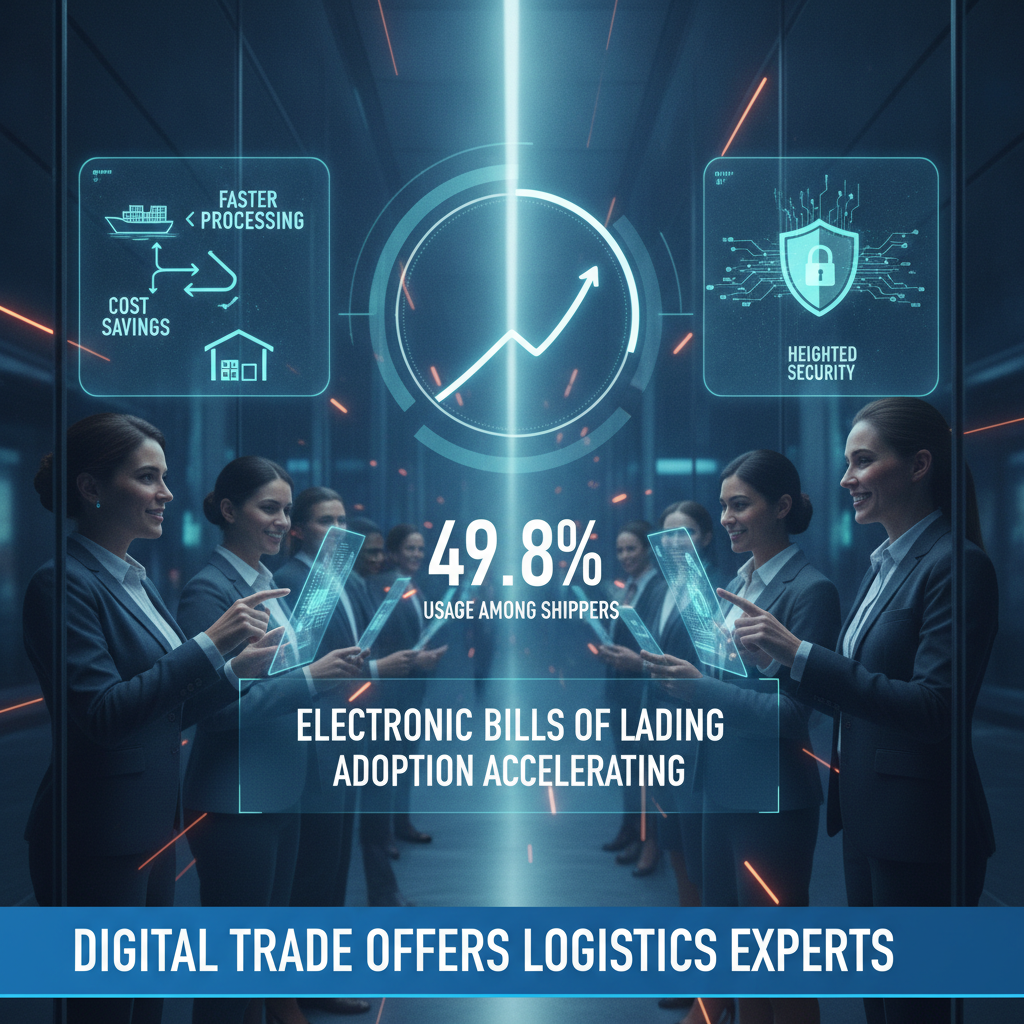
The global shipping and logistics industry is witnessing a monumental shift as Electronic Bills of Lading Adoption transitions from a theoretical concept to an operational standard. Recent data from a comprehensive global survey by the International Chamber of Commerce and FIT Alliance reveals that the overall adoption rate—encompassing users of digital records alongside paper—has surged to 49.2%. As major shipping conglomerates incentivize digital platforms, the ambitious industry-wide goal of 100% digitalization by 2030 appears increasingly attainable.
With global carrier production levels hitting roughly 11% core utilization by mid-2025, the maritime sector is already recognizing tangible operational benefits. According to current market insights, over 94% of supply chain respondents believe this shift will unlock broader digital transformation. Key advantages reported by logistics experts include:
- Faster document processing and reduced border friction (94.2%)
- Significant operational cost savings through enhanced process efficiencies (89.8%)
- Superior data accuracy and bolstered supply chain security (89.2%)
Additionally, the environmental benefits are compelling; achieving total digitalization could save an estimated 28,000 trees annually by eliminating unnecessary paperwork.
Despite clear momentum, freight forwarders and logistics experts must still navigate legal fragmentation and technical interoperability challenges. However, recent legal frameworks and the International Group of P&I Clubs’ approval of unified digital ecosystems in early 2025 are paving the way for seamless, cross-border functionality. For forward-thinking supply chain professionals, investing in these technological infrastructures is no longer optional. The data unequivocally shows that the maritime industry has crossed the point of no return in digital trade execution.
References
- ZIM SUSTAINABILITY REPORT 2025
- BlockPeer (2026). Transforming Shipping with Digital Trade Documents
- Overcoming Challenges and Navigating the Future of Trade with Electronic Bill of Lading
- ICC Belgium (2025). Survey shows steady rise of global adoption of electronic Bills of Lading
- Arta Rail (2026). eBLs Going Mainstream: DCSA 2030 Vision