

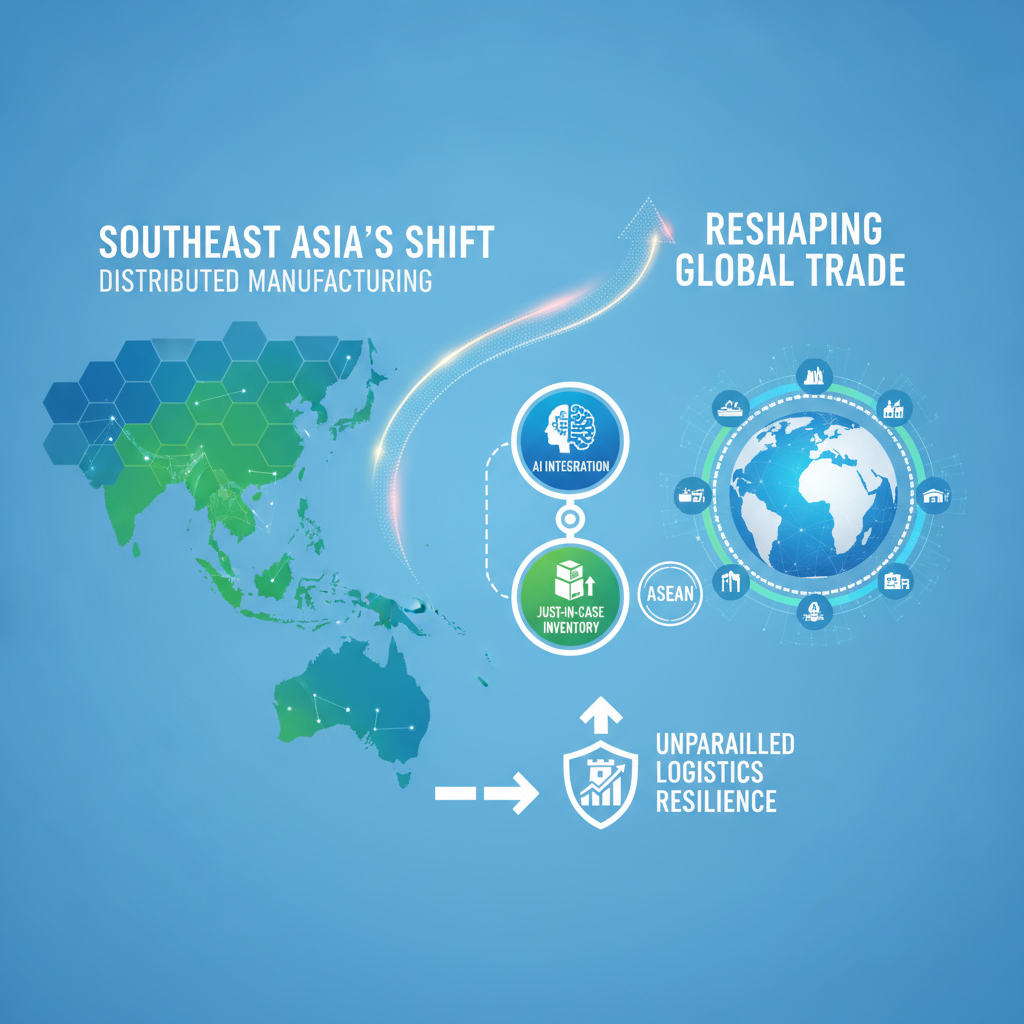
Global supply chains are rapidly rebalancing, making Southeast Asia an ultimate beneficiary. The shift from Just-in-Time to Just-in-Case inventory strategies has placed ASEAN Supply Chain Resilience at the forefront of global logistics. By 2026, the ASEAN logistics market is projected to surpass USD 305 billion, driven by manufacturing relocation and the “China Plus One” strategy.
- Strategic Diversification: Multinationals are dispersing production across Vietnam, Malaysia, and Thailand to mitigate tariff volatility. Average safety stock holding days surged by 169% recently, drastically improving regional supply chain resilience scores.
- AI Integration: AI forecasting and digital platforms are now standard operational layers. Frameworks like the Digital Economy Framework Agreement harmonize cross-border data flows.
- Green Logistics: Strict ESG compliance has accelerated the adoption of electric fleets and real-time carbon tracking.
Evolving from a manufacturing hub to a central trade orchestrator, ASEAN is pioneering a proactive redesign of global shipping logistics. It seamlessly integrates robust policy support, advanced AI analytics, and expanded regional connectivity to future-proof international trade.
References
Source of Asia (2026). ASEAN’s Role in Global Supply Chain Rebalancing.
ResearchGate (2026). A Strategic Model for Manufacturing Resilience.
ASEAN Secretariat (2025). AEC Strategic Plan 2026-2030.
EEAS (2025). EU-ASEAN Digital Trade.
ASEAN’s Logistics Boom in 2026.
Mordor Intelligence (2026). ASEAN Freight Market.