
Introduction to AI-Powered Supply Chain Visibility
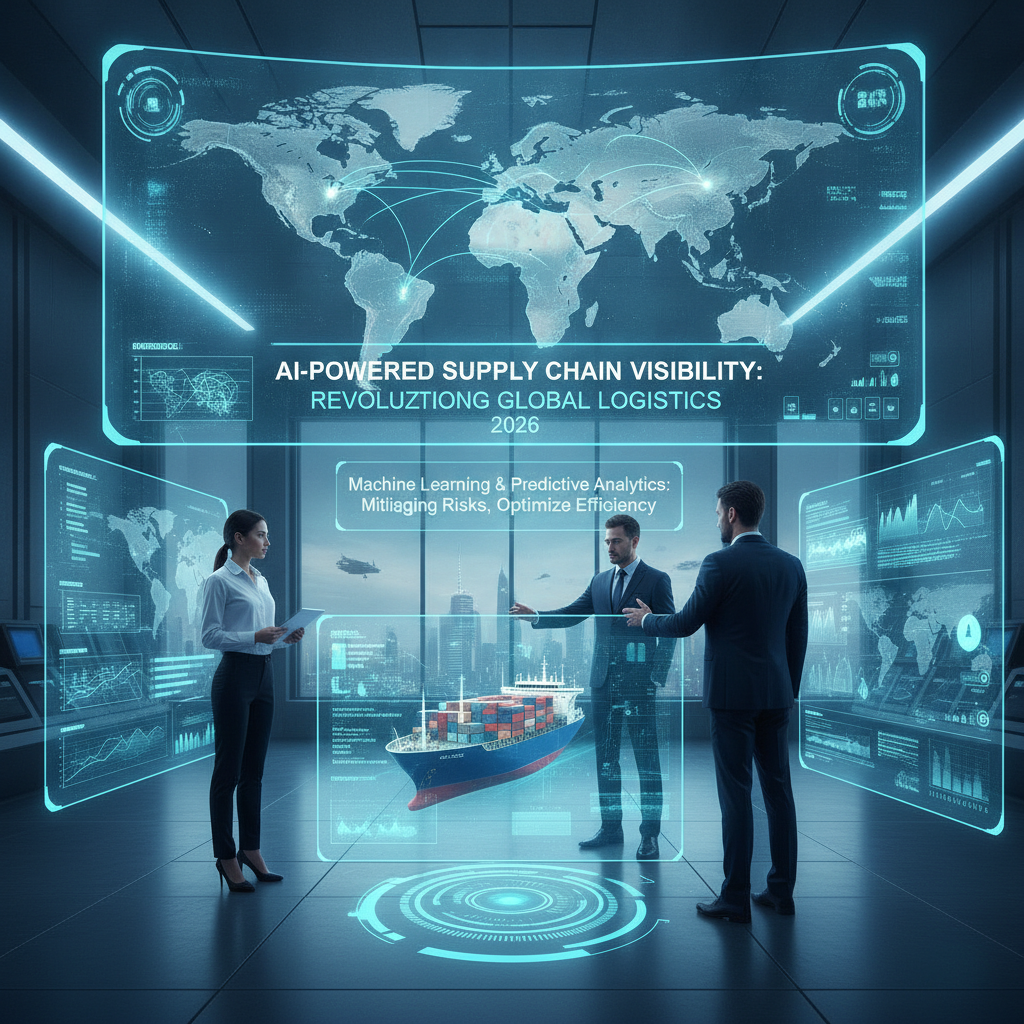
Traditional tracking is no longer sufficient in global trade. Today, AI-Powered Supply Chain Visibility transforms logistics into a predictive powerhouse. By synthesizing real-time data and machine learning, organizations preempt bottlenecks. A 2026 Dataintelo report highlights that companies deploying predictive analytics reduced supply disruption impacts by 32% and improved recovery times from 48 to 12 days [1].
Benefits of AI-Powered Supply Chain Visibility
With disruptions affecting 94% of companies, algorithmic foresight is urgent [2]. Through AI-Powered Supply Chain Visibility, shipping experts gain critical advantages:
- ETA Prediction: Models analyze traffic, ports, and weather for precise arrival forecasting [2].
- Automated Alerts: AI monitors global news and supplier health to issue early warnings for proactive rerouting.
- Inventory Optimization: Time-series forecasting balances global stock, mitigating overstock and stockouts.
Future Trends in AI-Powered Supply Chain Visibility
In 2026, logistics leaders are heavily expanding AI capabilities, including digital twin platforms for autonomous simulations [3]. Adopting AI-Powered Supply Chain Visibility is now a strict necessity for resilient operations.
References
- [1] Dataintelo (2026). AI in Supply Chain and Logistics Market Research Report.
- [2] ZenML (2025). Toyota / IBM: AI-Powered Supply Chain Visibility and ETA Prediction System.
- [3] Optiblack (2025). AI Tools for Real-Time Supply Chain Visibility.