
The Tipping Point for Maritime eBL Standardization
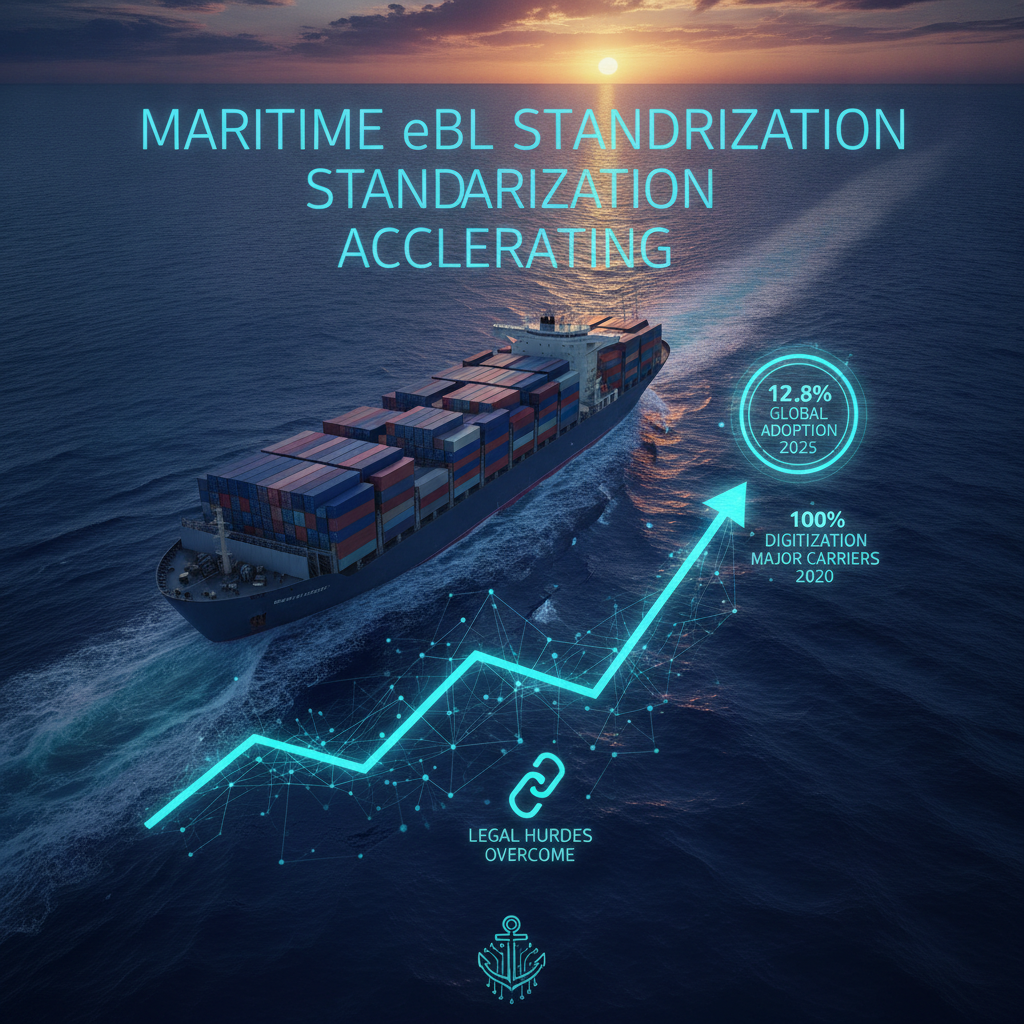
The global shipping industry is experiencing a critical shift as Maritime eBL Standardization moves from concept to execution. For centuries, physical bills of lading have bottlenecked international trade with costly delays and fraud risks. However, recent data from the Digital Container Shipping Association (DCSA) reveals that global electronic Bill of Lading (eBL) adoption reached approximately 12.8% by mid-2025, a significant surge from just 5% in 2024 [1]. This acceleration proves that the digital foundation is finally maturing.
Aggressive Adoption Rates and Industry Targets
Top ocean carriers, including Maersk and MSC, remain firmly committed to achieving 100% eBL adoption by 2030. Progress is already visible across various sectors:
- Container shipping adoption doubled over the past year, shrinking document processing cycles from weeks to minutes [1].
- Dry bulk sectors are leading the charge, with major iron ore shippers achieving a 25.1% eBL adoption rate [2].
- Widespread eBL implementation is projected to save maritime stakeholders up to $6.5 billion in direct costs annually while preserving 28,000 trees [3].
Overcoming Legal and Technical Bottlenecks
While the technology for Maritime eBL Standardization exists, the primary barrier is industry-wide coordination. Universal transition requires synchronized efforts among banks, carriers, shippers, and regulators. Fortunately, legal frameworks are catching up. Following the UK Electronic Trade Documents Act of 2023, countries like the Netherlands recognized eBLs as legally valid in 2025 [3]. Furthermore, interoperability initiatives spearheaded by the DCSA are actively bridging the gap between fragmented private platforms, paving the way for a unified digital trade ecosystem.
References
[1] DCSA 2025-2026 eBL Adoption Reports and Maritime Analytica Insights.
[2] BIMCO 2024 Bulk eBL Pledge Data.
[3] 2025 Industry Analyses on Electronic Bills of Lading and UK/Netherlands Legal Reforms.