

Sino-EU Green Shipping Transition: Can Corridors Offset ETS Costs?
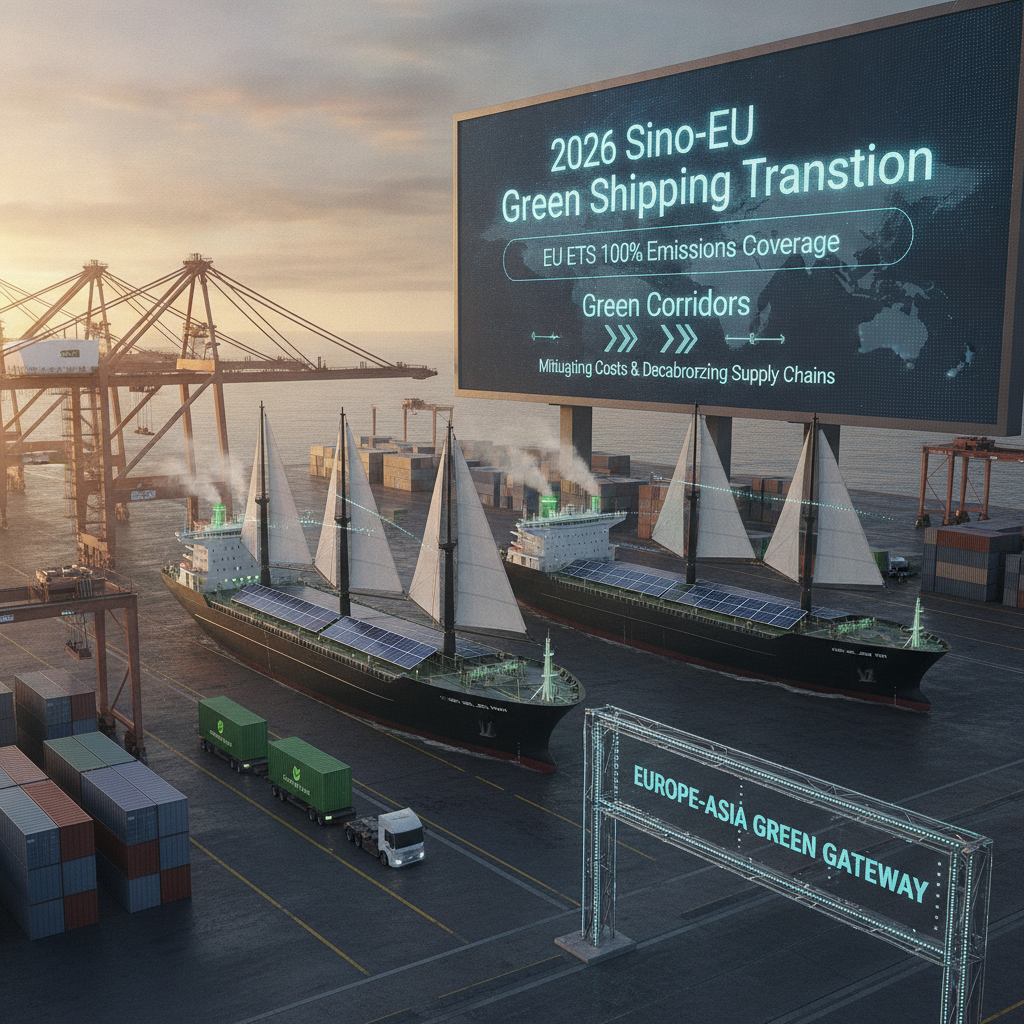
The Sino-EU Green Shipping Transition has reached a critical inflection point in late 2026 as decarbonization mandates directly impact global supply chains. Following the 19th EU-China Maritime Transport Agreement meeting in Shanghai on October 19, 2026, industry leaders are aggressively accelerating zero-emission pathways to mitigate rising compliance costs. This diplomatic push aligns with the European Union Emissions Trading System (ETS) entering its strictest phase.
EU ETS Impacts on the Sino-EU Green Shipping Transition
As of January 1, 2026, the maritime sector faces full EU ETS compliance, requiring carriers to surrender allowances for 100% of their verified carbon dioxide emissions. Crucially for the Sino-EU Green Shipping Transition, the regulations now also mandate accounting for methane and nitrous oxide. This shift affects 50% of emissions on voyages between China and EU ports, forcing carriers to embed carbon pricing into their ocean freight quotations and Q4 2026 surcharges. The added financial burden is accelerating the deployment of alternative fuels and energy-efficient vessels.
Corridors Fueling the Sino-EU Green Shipping Transition
To navigate these regulatory pressures, stakeholders are establishing dedicated maritime green corridors. On September 23, 2026, Shenzhen Port and the Port of Felixstowe signed a landmark cooperation initiative to develop a low-carbon trade route. This follows the earlier establishment of a green corridor between Qingdao Port and the Port of Hamburg. Furthermore, the September 2026 launch of the International Green Shipping Corridor Alliance, featuring 45 global entities including COSCO and CMA CGM, aims to standardize green fuel supply and infrastructure.
Strategic Implications for Logistics Experts
For logistics professionals, navigating these changes demands proactive strategies.
- Audit contracts to ensure transparent ETS surcharge calculations.
- Prioritize carriers deploying methanol-capable ships on Euro-Asian routes.
- Monitor the development of zero-carbon port infrastructure in both China and Europe.
The next 12 months will determine which carriers can successfully balance regulatory compliance with competitive freight rates on the critical Asia-Europe trade lane.
References
Splash247: Global green shipping corridor alliance launches in Beijing. Politis: EU-China Talks Focus on Green Shipping. Xinhua: China unveils initiative to promote international green shipping corridors. Xinde Marine News: Yantian and Felixstowe Sign Green Shipping Corridor. MINAZ: EU ETS Maritime Deadline. Woodland Group: EU ETS Maritime 2026. Searoutes: EU ETS 2026.