

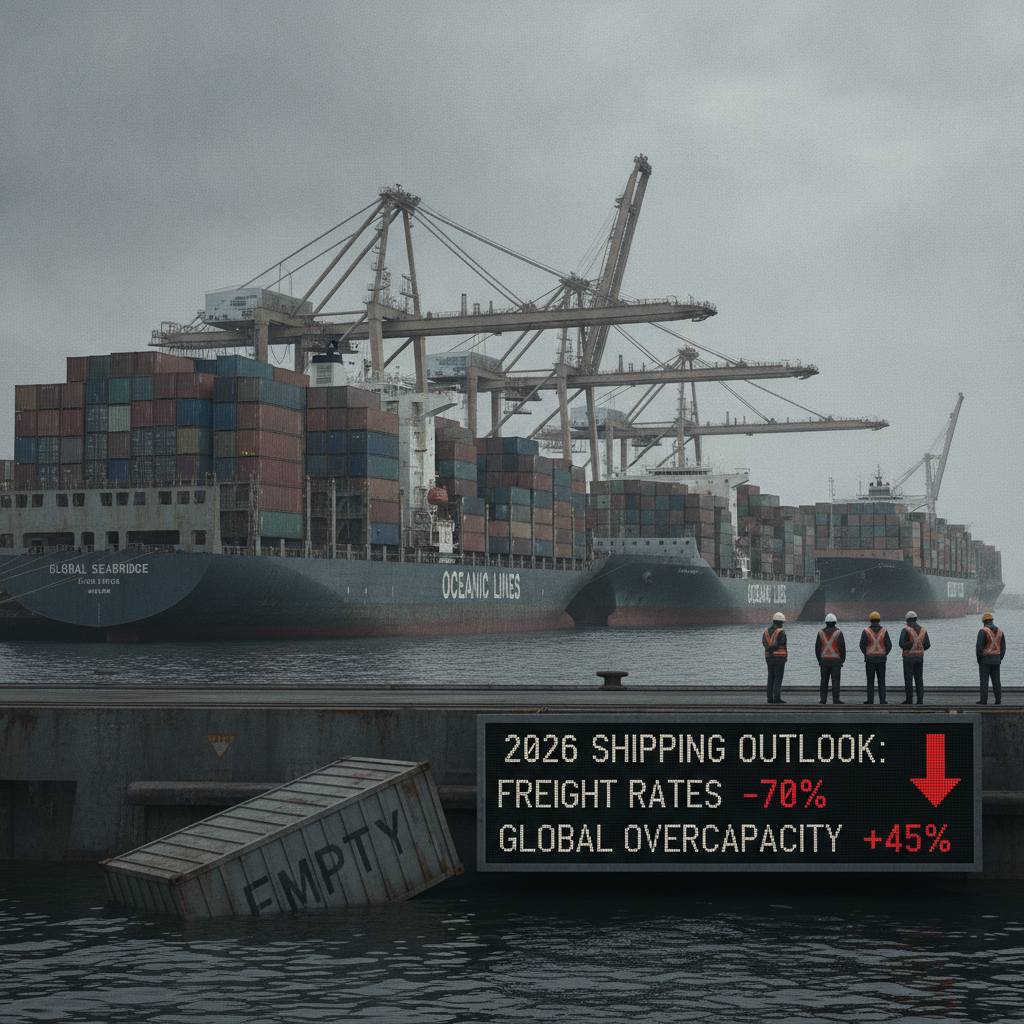
Navigating Global Container Vessel Overcapacity
The maritime logistics sector is bracing for a structural correction as Global Container Vessel Overcapacity reshapes trade dynamics in 2026. Despite early warning signs, carriers have continued an unprecedented procurement spree. By mid-2025, the global order book reached 9.6 million TEU, representing over 30% of the active fleet. While Red Sea reroutings temporarily absorbed excess tonnage, the massive influx of new vessels is now outpacing cargo demand.
Key Drivers of the 2026 Market
Entering 2026, the structural impact of fleet expansion is fully materializing. The market faces several critical pressures:
- Saturated Fleets: Active global capacity has expanded by nearly 19% since late 2023.
- Plummeting Rates: Xeneta data shows spot rates from the Far East dropping as capacity continuously outstrips demand.
- Sluggish Demand: Cargo throughput is forecast to grow by only 1.7% in 2026 due to lingering economic pressures.
Combatting Global Container Vessel Overcapacity
To survive the downcycle, shipping lines are pivoting toward aggressive cost-saving programs. Even though new vessel deliveries are projected to dip to 1.7 million TEU in 2026, older tonnage must face demolition to balance the scales. Logistics experts should prepare for a volatile contracting environment as carrier alliances utilize strategic blank sailings to optimize their sprawling networks.
References
Metro Global: Container Shipping Faces Prolonged Excess Capacity. Xeneta: Ocean Container Shipping Market Update. Lloyd’s List: Container spot rates.