
The Escalating Crisis of Asian Port Congestion
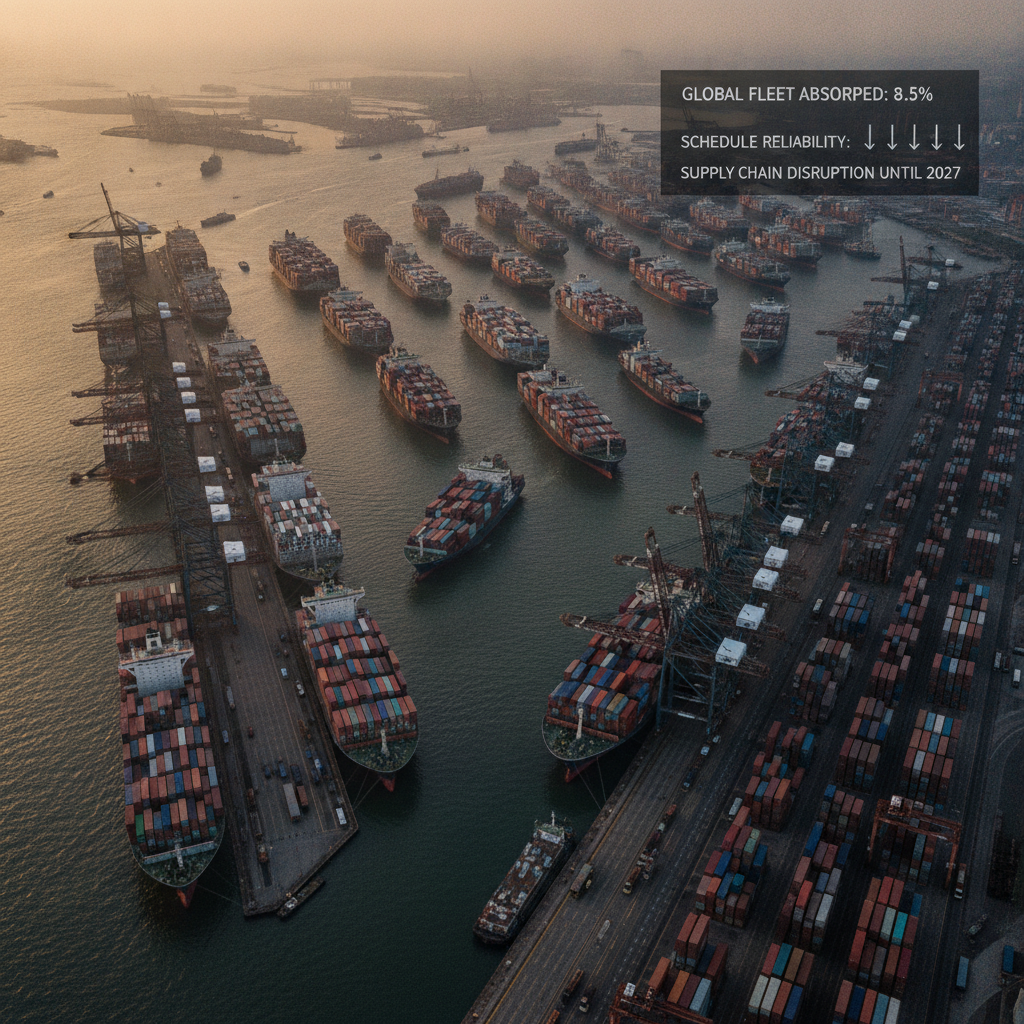
The shipping industry is currently facing a severe logistical bottleneck, with Asian port congestion reaching levels unseen since the pandemic. Recent maritime data reveals that this gridlock is absorbing approximately 8.5% of the global containership fleet. This effectively removes nearly 3 million TEU of capacity from active service, creating a massive supply chain deficit. Multiple factors are driving this Asian port congestion, including repeated severe typhoons in China and surging export demand ahead of the 2027 Lunar New Year.
Staggering Drops in Schedule Reliability
The operational toll of Asian port congestion has been devastating for global schedule reliability. By late 2026, global container reliability plummeted to 49.9%, marking the lowest recorded level since September 2022. Hard-hit terminals like Shanghai saw their on-time performance crash to a mere 21%, with average global vessel delays increasing to 6.8 days. Consequently, logistics experts report that intra-Asia freight rates have surged by an alarming 177% since early 2026. Shippers are currently forced to navigate severely tightened capacity and mounting schedule uncertainties.
When Will Asian Port Congestion Ease?
Industry analysts project a highly prolonged recovery timeline for the current backlogs. According to maritime research firm Sea-Intelligence, clearing the massive vessel queues could take up to ten months. This timeline indicates that structural supply chain disruptions will persist well into 2027, severely impacting the upcoming pre-Lunar New Year cargo rush. To mitigate these operational risks, logistics professionals must prioritize supply chain agility, dynamic forecasting, and alternative routing strategies.
References
- Shipping Capacity Crunch from Asia’s Port Delays Could Stretch into Late 2027
- Asia’s Port Congestion Puts Shipping Rates in Focus
- Port Congestion Removes 3m TEU From Market – Shipping Gazette