

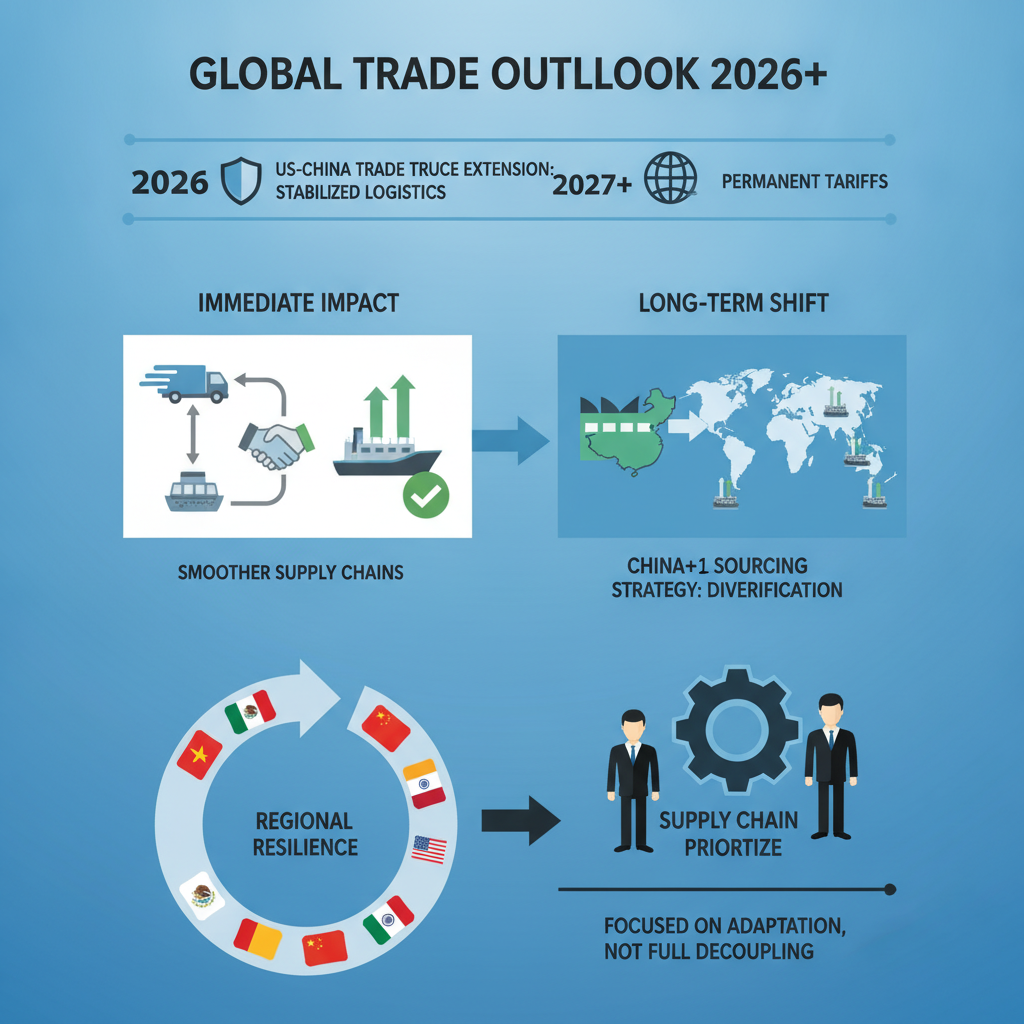
Navigating the 2026 Tariff Landscape
The landscape of US-China Trade Tariff Logistics continues to face unprecedented volatility as we enter late 2026. Despite the recent extension of the US-China trade truce through January 10, 2027, the underlying supply chain mechanics have fundamentally shifted. Recent industry data reveals a permanent transformation, with organizations abandoning direct reliance on Chinese manufacturing in favor of a distributed "China + 1" sourcing model across Southeast Asia.
Impact on Global Supply Chains and Port Fees
A critical short-term development in US-China Trade Tariff Logistics is the ongoing suspension of costly port fees on China-linked vessels, recently proposed to extend into early 2027. This temporary relief shields global bulk exporters from skyrocketing freight costs. However, the data highlights that complete decoupling is practically impossible. As of August 2026, China-origin goods still accounted for approximately 34% of total US containerized imports, even as alternative corridors in Vietnam and Thailand experienced rapid growth.
Looking Ahead: Resilience Over Replacement
Faced with permanent high-tariff baselines and regulatory uncertainties, 71% of US supply chain leaders plan to significantly alter their logistics strategies over the next few years. Forward-thinking managers are prioritizing regionalization, multi-hub transit routes, and advanced compliance tracking to maintain agility in a restrictive international trade environment.
References
- UPDATE: Trump Tariffs On Mexico, Canada, China (Nov 2026)
- US-China Tariff Relief Changes Logistics Math (Oct 2026)
- Tradeverifyd Supply Chain Statistics (May 2026)
- US may delay reinstatement of port fees on China-linked vessels (Nov 2026)