

The Rise of Elastic Logistics Models
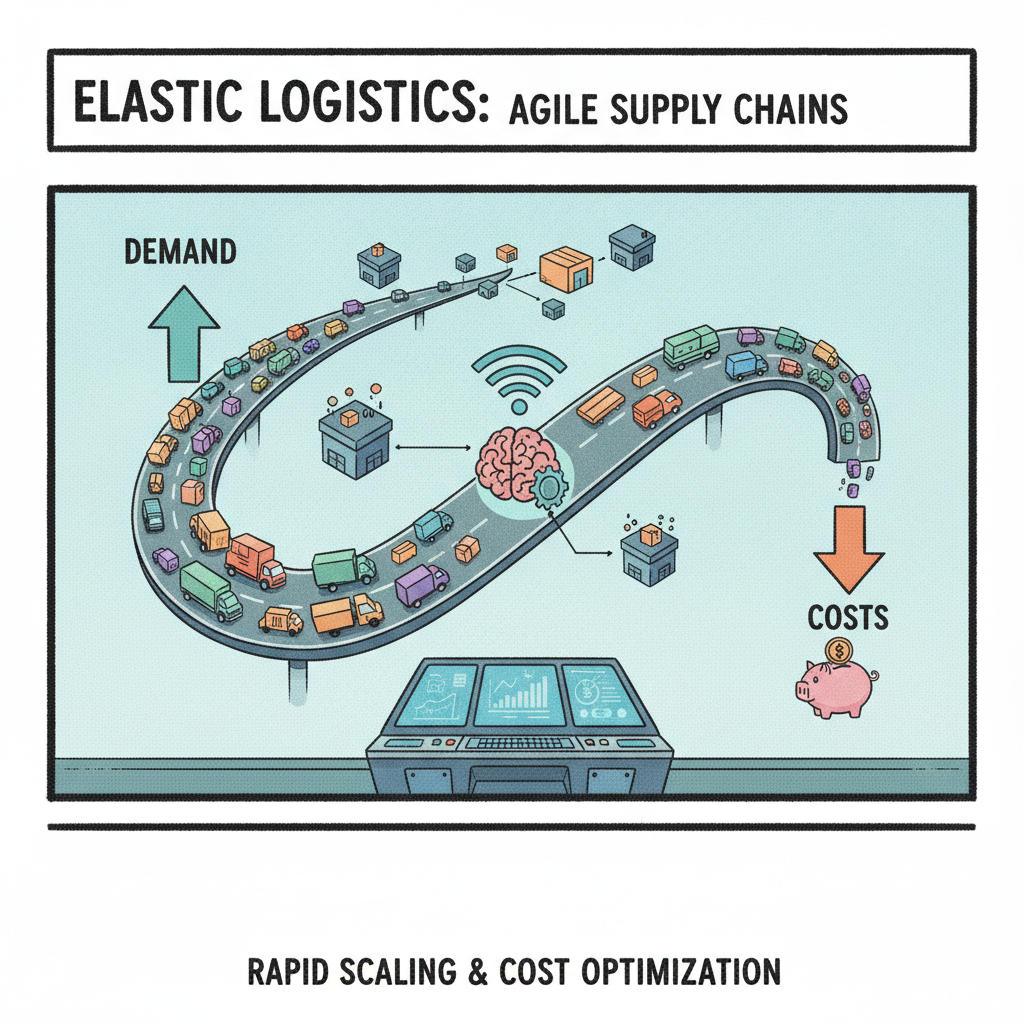
In today’s unpredictable economic environment, rigid supply chain infrastructures are no longer viable. To combat structural demand volatility, industry experts are turning to Elastic logistics models to rapidly scale operations up or down without depending on fixed capacity. With U.S. delivery costs growing by 12% between 2024 and 2025, elastic frameworks have transitioned from experimental concepts to operational necessities for logistics providers.
Core Pillars of Elastic Logistics Models
Elastic logistics transforms fixed overhead into variable, pay-as-you-go costs through a combination of digital orchestration and physical adaptability. Companies adopting Elastic logistics models report up to a 30% reduction in order fulfillment time and a 25% decrease in overall operational costs. The strategy relies heavily on several technological and structural advancements.
- Digital Orchestration: Utilizing artificial intelligence and cloud systems for real-time visibility and predictive planning.
- Flexible Infrastructure: Leveraging on-demand warehousing and shared carrier networks instead of permanent assets.
- Dynamic Operations: Implementing real-time routing and multi-party collaboration to absorb sudden demand spikes.
Future Outlook for Elastic Logistics Models
By 2026, technologies supporting elasticity, such as AI-driven predictive maintenance, are expected to reduce network breakdowns by up to 70%. As the global logistics landscape evolves, embracing these scalable models is crucial for maintaining resilient and cost-effective operations.
References
MBE Franchise: What is Elastic Logistics and how it’s redefining business scaling in 2026. Outlook for transport and logistics in Europe for 2026. MBE Franchise: Elastic logistics supply chain data.