
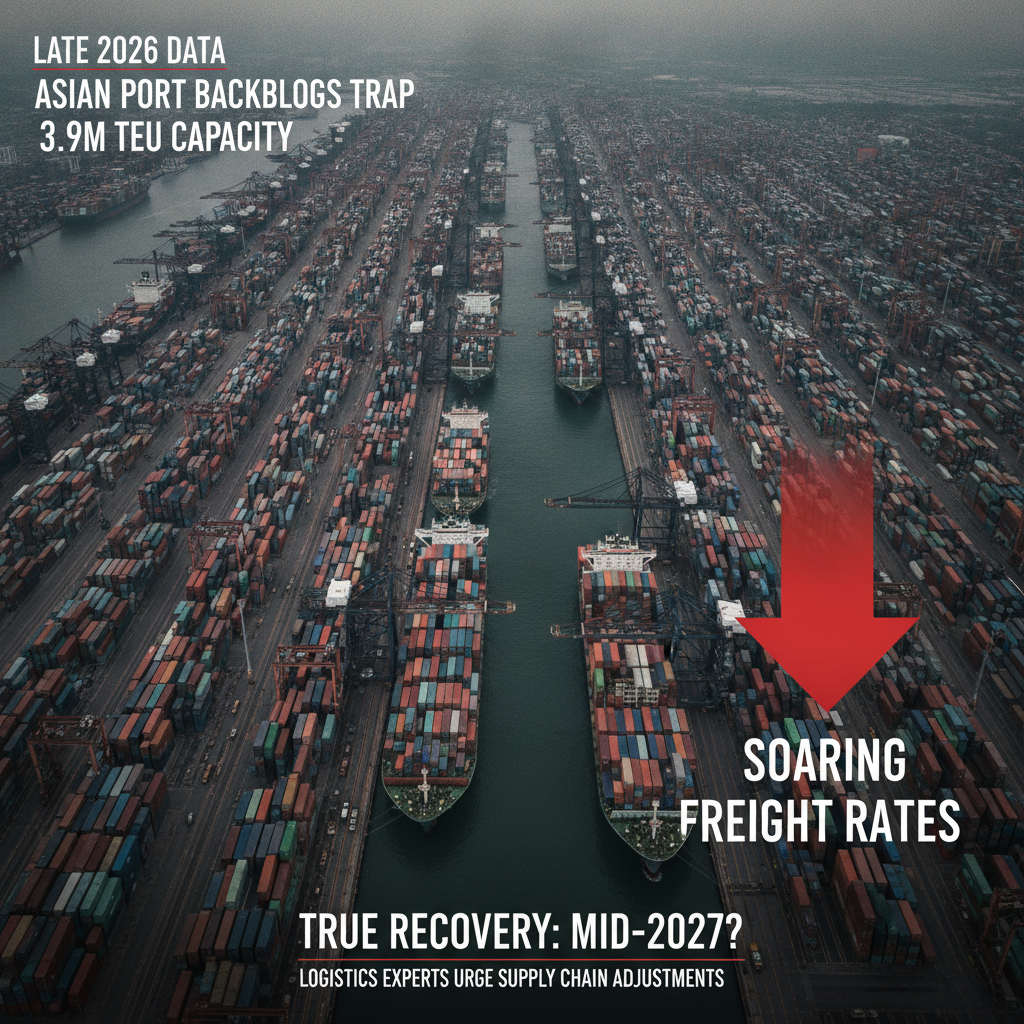
For global supply chain experts, determining the timeline for true East Asia Port Congestion Recovery has become a critical operational priority. By late 2026, extreme bottlenecks across major maritime gateways have severely strained global shipping networks, pushing schedule reliability to a four-year low of 49.9%. Repeated weather disruptions and surging export demands have trapped approximately 3.9 million TEU of capacity, absorbing around 8.5% of the global containership fleet.
Assessing the East Asia Port Congestion Recovery Timeline
The cascading effects of these delays are visible worldwide. While hubs like Shanghai and Ningbo battle typhoon-induced vessel backlogs, transshipment centers like Singapore have seen daily vessel queues nearly double as they absorb the overflow. Consequently, average vessel delays have spiked to 6.8 days, effectively negating the capacity relief expected from the recent influx of new container ships into the market. Analysts project that clearing these accumulated backlogs could take up to ten months, pushing full operational normalization well into 2027.
East Asia Port Congestion Recovery: Freight Rate Impacts
Beyond schedule disruptions, the delayed East Asia Port Congestion Recovery is drastically driving up freight costs. Spot rates from Asia to the U.S. East Coast recently exceeded $10,000 per FEU, while Asia-to-Middle East lane pricing surged 250% year-to-date. For forwarders and shippers, proactive supply chain planning is non-negotiable. Logistics experts recommend extending booking lead times, diversifying routing strategies, and maintaining flexibility in carrier selection to mitigate these prolonged systemic stresses.
References
- Metro Global (Sept 2026)
- The Loadstar (Nov 2026)
- Xeneta Data (Oct 2026)
- Infor Nexus Data (Oct 2026)