

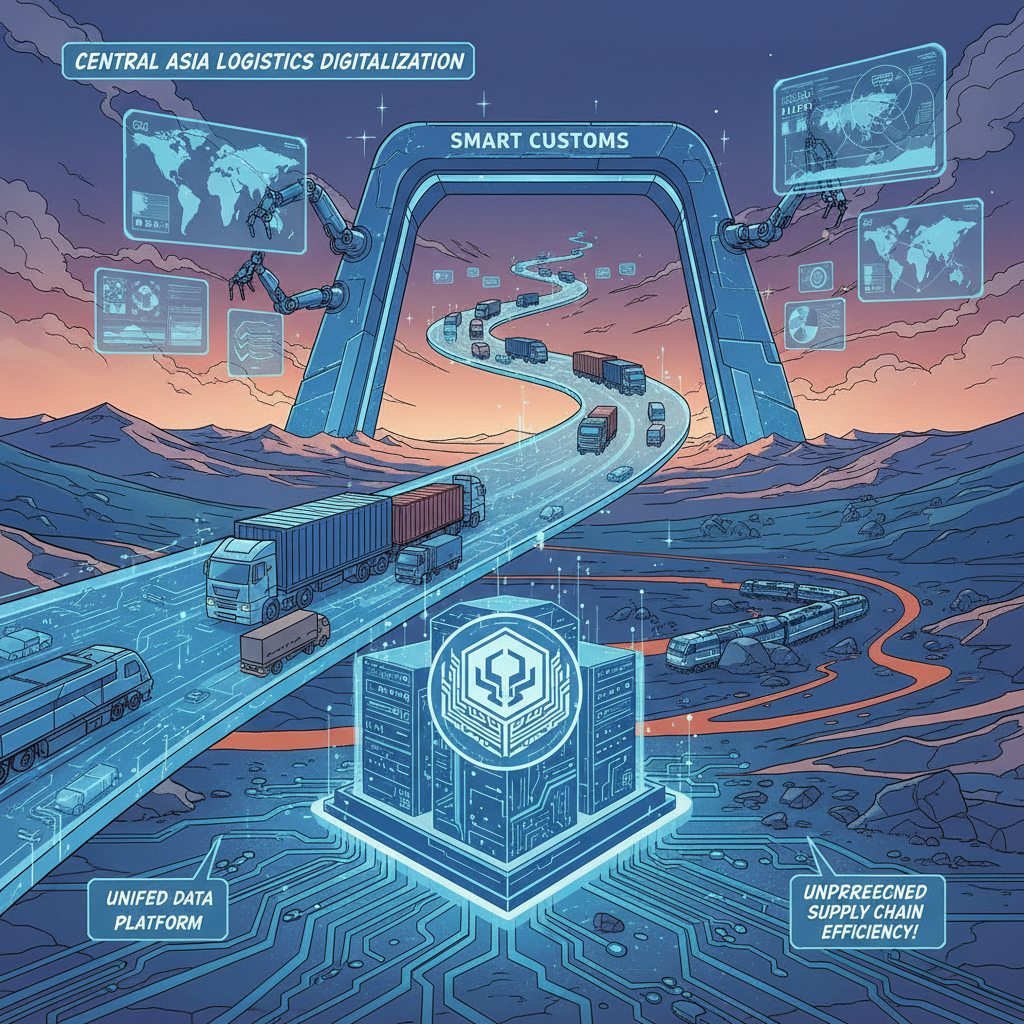
In May 2026, the strategic landscape of Eurasian trade shifted decisively from physical infrastructure to data-driven efficiency. Central Asia logistics digitalization has emerged as the critical differentiator for international transport corridors. According to the Eurasian Development Bank, cargo volumes across the region could expand by 50% by 2030, with container transit surging nearly 70%. To manage this exponential growth, regional powers are aggressively implementing smart supply chain networks.
The Trans-Caspian International Transport Route (TITR) saw a 34.4% year-over-year increase in container train traffic through Kazakhstan in the first quarter of 2026. To sustain this momentum, member states ratified a unified work plan prioritizing Central Asia logistics digitalization. Key initiatives include electronic document management with digital signatures and direct customs data exchange across borders. Solutions like Kazakhstan’s Tez Customs platform are actively reducing clearance times and minimizing non-tariff barriers.
Transforming these trade corridors requires immense capital. The total investment required for the region’s broader transport framework is estimated at $250 billion. Experts note that true competitiveness now hinges on several key technological pillars:
- Real-time multimodal cargo tracking capabilities
- Direct integration of automated port community systems
- Harmonized electronic trade documentation across jurisdictions
As global supply chains demand greater resilience, Central Asia logistics digitalization remains the fundamental architecture of modern Eurasian commerce.
References
Middle Corridor Countries Approve 2026 Plan, Focus on Digitalization and Container Growth
https://en.trend.az/business/3902919.html