
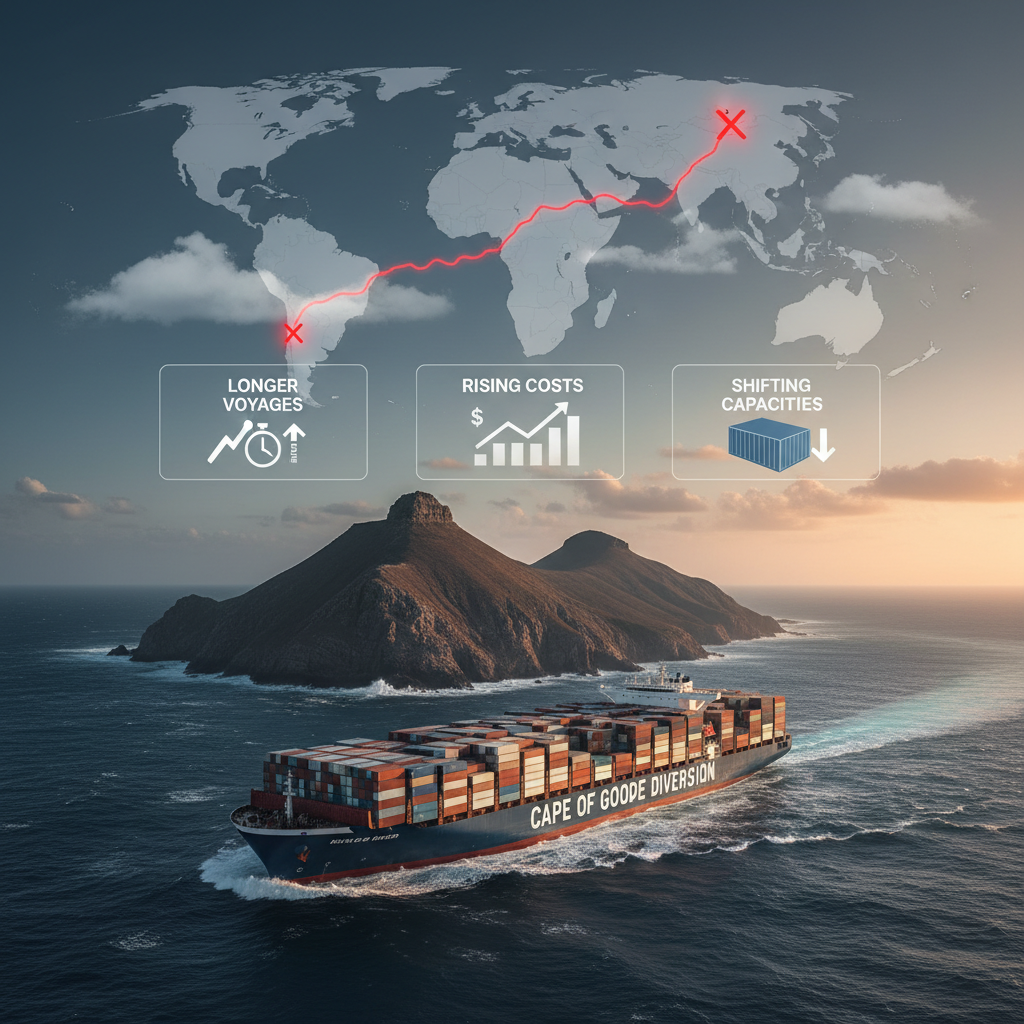
The geopolitical crises in the Red Sea have fundamentally reshaped global maritime logistics, transforming temporary Cape of Good Hope Route Diversions into a structural reality. As of mid-2026, the international maritime industry continues to grapple with the profound operational and economic impacts of completely avoiding the Suez Canal and Bab al-Mandab Strait.
Rerouting commercial vessels around the southern tip of Africa adds approximately 6,500 nautical miles to a standard journey. This massive geographic detour extends Asia-to-Europe transit times by 10 to 14 days and severely disrupts just-in-time manufacturing schedules.
- A standard Europe-to-Gulf container rotation now requires roughly 41 days via the Cape, compared to just 25 days via traditional routes.
- Suez Canal transits plummeted by up to 90% during peak disruptions, causing a corresponding surge in Cape traffic.
- These longer voyages have severely strained global fleet capacity and significantly elevated maritime bunker fuel consumption.
Logistics professionals are treating Cape of Good Hope Route Diversions not as an anomaly, but as a long-term strategic baseline. The geographic shift has completely altered marine insurance exposure profiles, with extended time-on-risk metrics challenging traditional underwriting models. To build resilience, port authorities and supply chain managers must prioritize fleet capacity planning and robust forecasting to navigate this enduring geopolitical volatility.
References
https://dergipark.org.tr/en/pub/jems/issue/82260/1411516
https://www.spglobal.com/commodityinsights/en/market-insights/latest-news/shipping/092524-cape-of-good-hope-reroutes-likely-to-persist-well-into-2025-as-industry-adapts-one-ceo
https://freightamigo.com/red-sea-crisis-impacts-freight-shipping/
https://windward.ai/blog/monitoring-a-fleet-you-cant-find-the-marine-insurance-challenge-in-a-dark-activity-era/