
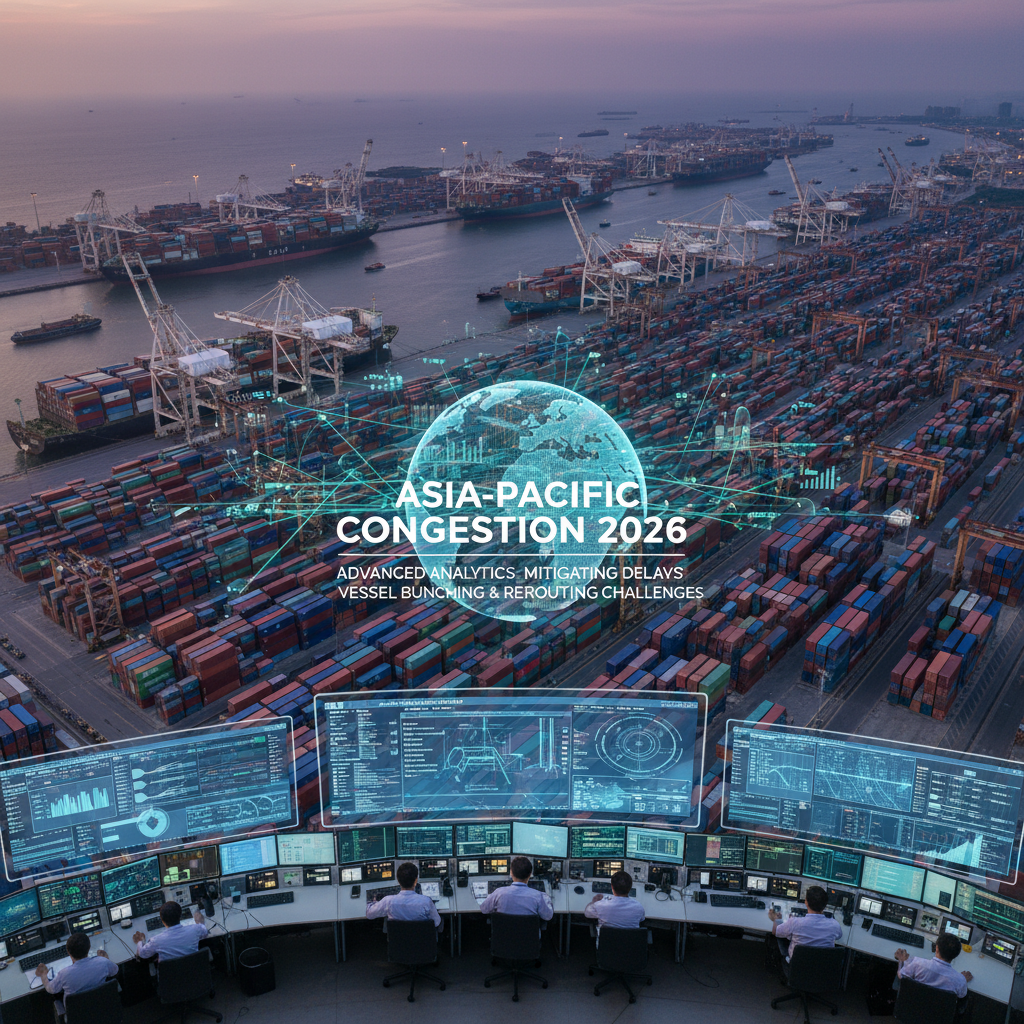
As global trade networks face unprecedented volatility, Asia-Pacific Terminal Congestion remains a critical bottleneck for logistics professionals in 2026. Ongoing geopolitical shifts and the lingering effects of the Red Sea crisis have forced carriers to continuously alter their routes. This prolonged rerouting creates severe vessel bunching at primary regional hubs, significantly extending transit times and driving up operational costs across major ocean freight lanes.
Current data from 2025 and early 2026 highlights intense pressure on top transshipment ports. Facilities in Singapore, Shanghai, and Port Klang have frequently reported delays exceeding three days, with peak waiting times occasionally reaching up to 110 hours. These deep-water backlogs are exacerbated by secondary operational factors:
- Weather Disruptions: Early 2026 cold surges severely impacted operations in Japan and South Korea, freezing container handling equipment and stalling port throughput.
- Equipment Imbalances: A critical shortage of empty containers continues to disrupt outbound logistics scheduling.
- Volume Spikes: Megaships unloading mass volumes at once overwhelm yard capacities, which consistently hover near 80 percent utilization.
o navigate the ongoing Asia-Pacific Terminal Congestion, shipping experts are increasingly turning to advanced forecasting tools. The port congestion analytics platform market is projected to grow at a staggering 20.2 percent CAGR from 2025 through 2033. By integrating GPS tracking with real-time weather data, supply chain managers can dynamically reroute cargo, secure early contracts to avoid peak spot rates, and maintain vital lead-time flexibility.
References
Port Congestion Analytics Platform Market Research Report 2033
https://freightamigo.com
https://worldeconomy.live
Freight Rate Trends 2025
https://mykn.kuehne-nagel.com