

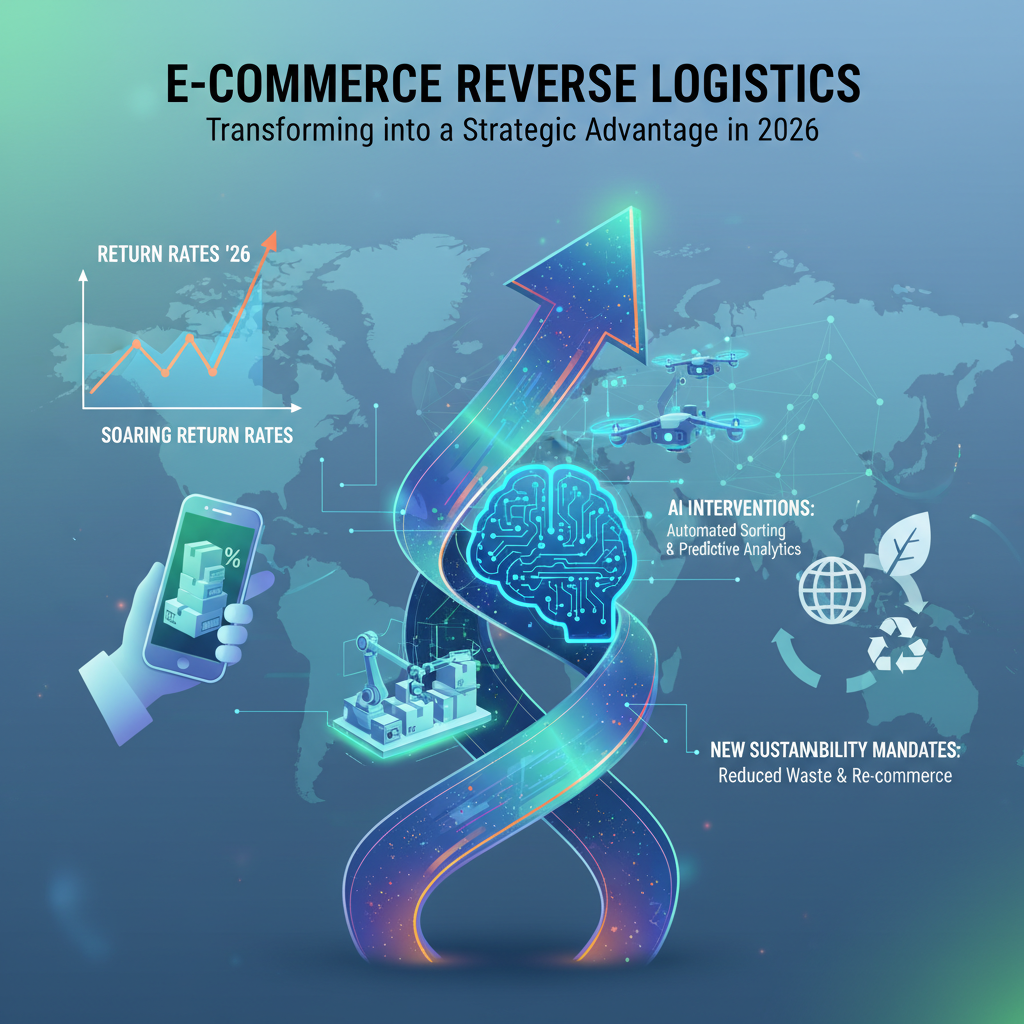
In the rapidly evolving digital retail landscape, E-Commerce Reverse Logistics has shifted from an unavoidable operational cost to a primary competitive differentiator. As of 2026, the global reverse logistics market is projected to reach USD 936 billion, growing at a robust CAGR of 7.3%. Industry experts recognize that efficiently managing product returns is essential for preserving margins and enhancing brand loyalty.
Consumer behavior continues to pressure supply chains, with average return rates hovering around 15% to 35% depending on the merchandise category, and apparel returns often exceeding 30%. A DHL E-Commerce Trends Report revealed that 79% of shoppers abandon carts if return policies are unsatisfactory. Consequently, mastering E-Commerce Reverse Logistics is critical. Each return costs merchants between €15 and €20 in logistics, labor, and depreciation, pushing logistics providers to rethink their operational frameworks.
To mitigate these staggering losses, leading operators are deploying advanced technologies and sustainable practices. The integration of Artificial Intelligence (AI) and the Internet of Things (IoT) has dramatically improved visibility across the returns lifecycle.
- Predictive AI analytics for anticipating return volumes and routing items to recommerce channels.
- Consolidated return hubs to reduce per-unit shipping costs and carbon footprints.
- Automated processing facilities that accelerate speed-to-restock cycles to 24-48 hours.
References
DHL: Reverse logistics goes from cost center to competitive edge
Shippingbo: E-commerce returns 2025 – 5 logistics trends
Global Market Insights: Reverse Logistics Market Size 2026-2035