

The global logistics industry is rapidly transitioning from passive predictive models to autonomous execution frameworks. The Agentic AI Supply Chain represents a fundamental operational shift where intelligent systems do not merely flag disruptions but autonomously execute complex corrective actions. For shipping and logistics professionals, this technology is moving swiftly from theoretical pilot programs to mission-critical enterprise deployments. Market data suggests a massive reallocation of capital into autonomous orchestration software over the next half-decade.
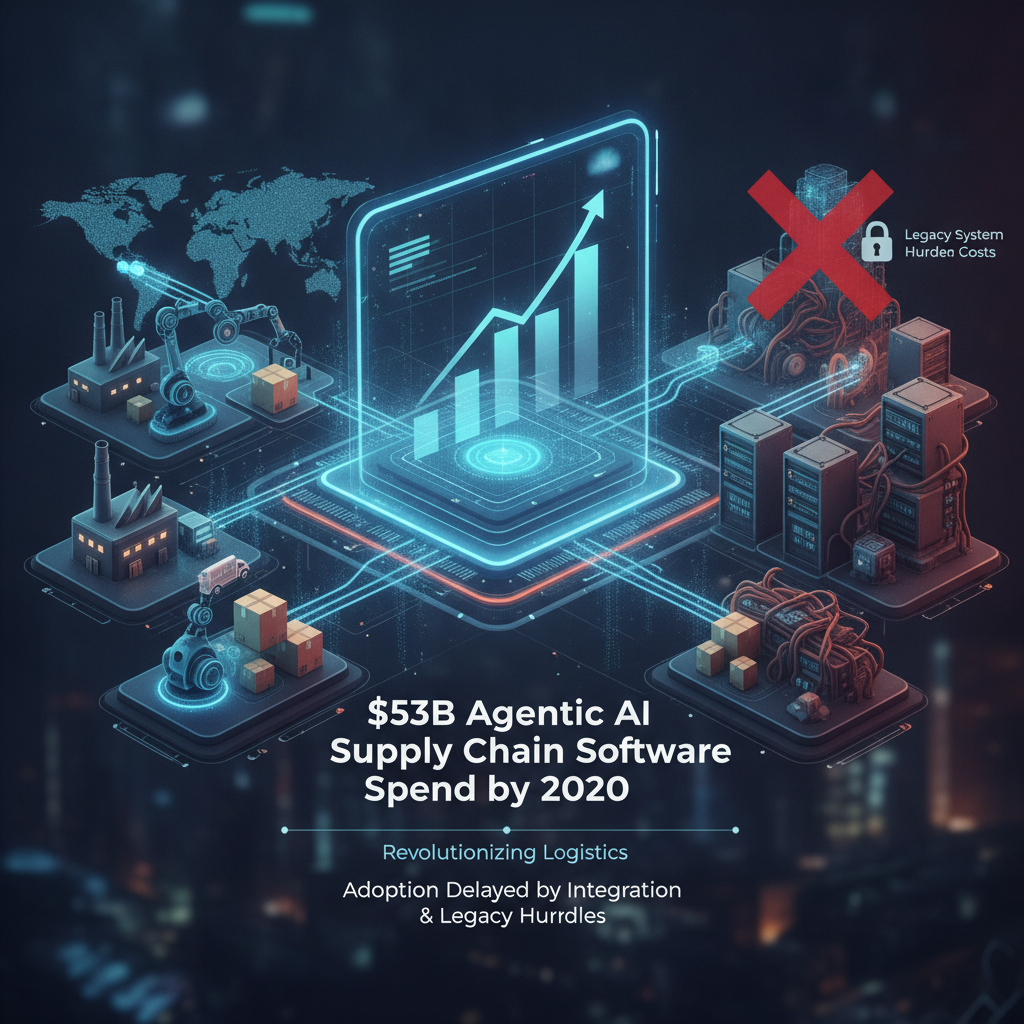
Recent industry forecasts indicate that enterprise spend on supply chain management software featuring agentic artificial intelligence will surge from under $2 billion in 2025 to a staggering $53 billion by 2030. This rapid scale of adoption is becoming a critical competitive differentiator for global freight networks. Furthermore, experts project that 40 percent of enterprise applications will integrate task-specific AI agents by the end of 2026.
Key operational benefits currently driving this market expansion include:
- Autonomous rerouting, inventory adjustments, and alternative supplier selection during unexpected transit delays.
- Drastic productivity increases, with major early adopters reporting up to 30 percent gains in freight shipment task processing.
- Enhanced demand forecasting, which currently accounts for over 32 percent of the total autonomous supply chain market.
Despite these profound operational advantages, integrating an Agentic AI Supply Chain presents substantial architectural and financial challenges. A 2026 industry survey found that 42 percent of logistics organizations are actively delaying agentic adoption due to data security concerns, unclear return on investment, and high integration costs. Legacy enterprise resource platforms often lack the modern connectivity required for seamless orchestration.
Analysts warn that incompatibility with existing transport management systems and escalating technical debt could cause early implementation projects to stall by 2027. To capture sustainable value, logistics executives must prioritize deep data modernization, stringent governance, and scalable architectures before deploying autonomous agents across their networks.
References
Gartner Forecasts Supply Chain Management Software with Agentic AI Will Grow to $53 Billion in Spend by 2030
Agentic AI in Supply Chain Management: Use Cases and Real-World Examples 2026 – EICTA Consortium
The Agentic Supply Chain – Deloitte Canada
Agentic AI in Supply Chain & Logistics Market Size – Evolvance Market Research
Agentic AI for Autonomous Supply Chain, Shipping and Logistics
Survey Finds 42% of Logistics Leaders Aren’t Using Agentic AI – Supply Chain 24/7