

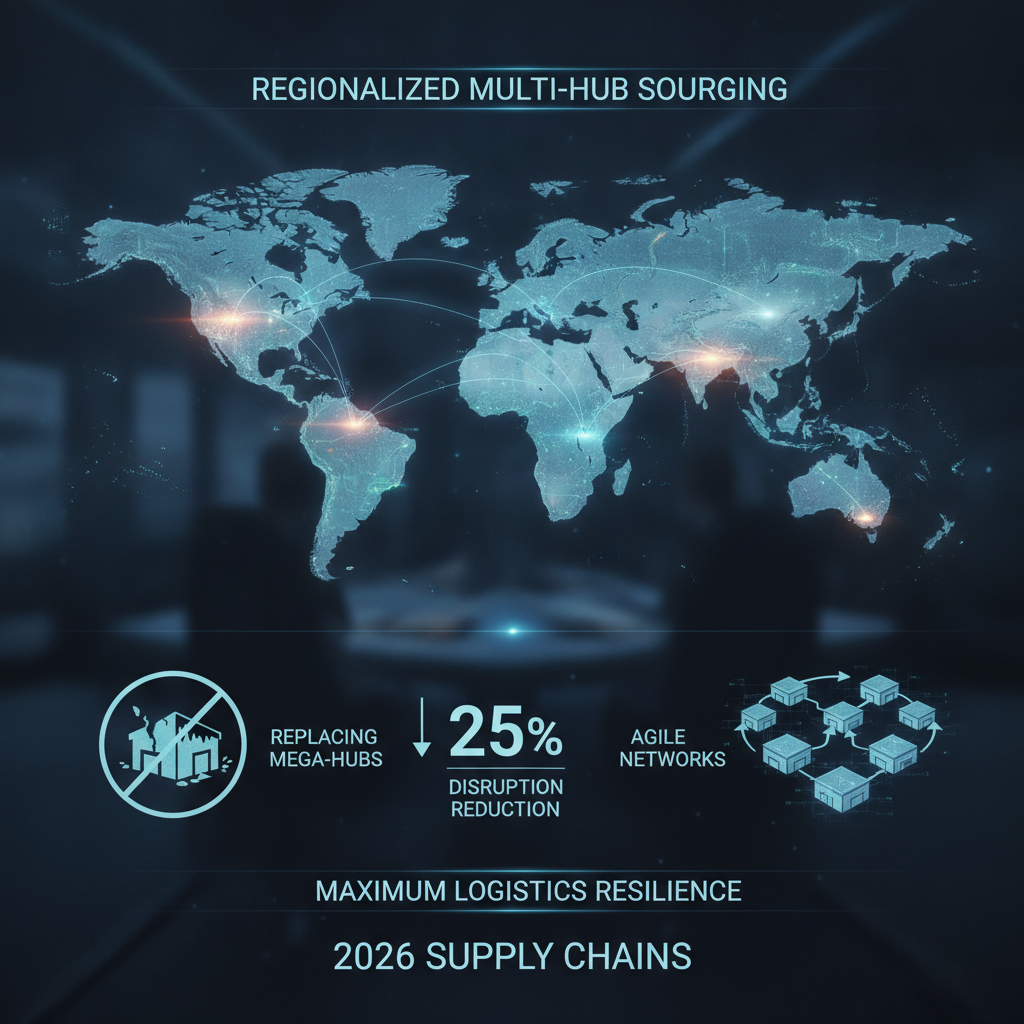
The global logistics landscape is undergoing a systemic transformation in 2026. Driven by expanding tariffs, geopolitical friction, and trade fragmentation, linear supply chains are rapidly giving way to Regionalized Multi-hub Sourcing. Rather than relying on a single mega-hub, organizations are proactively distributing production across several self-sufficient regional centers. This structural shift strategically balances global scale with localized agility, ensuring that a disruption in one territory does not cascade into a worldwide product shortage.
The numbers firmly support this network redesign. According to recent industry analyses by major global logistics players in 2025, companies leveraging multi-hub sourcing strategies experience up to 25% fewer supply chain disruptions compared to those rigidly dependent on single-region production. Furthermore, TradeBeyond’s Q1 2026 Retail Sourcing Report highlights that this hybrid model is gaining massive traction across emerging industrial corridors, particularly in Mexico, Southeast Asia, and South Asia. These regions are rapidly evolving into collaborative multi-hub networks, acting as a crucial buffer against tariff shocks and shipping bottlenecks.
- Proactive Risk Mitigation: Built-in geographic redundancy protects against sudden regulatory, geopolitical, or climate disruptions.
- Agile Responsiveness: Regionalizing production closer to key consumer markets dramatically reduces lead times and inventory bloat.
- Cost Optimization: Spreading manufacturing assets enables companies to better absorb regional currency fluctuations and specialized freight constraints.
Adopting Regionalized Multi-hub Sourcing requires more than just new supplier contracts; it demands robust digital visibility. In 2026, logistics winners will merge physical regional flexibility with deep data intelligence.
References: Maersk (2025) Sourcing Strategy & Supply Chain Diversification. Inbound Logistics (2026) Global Supply Chain Trends. Council Fire (2025) Adapting Supply Chains.