

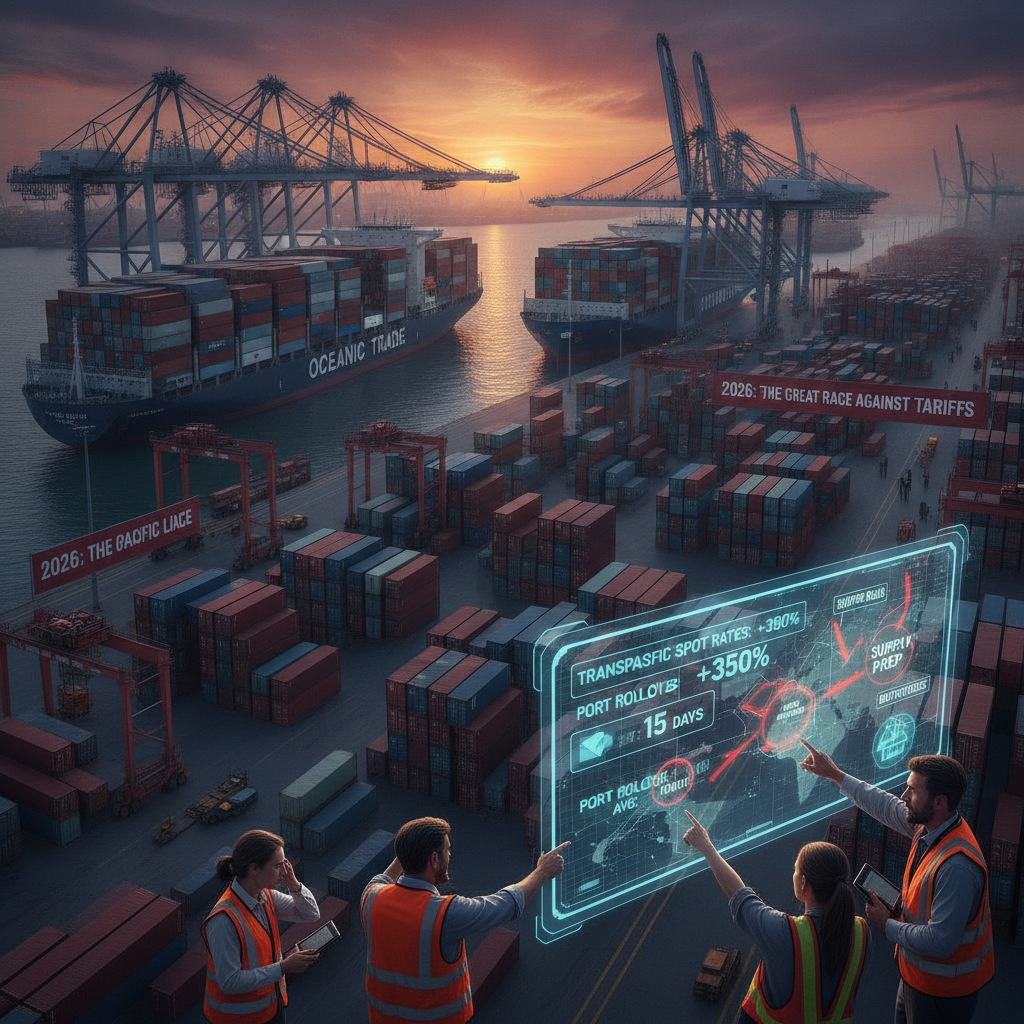
As global supply chains navigate Middle East geopolitical tensions and evolving U.S. tariff policies, Transpacific Trade Front-Loading has become a dominant tactic for nervous shippers. Fearing future supply shocks, importers are aggressively pulling freight forward. According to late May 2026 industry data, ocean carriers announced eight blank sailings on the Transpacific route in a single week to maintain firm rates rather than compete for volume. This sudden capacity tightening has led to surging cargo rollover rates, currently estimated between 30% and 60% depending on the specific carrier and service lane.
The aggressive push for early imports has dramatically impacted both pricing and infrastructure. Driven by this front-loading phenomenon and strict capacity management, spot rates from the Far East to the U.S. West Coast have skyrocketed, climbing by an average of 50% since the onset of the spring conflict. Downstream logistics networks are feeling the immediate strain of this artificial peak season. Warehouse space near critical East and Gulf Coast gateways—including Savannah, Houston, and Norfolk—is becoming fiercely competitive. Shippers utilizing Transpacific Trade Front-Loading strategies who failed to secure advance storage are now absorbing severe demurrage costs and inflated truckload rates.
While pulling inventory forward successfully mitigates stockout risks during disruptions, experts warn it creates hidden vulnerabilities. The massive accumulation of ‘silent stockpiles’ drains standard second-half demand, leading to unpredictable boom-and-bust shipping cycles. Logistics professionals must carefully weigh the security of early imports against the financial burden of excess inventory holding costs.
References
- Averitt: Transpacific Freight Rates Rising, June 2026 Market Update.
- Transpacific Rates Rise Against Market Slide as War Disruptions Reshape Demand, May 2026.
- Logicall: Silent stockpiles and front-loading blur freight outlook, 2026.