
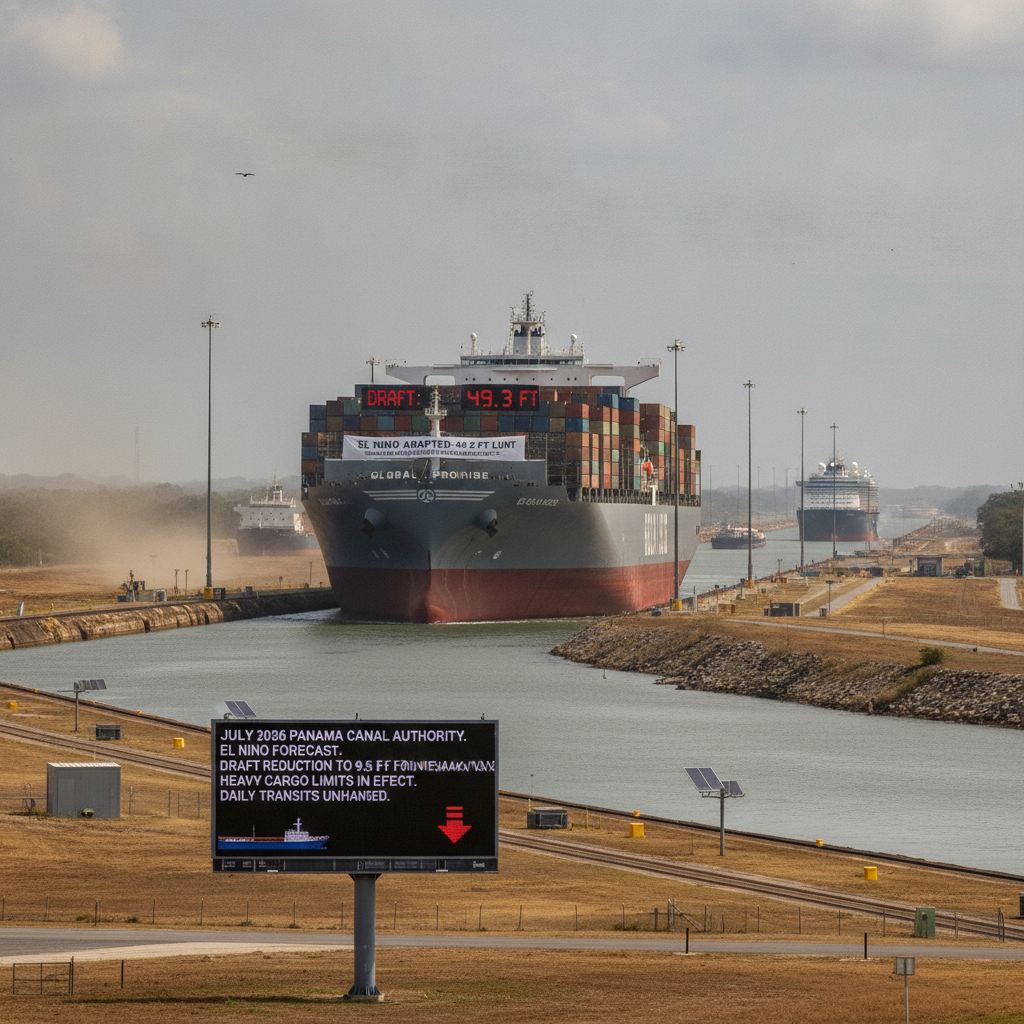
In response to looming climate variables, the Panama Canal Authority (ACP) has preemptively instituted new Panama Canal draft restrictions effective July 2026. While transits have recovered to roughly 38 vessels per day following the historic 2023-2025 drought, this latest operational shift highlights an ongoing vulnerability in transpacific shipping routes.
Driven by forecasts of a returning El Niño climate pattern, the ACP has lowered the maximum authorized draft for Neopanamax locks from 50 feet (15.24 meters) to 49.5 feet (15.09 meters) in Tropical Fresh Water. This preventive measure aims to safeguard Gatun Lake’s water reserves. Key operational realities include:
- Draft Reductions: A half-foot decrease forces mega-ships to limit cargo weight to comply with new buoyancy rules.
- Heavy Cargo Constraints: Freight forwarders are already experiencing reintroduced weight restrictions and occasional port gate rejections for heavy lift vessels bound for the US East Coast and Gulf.
- Sustained Transit Capacity: Unlike previous crises, the daily transit limit currently remains stable at 38 vessels, preventing massive bottlenecks.
For logistics and shipping experts, modern Panama Canal draft restrictions have transitioned from short-term anomalies to permanent risk variables. Shippers moving heavy cargo or transpacific containers must factor these evolving limitations into vessel utilization models and route planning. As climate volatility continues, agile routing will remain critical for supply chain resilience.
References
JCtrans, Freight Policy Analysis 2026. Flexport, Supply Chain & Logistics Updates. Panama Canal Authority Updates 2026. Maritime El Niño Forecasts. CNSS Draft Reduction Reports. Maritime shipping reports on El Niño.