
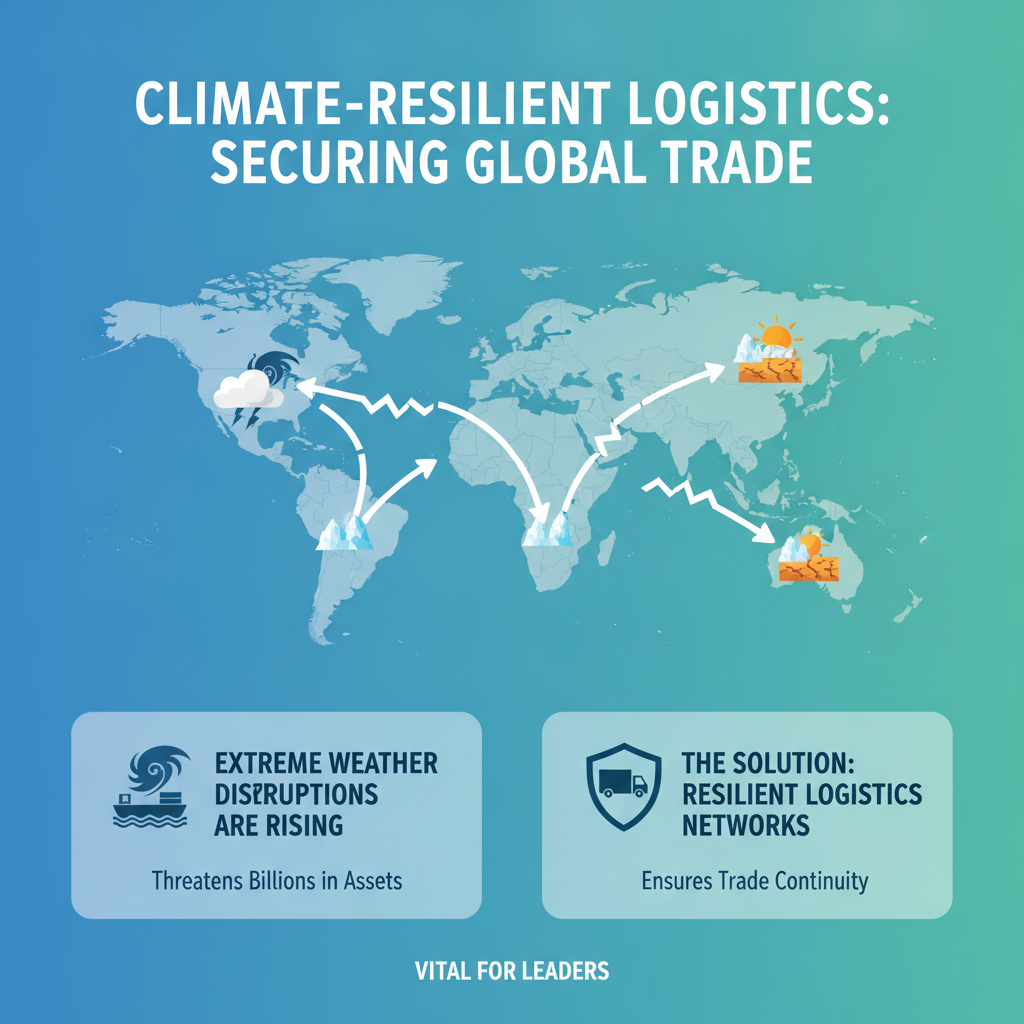
As extreme weather events become the new operational baseline, the vulnerability of global supply chains has reached unprecedented levels in 2026. Experts are increasingly emphasizing that Climate-Resilient Logistics Networks are no longer a strategic luxury, but an economic imperative. The sheer volume of disruption caused by droughts, floods, and volatile temperatures is forcing shipping and logistics leaders to rethink traditional routing, inventory management, and port operations.
Recent data underscores the massive financial toll of environmental unpredictability. According to industry reports from 2025, fixed asset losses stemming from climate hazards could soar to between $560 billion and $610 billion annually on a global scale by 2035. Furthermore, a July 2026 United Nations report warned that global supply chains face mounting pressure from climate volatility, which is actively threatening Sustainable Development Goal progress. To mitigate these staggering costs, building Climate-Resilient Logistics Networks has become a top priority for forward-thinking enterprises.
Transitioning from reactive operations to robust, climate-proof strategies requires a multi-layered approach. Experts recommend focusing on several core elements to ensure continuity:
- Implementing real-time data monitoring and AI-driven control towers to predict and navigate environmental shocks.
- Diversifying supply chain nodes and establishing alternative transport routes to bypass vulnerable canals and ports.
- Collaborating closely with local suppliers to strengthen grassroots resilience and ensure rapid recovery during crises.
By heavily investing in Climate-Resilient Logistics Networks, companies can protect their assets, ensure regulatory compliance, and maintain a competitive edge. Ultimately, proactively adapting infrastructure and leveraging digital analytics will define the most successful logistics operators in the coming decade.
References
- OBATA: Climate Resilience Planning: Adapting Supply Chains to Extreme Weather (2025)
- United Nations Sustainable Development Goals Report (July 2026)
- WTW: Global Transportation and Logistics Risk Report (2024/2025)