
The New Era of AI-Driven Customs Visibility
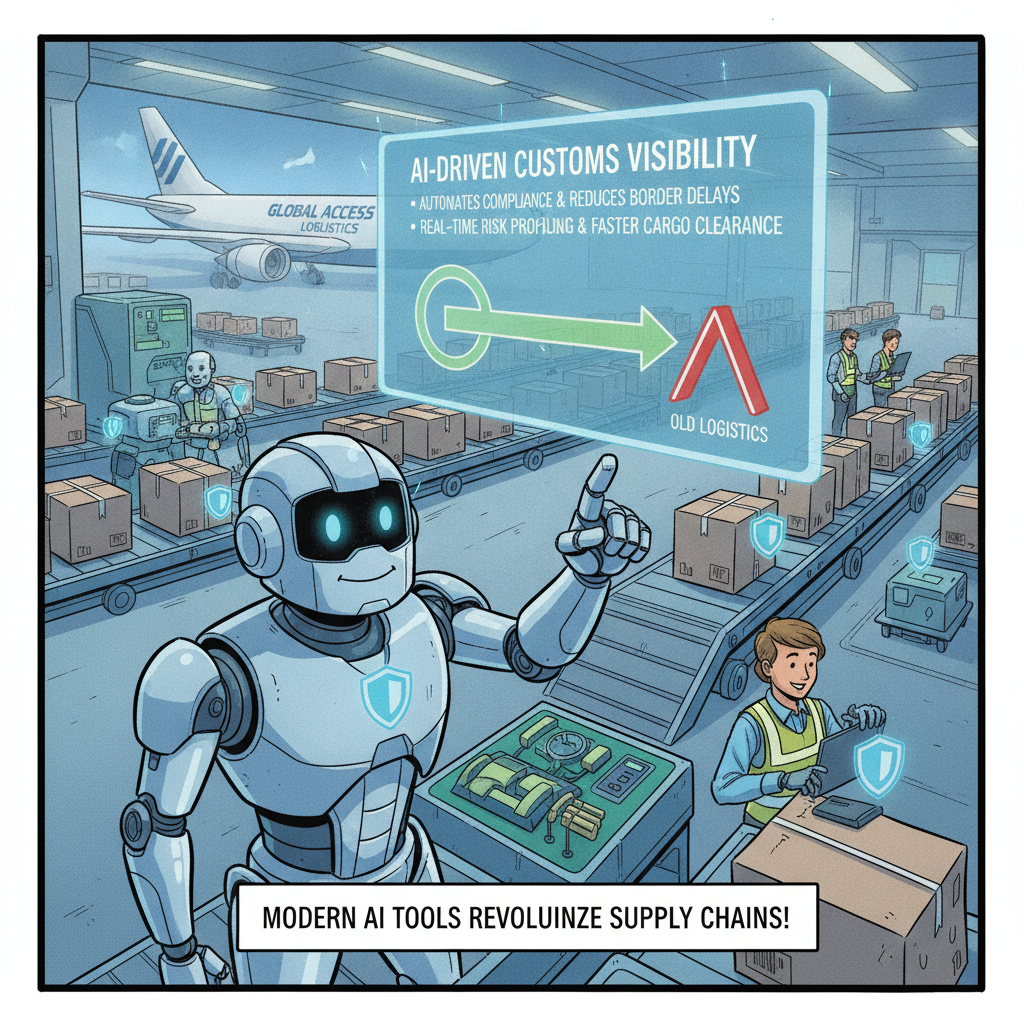
As international logistics face unprecedented complexities in 2026, experts are asking: can AI-Driven Customs Visibility eliminate border friction? Historically, customs clearance has been bottlenecked by varying regulations and manual document processing. Today, AI-powered systems can process vast amounts of data at unprecedented speeds, dramatically reducing clearance times and human error. The World Economic Forum highlights that adopting these digital procedures significantly slashes global shipment delays.
Core Benefits of AI-Driven Customs Visibility
In modern trade compliance, accuracy and speed are non-negotiable. Supply chain leaders are leveraging AI-Driven Customs Visibility to unlock several strategic advantages:
- Automated Document Processing: Machine learning categorizes declarations, extracting key data from commercial invoices and packing lists.
- Real-Time Risk Profiling: Agencies like U.S. Customs and Border Protection (CBP) use AI models to screen cargo and detect shipment anomalies instantaneously.
- Strategic Sourcing Optimization: Validated AI data prevents systemic classification errors, ensuring procurement teams can accurately calculate landed tariff costs.
How AI-Driven Customs Visibility Transforms Logistics
The integration of machine learning and natural language processing allows businesses to pivot from reactive tracking to proactive risk management. By automating repetitive tasks, freight forwarders and customs brokers can refocus on strategic human-in-the-loop decision-making. With AI platforms maturing in 2026, AI-Driven Customs Visibility is no longer a futuristic concept—it is the baseline for competitive international logistics.
References
eezyimport, The use of AI in logistics and customs clearance in the USA, 2025.
RTS Labs, Simplifying Customs Clearance: AI Transforming Global Trade, 2025.
ResearchGate, AI-Powered Customs Clearance: Optimizing Trade Compliance, 2024.
VAO, Pre-Entry and Post-Entry Customs Audits, 2026.