

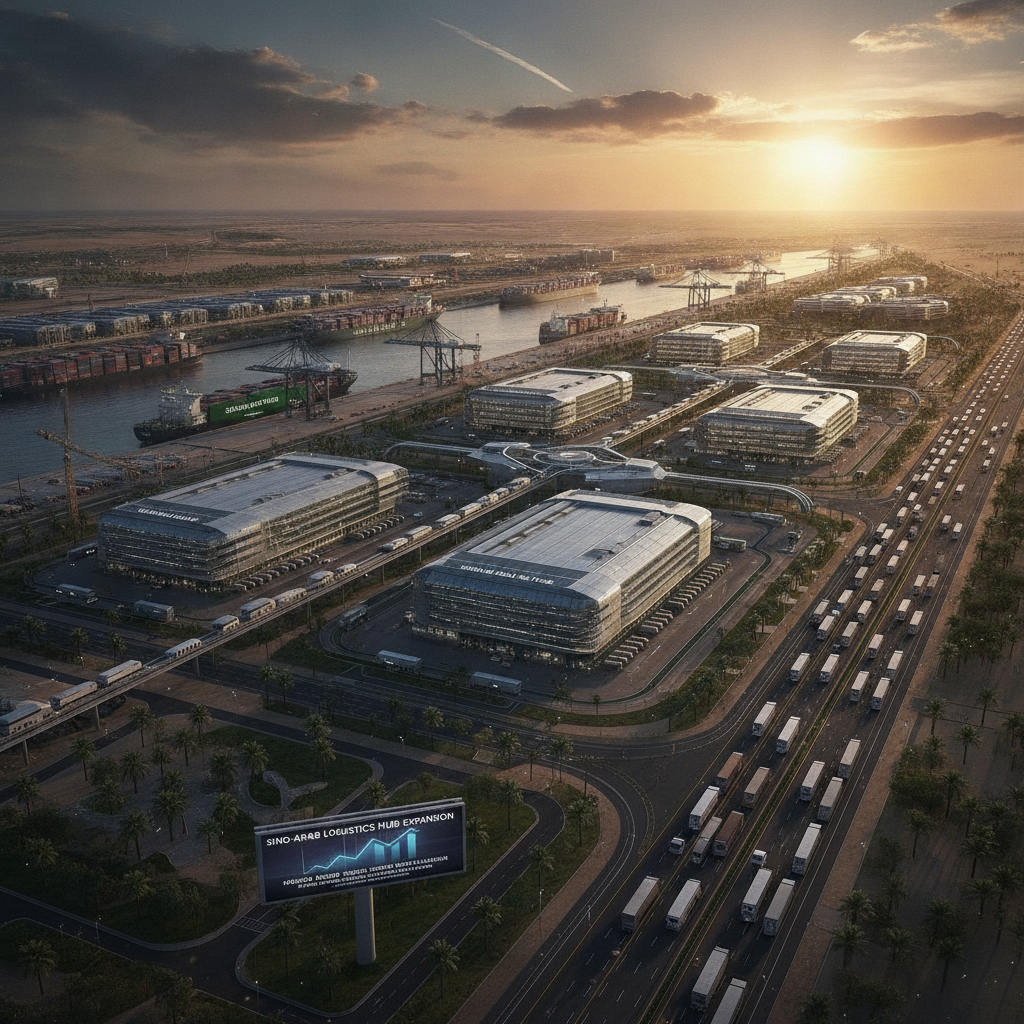
The acceleration of Sino-Arab Logistics Hub Expansions is fundamentally reshaping Eurasian and Middle Eastern supply chain dynamics in 2026. As bilateral trade between the United Arab Emirates and China surpassed $108 billion in 2025, major infrastructure investments are transforming regional ports into global multi-modal transit centers. For logistics professionals, these developments signify a shift from point-to-point shipping toward deeply integrated, technologically advanced transport corridors.
Catalysts Behind Sino-Arab Logistics Hub Expansions
Recent data indicates a massive influx of corporate investment driving the structural growth of Middle Eastern freight networks. By late September 2026, active Chinese firms registered with the Dubai Chamber of Commerce reached 6,650, while Chinese foreign direct investment in Dubai soared by 179% to 3.4 billion dirhams. This commercial surge has prompted a rapid scaling of localized fulfillment capabilities.
- Maritime Integration: Upgraded maritime corridors from Chinese ports to Jebel Ali now anchor the global supply chain, adapting to high-volume trade requirements.
- Land-Based TIR Routes: Specialized logistics firms are establishing continuous TIR truckload lines from Xinjiang to the Gulf, reducing transit times via robust cross-border networks.
- Digital Infrastructure: Sovereign cloud services and automated systems are becoming standard in Gulf port operations, boosting operational efficiency while requiring updated security protocols.
Future Outlook for Sino-Arab Logistics Hub Expansions
Moving forward, the strategic alignment of Asian trade initiatives with regional agendas like Saudi Arabia’s Vision 2030 guarantees sustained growth for Sino-Arab Logistics Hub Expansions. Saudi Arabia’s imports from China climbed to $58.9 billion recently, cementing the need for continuous infrastructure upgrades. Supply chain managers must proactively integrate these expanding corridors to optimize transit times and mitigate geopolitical bottlenecks.
References
Xinhua News – Chinese firms bring homegrown expertise to fuel Dubai’s growth. Arab News – Dubai-China non-oil trade tops $500bn. European Relations – China’s Expanding Footprint. Tranbay – China to Middle East Sea Freight. LHZ – Sino-Middle East Trucking. JCtrans – China to Saudi Arabia Sea Freight.