
Navigating the 2026 Asia Reefer Cargo Realignment
The global shipping industry is currently experiencing a massive Asia Reefer Cargo Realignment, driven by evolving trade routes, geopolitical disruptions, and surging demand for temperature-controlled logistics. As of late 2026, the Asia-Pacific region dominates the refrigerated transport sector, holding approximately 39% of the global market share [1]. However, structural changes caused by continuous Red Sea rerouting have added up to 20 days to transit times.
Key Drivers of the Asia Reefer Cargo Realignment
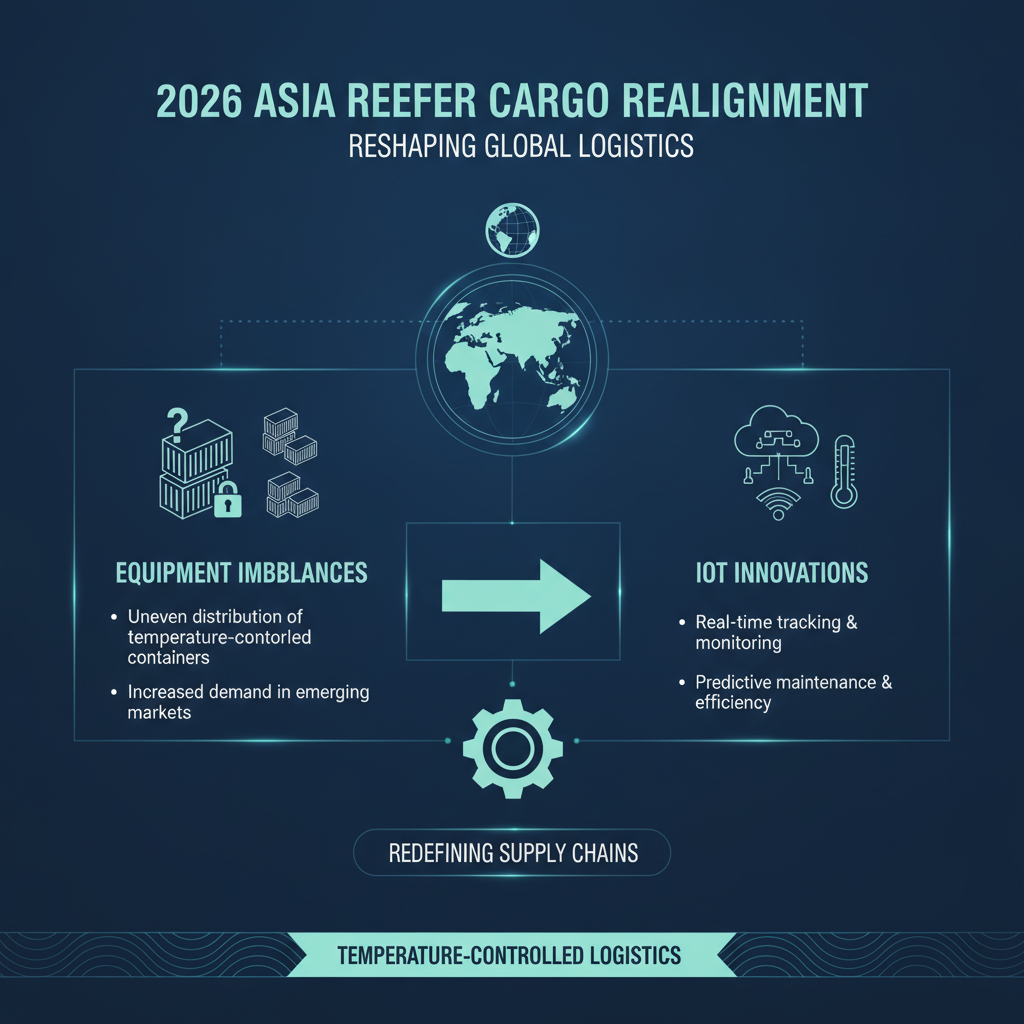
Despite supply chain turbulence, regional demand for cold chain infrastructure is skyrocketing. This demand explosion has created severe asset imbalances that experts must carefully navigate. The realignment is primarily driven by three core factors:
- Asset Imbalances: High import volumes into China leave carriers struggling to reposition empty containers outward due to constrained vessel space [2].
- Market Growth: The Asia-Pacific cold chain logistics market is projected to reach $224.25 billion by 2031, driven by perishable goods [3].
- Geopolitical Rerouting: Extended voyages around the Cape of Good Hope are straining regional container availability [2].
Technological and Strategic Adjustments
To mitigate the impacts of this realignment, logistics operators are heavily investing in smart reefer technology. The adoption of IoT-enabled Controlled Atmosphere (CA) containers allows shippers to monitor real-time temperature fluctuations, ensuring product integrity during extended voyages [3]. Furthermore, major ocean carriers are actively adjusting East-West network rotations to optimize terminal capabilities and deploy shuttle vessels against port congestion [2].
References
- [1] Navigating the 2026 Perishable Trade Realignment, Industry Insight, 2026.
- [2] Rerouting from Asia in 2026: Supply Chain Adjustments, SeaRates, 2026.
- [3] Asia-Pacific Cold Chain Logistics Market Forecast 2026-2031, Mordor Intelligence.