

The New Benchmark for Logistics Efficiency
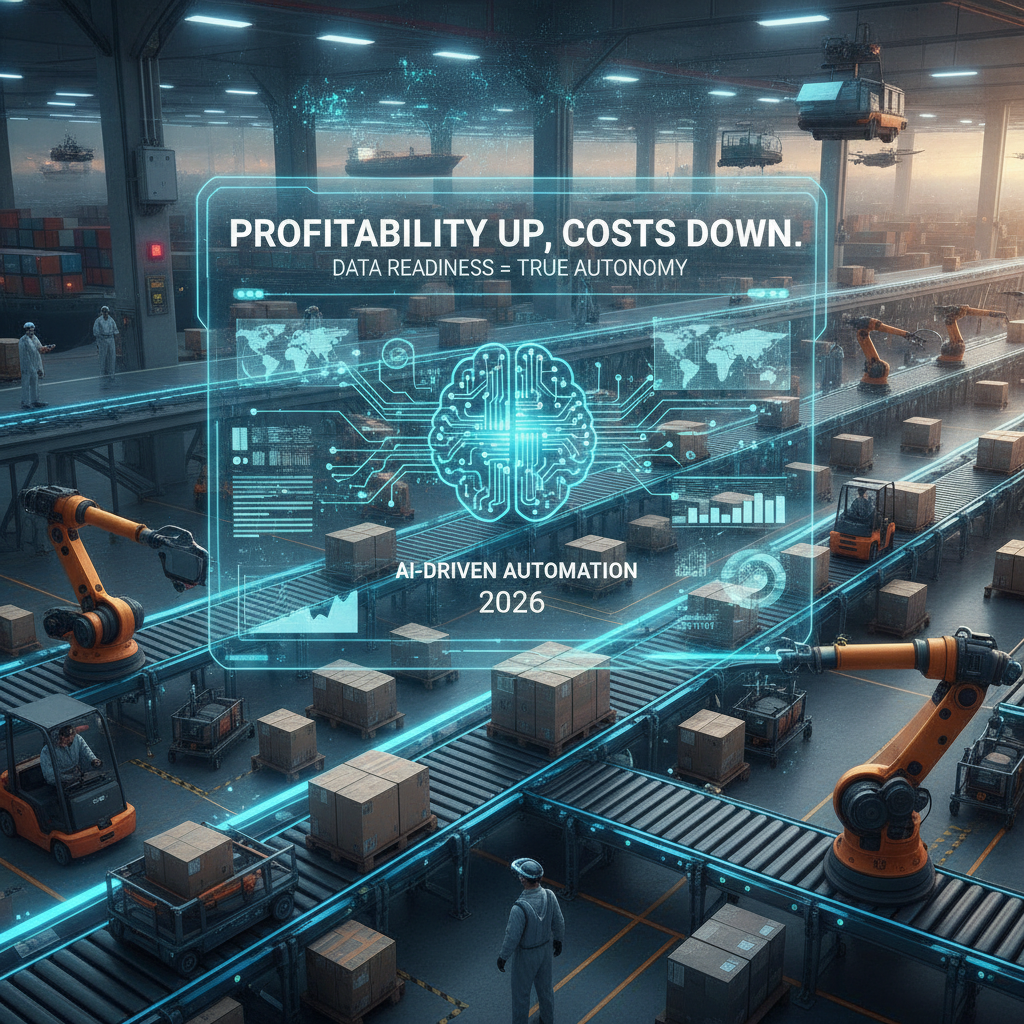
In 2026, AI-driven supply chain automation is no longer a theoretical concept but a foundational requirement for global shipping operations. By analyzing weather patterns, geopolitical shifts, and real-time inventory levels, modern machine learning models are fundamentally changing how logistics networks operate. Recent data highlights the financial impact of this transformation. According to McKinsey research, integrating artificial intelligence into supply chain operations improves forecast accuracy by 20 to 50 percent and reduces overall logistics costs by 5 to 20 percent. Furthermore, a 2025 Gartner report found that companies with AI-mature supply chains are roughly 23 percent more profitable than their less digitally advanced peers. The technology empowers logistics managers to shift from reactive firefighting to proactive strategy, optimizing routes and automating routine procurement tasks.
Bridging the Automation to Autonomy Gap
Despite heavy investments, a significant maturity gap remains in achieving true autonomous decision-making. A late 2026 Gartner analysis predicts that by 2030, only 5 percent of organizations with supply chain planning automation will make at least 10 percent of their planning decisions fully autonomously. The challenge lies in moving beyond simple rules-based automation to deploying agentic AI that can contextualize complex disruptions. To capitalize on AI-driven supply chain automation, industry experts recommend focusing on robust data governance rather than mere tool adoption.
Strategic Imperatives for 2026
- Data Cleanliness: Ensure underlying network design and master data disciplines are accurate before layering AI tools.
- Workforce Enablement: Train logistics personnel to collaborate with AI copilots for exception handling and scenario planning.
- Targeted Deployment: Pilot AI in high-friction areas like inventory reconciliation or dynamic route optimization before scaling network-wide.
As the AI in supply chain market scales toward a projected $50.41 billion by 2032, logistics leaders must prioritize decision quality over deployment speed. Organizations that master human-AI collaboration will secure the ultimate competitive advantage in an increasingly volatile global market.
References
1. Gartner Predicts Only 5% of Organizations Will Make At Least 10% of Supply Chain Planning Decisions Autonomously by 2030 (Gartner, September 2026). 2. The State of AI in Supply Chain 2026: Key Statistics (Agility / MarketsandMarkets). 3. Supply Chain Trends for 2025: The Impact of Artificial Intelligence (EASE).