

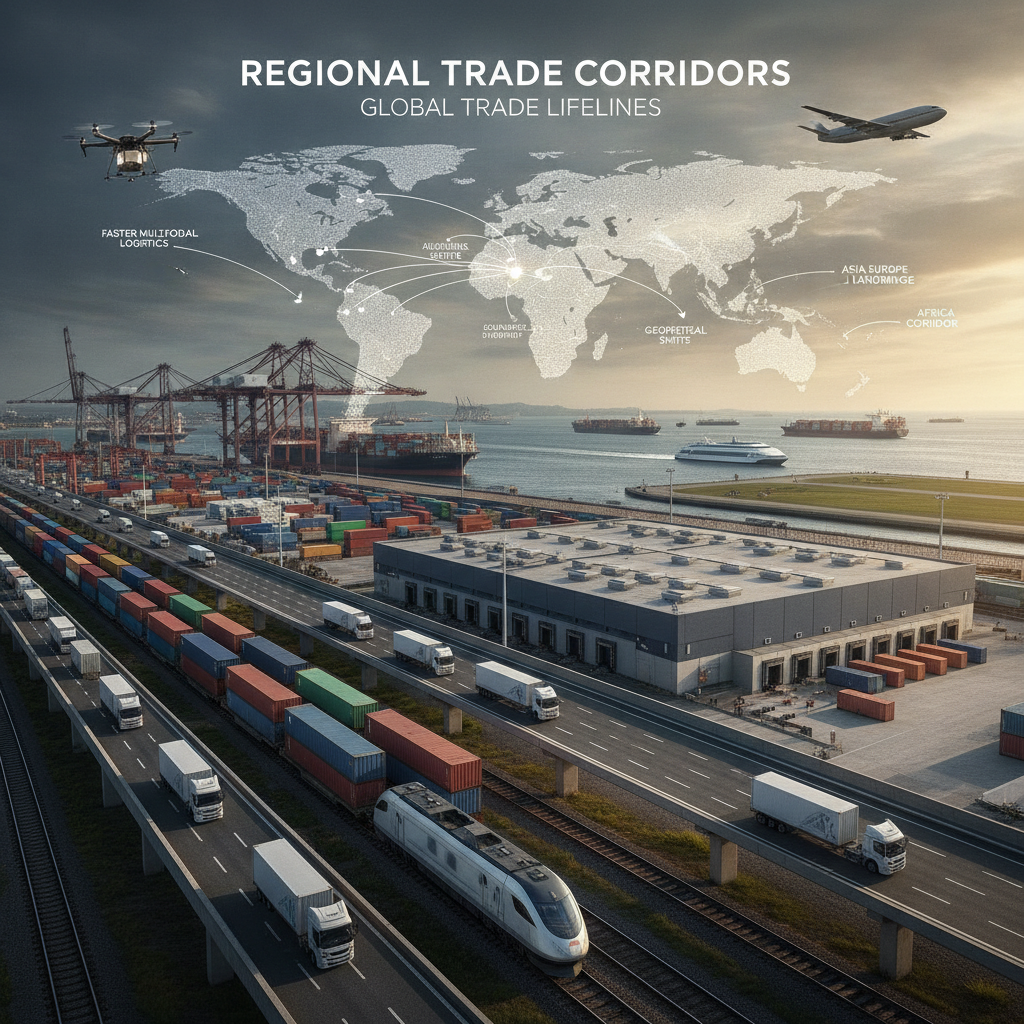
Redrawing the Global Logistics Map
In 2026, the logistics industry is witnessing a massive restructuring of supply chains, with Regional Trade Corridors emerging as the backbone of global resilience. As geopolitical fragmentation challenges traditional maritime choke points, nations are investing heavily in multimodal, inter-regional networks to secure faster and more reliable freight transit.
Key Infrastructure Advancements
Two monumental developments underscore this global pivot:
- The Trans-Caspian Route (Middle Corridor): Cargo transit along this multimodal artery has skyrocketed. Kazakhstan reported that container volumes reached approximately 77,000 TEU in 2025. Corridor optimizations have impressively slashed transit times from 28-32 days down to just 13-17 days. Furthermore, a September 2026 World Bank report projects that strategic investments could triple trade volumes and cut travel times by half by 2040.
- The Lobito Corridor: In Africa, this western-backed rail network is revolutionizing mineral logistics from the Copperbelt to the Atlantic. Transit times have plummeted from 45 days by truck to under 8 days by rail. The operating consortium expects to transport 400,000 tonnes of freight in 2026, representing a 51% surge compared to 2025 volumes.
The Future of Intermodal Freight
For shipping experts, these Regional Trade Corridors represent primary vectors for strategic growth rather than mere alternative routes. By integrating bonded facilities and carbon-efficient rail lines, these corridors lower operational costs and mitigate maritime risks. This structural shift ensures that hyper-efficient, localized trade networks will dominate the next decade of supply chain management.
References
- LogiSYM: The Future of Logistics and Supply Chains in Asia, 2026
- 360 Mozambique: Lobito Corridor Targets 400000 Tonnes of Freight in 2026
- The Lobito Corridor in 2026: Complete Guide to Africa’s Most Strategic Infrastructure Project
- Astana Times: Trans-Caspian Transport Route Cargo Volumes Increase Fivefold in Seven Years
- World Bank: Trans-Caspian Transport Corridor Investments Could Spur Growth