

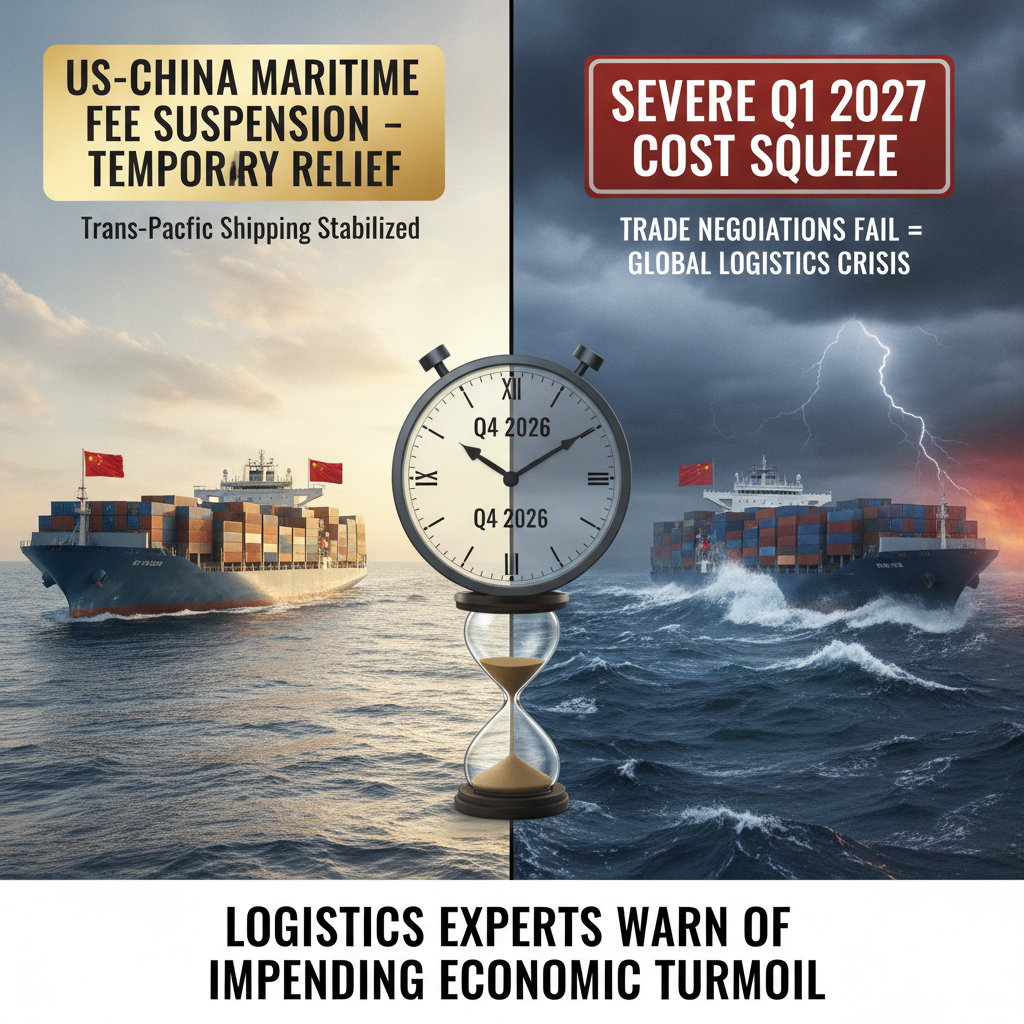
How the US-China Maritime Fee Suspension Impacts Q1 2027 Rates
The two-month extension of the US-China maritime fee suspension offers temporary relief but leaves trans-Pacific shipping bracing for Q1 2027 volatility. On November 9, 2026, the USTR formally paused its Section 301 port fees on Chinese-linked vessels until January 9, 2027. China reciprocated, deferring its counter-tariffs to January 10. While avoiding an immediate crisis, experts warn this temporary truce makes long-term trans-Pacific contracts highly precarious.
Industry Divide and Financial Stakes
The financial stakes surrounding the US-China maritime fee suspension are immense. A USTR summary reveals a sharp industry divide:
- Shipper Risks: Alphaliner estimates that if the suspension lapses, top container lines face $3.2 billion in fees. The European Community Shipowners’ Association, representing 35% of the global fleet, aggressively lobbies for permanent relief.
- Shipbuilding Incentives: Conversely, U.S. maritime unions argue tariffs are essential to counter China’s 70% share of recent global shipbuilding orders, advocating for the fees to return to rebuild American capacity.
Preparing for a Q1 Cost Squeeze
For logistics professionals, the January 2027 deadline is a critical pressure point. If negotiations fail, retaliatory charges will snap back just as major carrier General Rate Increases (GRIs) take effect. Forwarders must build dual contingency plans, utilizing alternative routes to mitigate operational shocks.
References
Warning: 5 Devastating Shipping Cost Surges – Logistics Strategies. US facing countdown on Chinese maritime fees. China Follows US in Continuing Suspension of Fees on Shipping – The Maritime Executive. USTR Extends Section 301 Maritime Fee Duty Suspension – Holland & Knight.