

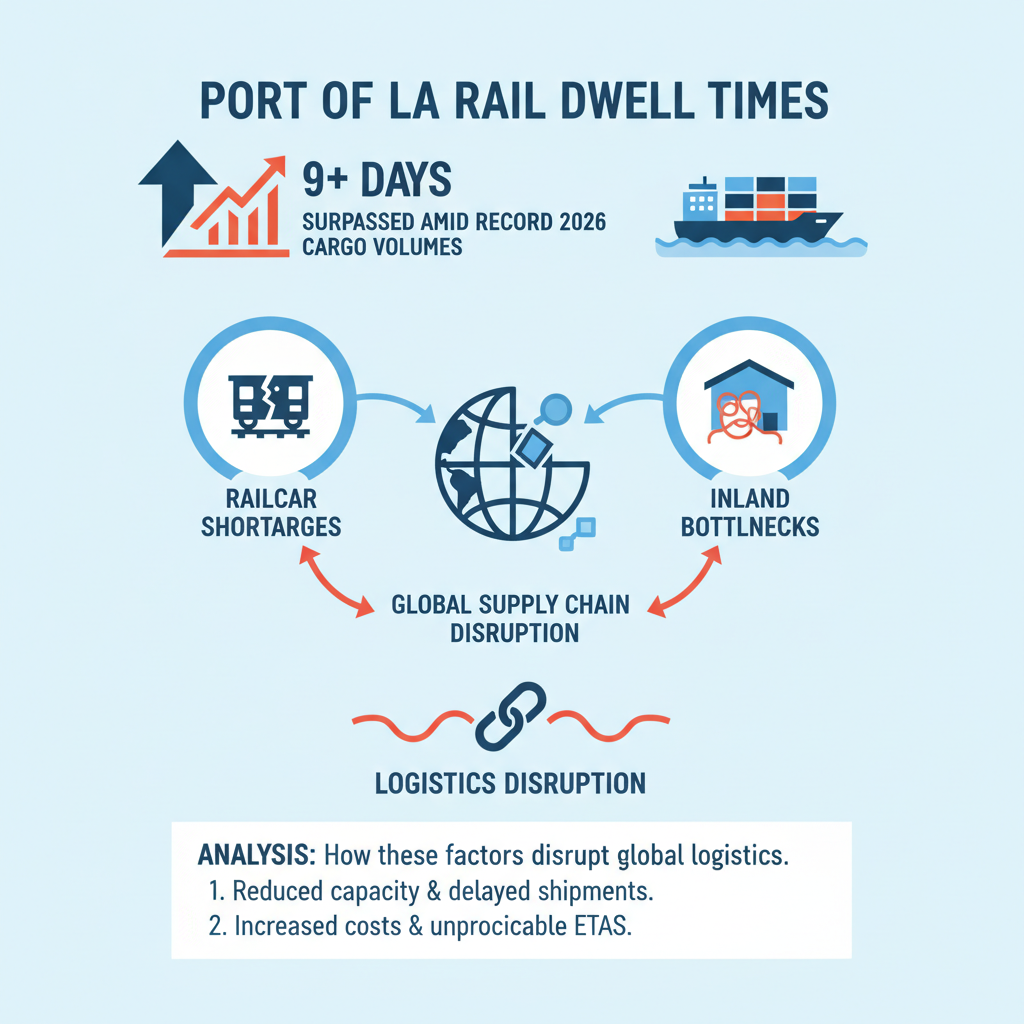
Understanding the Current Port of LA Rail Dwell Times
The Port of Los Angeles is battling severe intermodal bottlenecks as historic import volumes overwhelm inland transport capacity. As of November 2026, Port of LA rail dwell times have become a critical challenge for supply chain logistics.
Record Volumes Drive Congestion
Between June and October 2026, the port handled a record 5 million TEUs. This unprecedented surge has heavily strained the inland network. By mid-November, wait times for rail-designated containers exceeded nine days. Port Executive Director Gene Seroka noted that over 9,500 rail-bound containers lingered for nine days or longer, despite operational targets aiming for zero.
Impact on Supply Chain Logistics
The Pacific Merchant Shipping Association reported that average rail dwell times at the port complex escalated to 7.19 days in September 2026, up from just 3.98 days in September 2025. This backlog is primarily driven by structural shortages of intermodal railcars and severe equipment imbalances. While truck dwell times remain highly stable at around 3.18 days, the escalating Port of LA rail dwell times highlight a sharp disparity in cargo evacuation. Logistics experts actively advise shippers to expect prolonged transit times and aggressively explore alternative trucking routing options while peak season congestion persists.
References
Supply Chain Dive. gCaptain. Worldwide Logistics Group. The Dwell. The Conveyor. PMSA Data.