

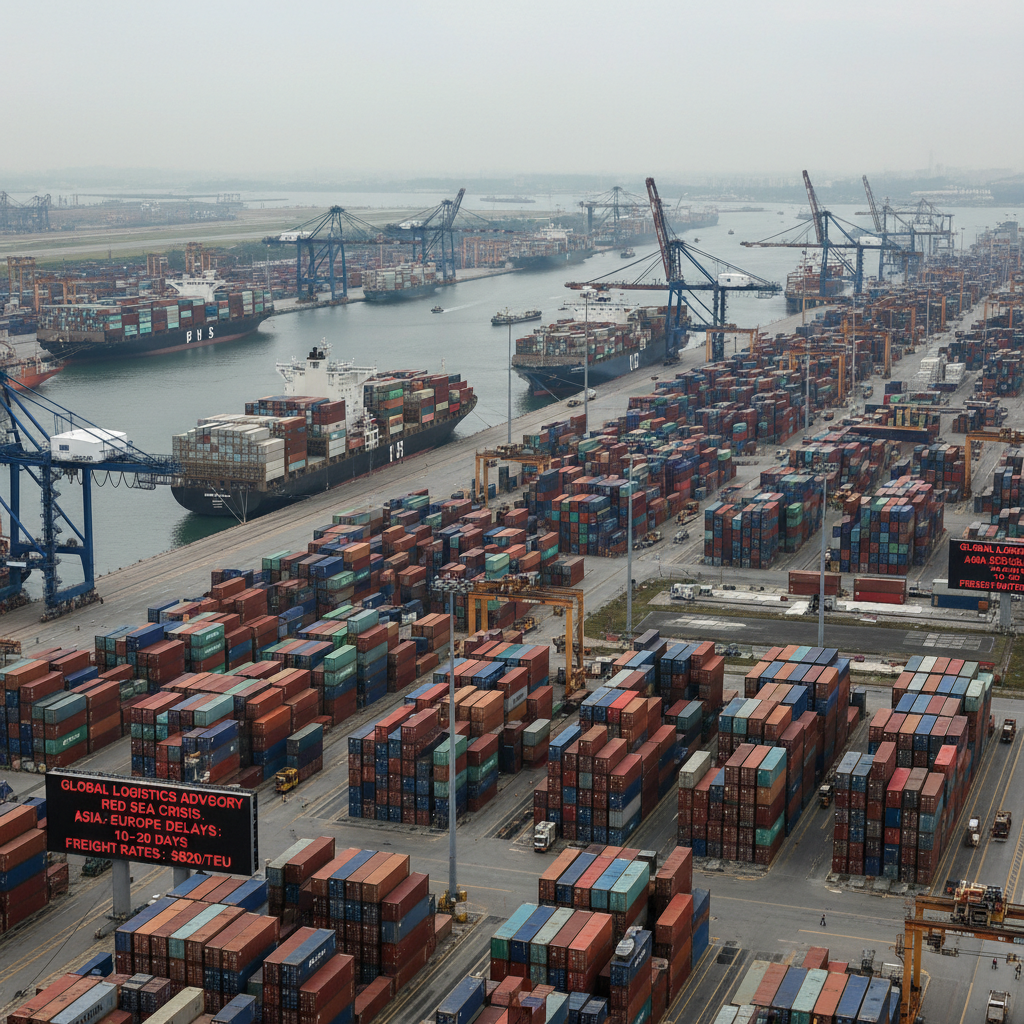
In mid-2026, the maritime logistics sector continues to grapple with unprecedented Asia-Europe transit delays. What originated as a regional security concern in the Red Sea has evolved into a structural feature of global trade, forcing major carriers to permanently reroute around the Cape of Good Hope. This prolonged diversion has systematically strained supply chains, compelling logistics planners to adapt to a vastly different operational reality.
The financial and temporal costs of these route changes are staggering. According to recent maritime data, the Asia-Europe lane spot freight rate surged to $5,820 per TEU by late April 2026, marking a 17% month-on-month increase. The logistical fallout driving these Asia-Europe transit delays includes:
- Extended transit times adding 10 to 20 days per voyage on key maritime routes.
- Approximately 2.5 million TEU of global container capacity heavily absorbed by longer routes.
- Equipment delivery lead times extending from 12 weeks to up to 22 weeks.
- Plummeting schedule reliability and severe port congestion.
To mitigate the compounding impact of Asia-Europe transit delays, forwarders and importers are heavily investing in supply chain diversification. While some carriers are cautiously testing limited Red Sea passages, the majority of the industry anticipates that Cape routing will remain the standard well into 2027. Supply chain leaders must prioritize real-time routing visibility and multi-carrier relationships to survive the ongoing volatility.
References
Vertex AI Search (2026): Red Sea Crisis Pushes Asia-Europe Freight Rates.
Vertex AI Search (2026): Rerouting from Asia in 2026.
Vertex AI Search (2026): Red Sea Shipping 2026.
Vertex AI Search (2026): Red Sea Crisis, Year Three.