

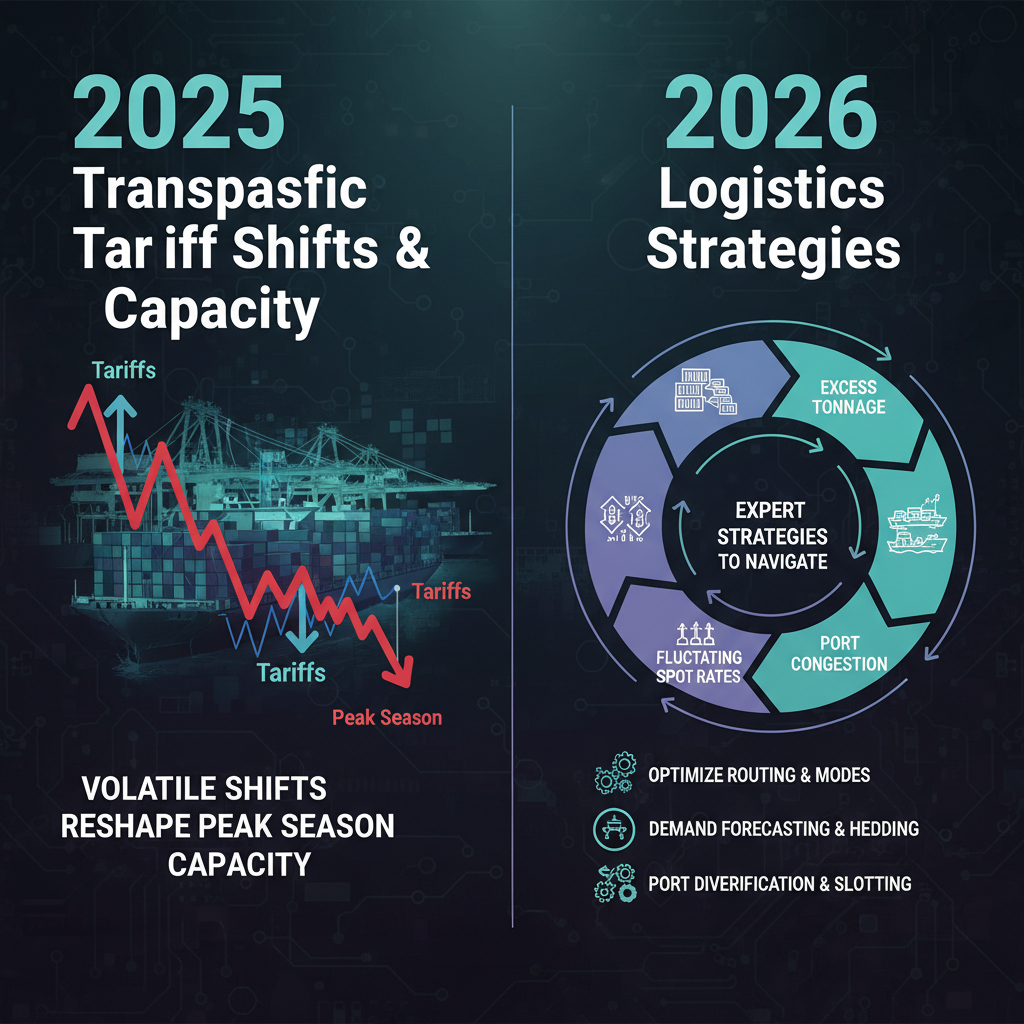
The logistics sector is strictly monitoring Transpacific peak season capacity in 2026, learning from last year’s boom-and-bust cycle. In 2025, a U.S.-China tariff truce unexpectedly dropped import tariffs from 145% to 30%. Shippers scrambled to front-load goods, pushing spot rates and triggering early peak season surcharges of up to $2,000 per FEU. However, an aggressive influx of vessel space soon led to a dramatic market shift.
By mid-2025, the early peak rush ended prematurely due to massive excess supply. Carriers saw rates collapse, with U.S. East Coast rates plunging 21% week-on-week to $5,352 per 40-foot container. This normalization proved that overestimating Transpacific peak season capacity disrupts carrier profitability and shipper forecasting. Moving into 2026, carriers are actively stabilizing trade flows by withdrawing 7% of sailings on key routes.
Managing Transpacific peak season capacity in 2026 demands proactive inventory management and agility. The traditional July to October window remains vulnerable to geopolitical shifts and abrupt capacity adjustments. Logistics experts recommend these key strategies:
- Book ocean freight 4 to 6 weeks in advance to secure reliable transit.
- Monitor carrier capacity discipline and tariff renegotiations closely.
- Diversify routing to mitigate sudden peak season surcharges.
Ultimately, shipping sustainability depends on balancing supply and demand. Shippers must remain vigilant as 2026 inventory restocking cycles begin anew.
References
The Loadstar. (2025). Dimerco. (2025). Shenzhen Topway. (2026). Ocean Freight Time. (2026). Linerlytica. (2025). SCMP. (2025). ICIS. (2025).