

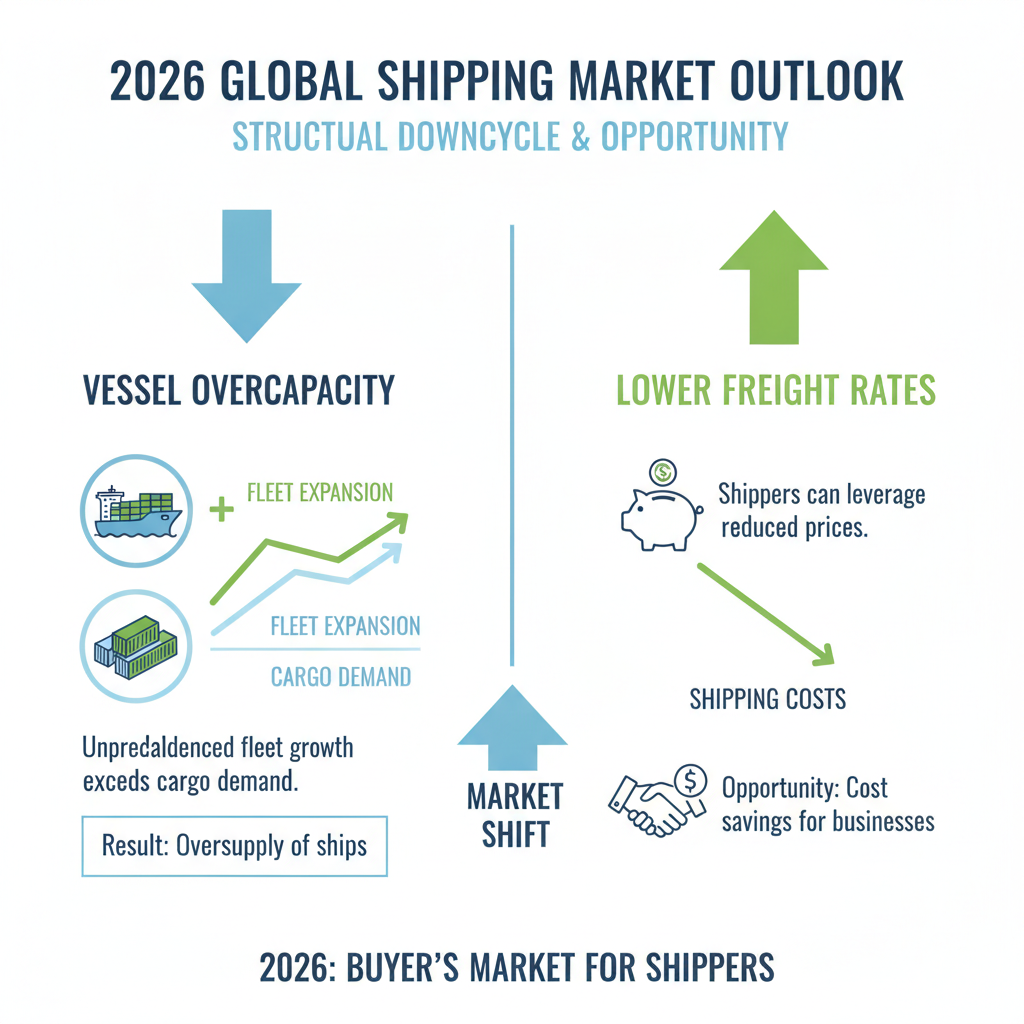
This vessel overcapacity is fundamentally shifting pricing leverage to shippers, creating a distinct buyer’s market. Long-term freight rates on East-West routes face intense downward pressure, as capacity surpluses exceed 10%. To combat these collapsing rates, maritime carriers are deploying several aggressive countermeasures:
- Implementing extensive blank sailings to artificially tighten active capacity.
- Introducing emergency surcharges amid Red Sea and Strait of Hormuz disruptions.
- Retaining older vessels rather than scrapping them to buffer against geopolitical shocks.
The container shipping industry faces prolonged margin pressures and fierce market-share competition. While localized port congestion and routing risks may trigger temporary spot rate spikes, the underlying vessel overcapacity ensures baseline freight rates remain highly competitive. Supply chain leaders must prioritize flexible procurement and data-driven routing to capitalize on these favorable conditions while mitigating localized volatility.
References
Insights sourced from 2025-2026 reports by Maritime Gateway, Sea Gate Logistics, Freightos, and Trans.INFO.