
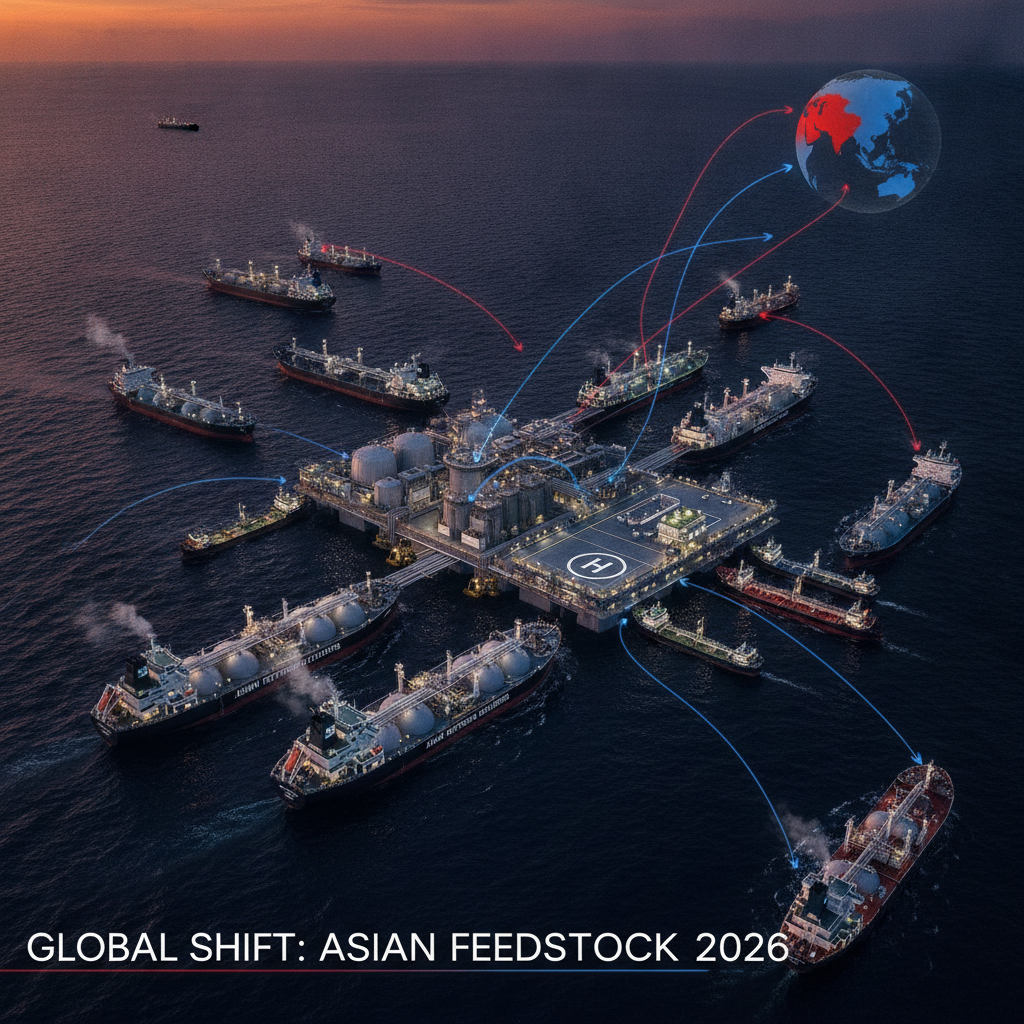
In 2026, the landscape of Asian petrochemical feedstock shipping is experiencing unprecedented structural shifts due to geopolitical disruptions and evolving demand. With the Strait of Hormuz heavily constrained, logistics managers face severe supply chain rationing, elevating freight and procurement costs.
Historically, Asia has relied on the Middle East for over 60% of its seaborne naphtha imports. The current maritime disruptions have forced regional importers to drastically rethink their sourcing frameworks. Current market data reveals several critical trends shaping the sector this year:
- Surging Chinese Demand: Despite a slowdown in transport fuels, Chinese petrochemical feedstock demand (ethane, LPG, and naphtha) is projected to grow by 410,000 barrels per day in 2026.
- Margin Volatility: Supply constraints pushed Asia’s benchmark naphtha refining margins to multi-year highs, reaching approximately $173 per ton over Brent.
- Alternative Routing: Importers in Japan and South Korea are increasing intake of US exports to offset shortages, though lighter US naphtha properties present complex downstream processing challenges.
To mitigate concentration risks, industry leaders are adopting a Middle East plus one strategy, exploring long-haul imports from the Americas. However, longer ton-mile requirements and elevated tanker rates continue to challenge the economic viability of these alternative supply routes. As Asian petrochemical feedstock shipping adapts to this volatile environment, robust cargo tracking and flexible procurement will remain essential for market survival.
References
ICIS: Asia petrochemical demand muted amid feedstock shortage. Petro Eghlima: Petrochemical Feedstocks: 7 Critical Market Dynamics. Kpler: Chinese oil demand weakness masked by petrochemical feedstock growth. Stemgenic: Hormuz Disruption Impact on APAC Chemicals. Jiji: Japan’s Naphtha Shock.