

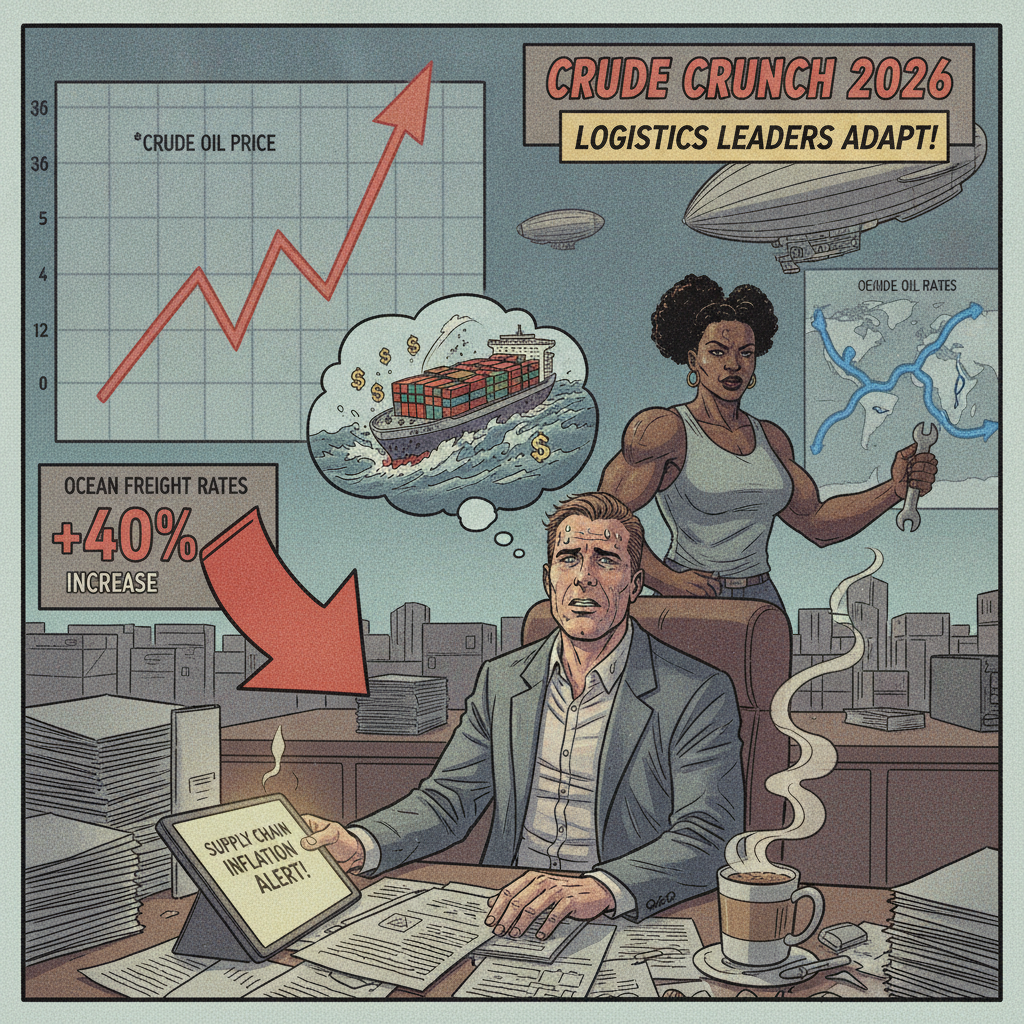
Global shipping networks are facing a severe wave of energy-driven supply chain inflation, fundamentally altering operational forecasts for 2026. Following prolonged geopolitical disruptions and restricted access through the Strait of Hormuz, the logistics sector is absorbing massive cost spikes. With Brent crude sustaining elevated levels around $105 per barrel, energy costs are cascading through every tier of global trade.
The operational toll of this energy crisis is staggering. Since March 2026, general logistics and transportation costs have soared by 20% to 30%. Supply-chain stress indicators recently hit their highest benchmark since 2022, largely driven by surging global freight rates. Industry data reveals that air freight rates have jumped by 17%, while ocean freight rates have spiked by nearly 40% compared to pre-disruption averages. For shipping experts, this means immediate pass-through costs; unlike slow-moving tariff impacts, fuel surcharges are directly written into commercial contracts, creating an instant squeeze on margins.
To combat persistent energy-driven supply chain inflation, industry leaders are shifting from reactive procurement to dynamic operational control. Key resilience strategies emerging in 2026 include:
- Flexible Routing: Utilizing advanced analytics to reroute shipments away from high-risk, fuel-intensive maritime bottlenecks.
- Inventory Buffering: Selectively building safety stock and bringing forward purchases to mitigate future fuel price volatility.
- Capacity Consolidation: Merging LTL (less-than-truckload) shipments to optimize diesel consumption on road-based freight.
As energy costs dictate the short-term future of global shipping, logistics professionals must prioritize supply chain visibility and agile contracting to prevent severe margin erosion.
References
KuCoin (2026). Oil Prices Unlikely to Return to $70 Soon. Oxford Economics (2026). Falling oil prices will ease supply-chain stress in the US. SGT Auto Transport (2026). How Inflation and Fuel Costs Are Connected. S&P Global Market Intelligence (2026). Global PMI shows prices rising sharply. Metro Global (2026). Economy slows as supply chain disruption and energy costs hit. Kearney (2026). Cost pressure persists as supply chains stabilize.