

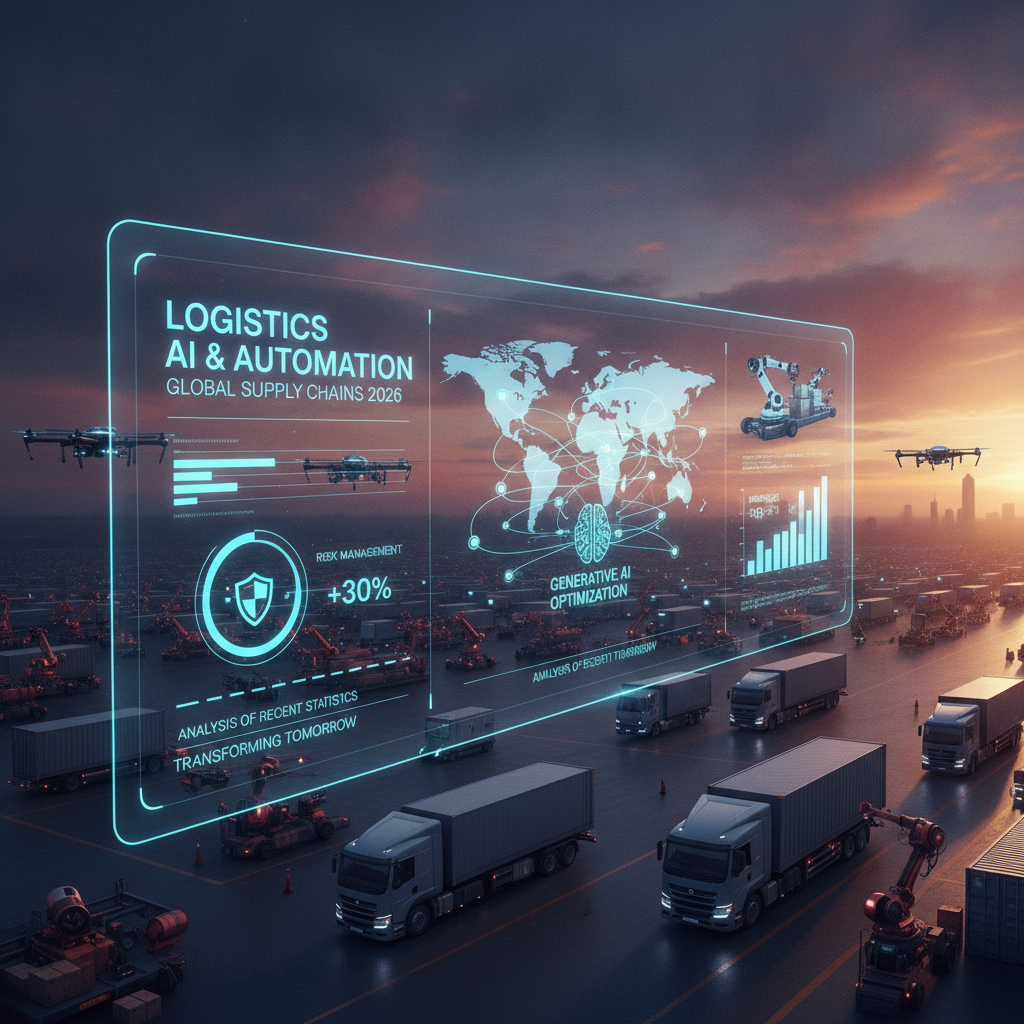
In the fast-evolving landscape of global trade, Logistics AI and automation are no longer experimental concepts but operational imperatives. A 2026 BCG and Alpega survey reveals that capital markets increasingly view artificial intelligence integration as a vital indicator of a logistics provider’s future competitiveness. The integration of these tools has shifted industry focus from reactive problem-solving to proactive supply chain resilience.
Supply chain leaders are aggressively deploying intelligent systems to manage disruptions. According to a 2025 Kuehne+Nagel survey, 70% of companies extensively utilize AI for customer experiences, while 60% leverage it for proactive risk management. Furthermore, a late 2025 Zebra Technologies study found that 87% of decision-makers expect generative AI to significantly improve loss prevention.
Physical automation is simultaneously revolutionizing warehouse operations and freight management. Industry giants are setting new benchmarks; for instance, DHL’s deployment of 5,000 robotic order pickers boosted parcel picking efficiency by 180%. Key developments include:
- Warehouse Robotics: Automated guided vehicles operating alongside human workers to accelerate order fulfillment.
- Space Optimization: AI-powered software that reduces unnecessary shipment space by up to 50%, cutting fuel consumption.
- Generative AI: Advanced algorithms optimizing capacity planning and dynamic pricing in real-time.
Companies failing to adopt Logistics AI and automation risk falling behind their competitors. Embracing these integrated technologies is essential for building sustainable and resilient global supply chains.
References
- BCG & Alpega (2026): AI Is Already Moving the Logistics Industry Forward.
- Kuehne+Nagel & Statista (2025): Consumer brands supply chain resilience.
- Zebra Technologies (2025): Global Shopper Study.
- Industry Reports (2024-2025): DHL sustainability and automation data.