

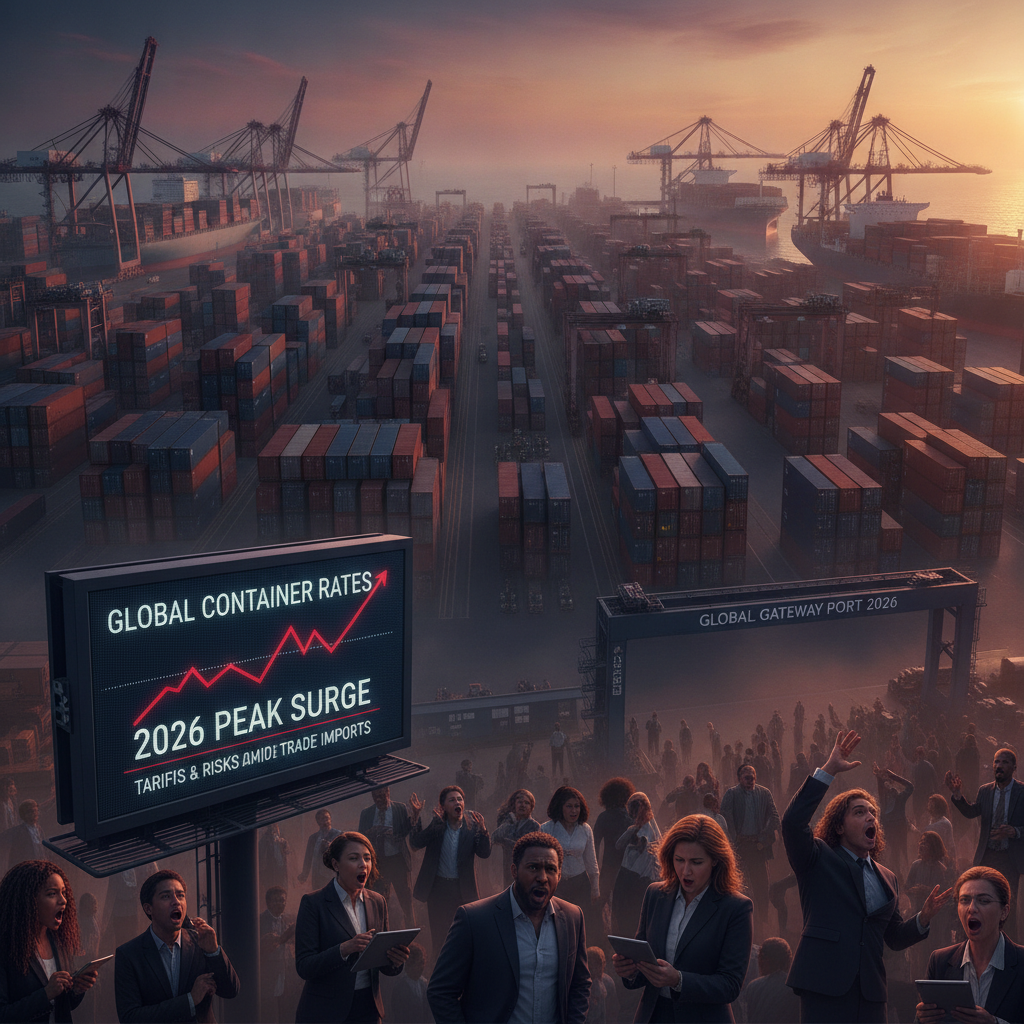
The logistics sector is experiencing a paradigm shift as the early peak shipping season takes aggressive hold in mid-2026. Importers are accelerating shipments, fundamentally altering traditional supply chain timelines.
Retailers are front-loading their fall and holiday inventory to mitigate compounding market risks. This proactive behavior is driven by mounting concerns over impending tariffs, fuel price increases, and geopolitical volatility. With regional conflicts disrupting trade flows, shippers are securing capacity immediately rather than risking fourth-quarter stockouts. Consequently, networks face immense pressure months ahead of the conventional August-to-October peak window.
The sudden influx of early cargo has severely constrained vessel capacity and triggered massive rate hikes. Critical 2026 market indicators reveal a strained system:
- Trans-Pacific spot rates to the US West Coast surged to $5,000 per FEU, an 80% increase within a single month.
- East Coast freight rates similarly spiked to roughly $6,100 per FEU.
- June 2026 inbound cargo volumes at US ports are forecast to hit 2.25 million TEU, reflecting 14.3% year-over-year growth.
Furthermore, the ITS Logistics Port/Rail Freight Index classified all North American regions as an elevated congestion risk for the first time in 16 months.
To navigate this volatility, logistics professionals must update routing guides and surcharge assumptions immediately. Securing guaranteed vessel space will be critical to bypassing congested mid-continent rail gateways.
References: S&P Global, ITS Logistics Index, Descartes Global Shipping Report.