

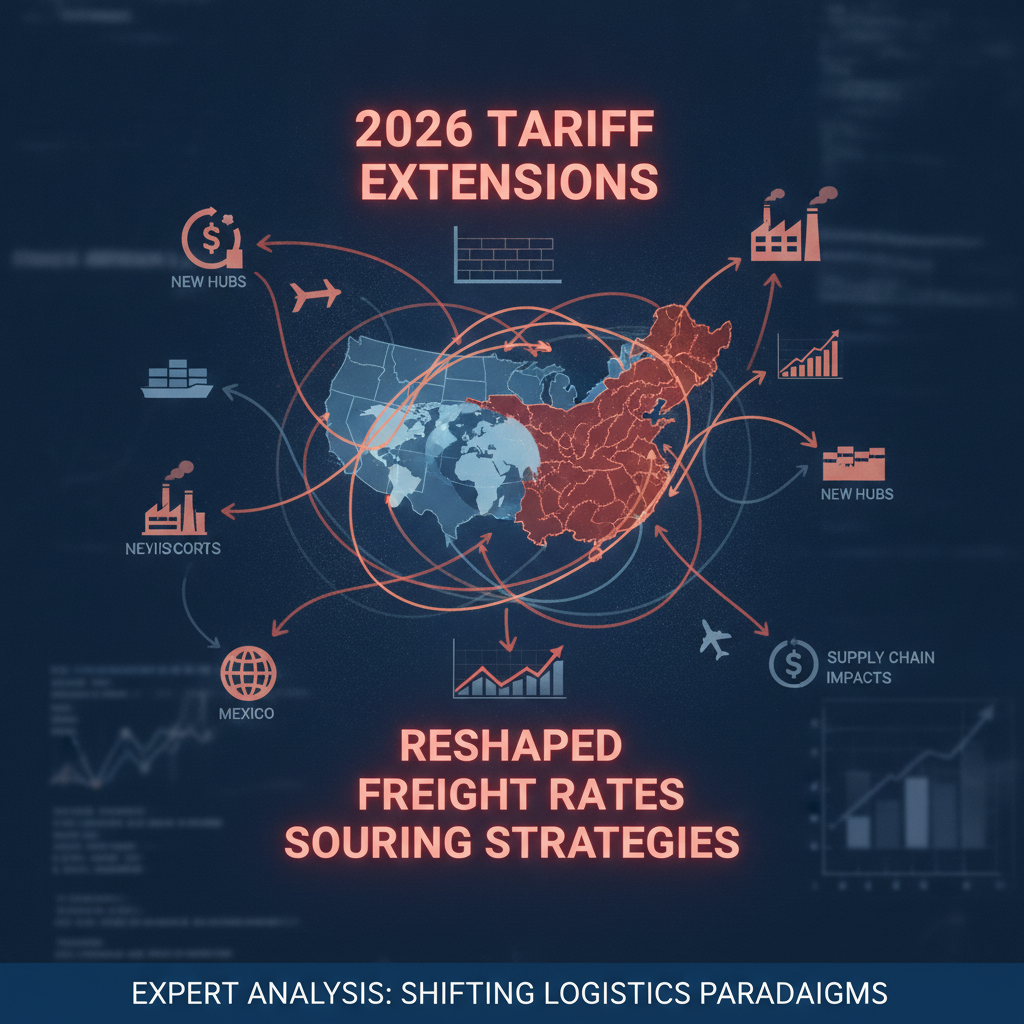
The global logistics landscape in 2026 is largely defined by critical shifts in US-China tariff supply chain impacts. Following the November 2025 truce extension that temporarily stabilized reciprocal duties, shippers face a closing window of certainty ahead of the November 2026 expiration.
Fluctuating trade duties have directly distorted ocean freight capacity and regional spot rates across major transpacific lanes.
- Transpacific demand surges previously caused Shanghai to Los Angeles container rates to spike by 117%, nearing $6,000 per 40-foot container.
- On June 2, 2026, the USTR proposed a new 12.5% tariff tied to Section 301 investigations, immediately complicating import compliance.
- Shippers are actively expediting purchase orders and securing capacity before potential tariff snapbacks in late 2026.
To mitigate long-term duty exposure, multinational corporations are actively accelerating their “China Plus One” manufacturing footprints. Production relocations to ASEAN markets, India, and Brazil are helping logistics leaders reduce dependency, though these moves introduce new multi-country assembly complexities. As geopolitical volatility persists, supply chain managers must prioritize diversified sourcing and regional buffers to maintain structural operational resilience.
Zencargo – Keeping your supply chain agile during the 90-day U.S.-China reciprocal tariff pause. TecEx – How US Tariffs Are Shaping Tech Trade in 2025 and 2026. ResearchGate – Impact of the US-China Tariff Policy on Multinational Corporations. Unicargo – Global Freight Landscape in Mid-2025: Tariffs, Rates, and Resilience. Supply Chain Outlook – US-China Tariff Surge Reshapes Global Shipping. China Briefing – Breaking Down the US-China Trade Tariffs: What’s in Effect Now?