
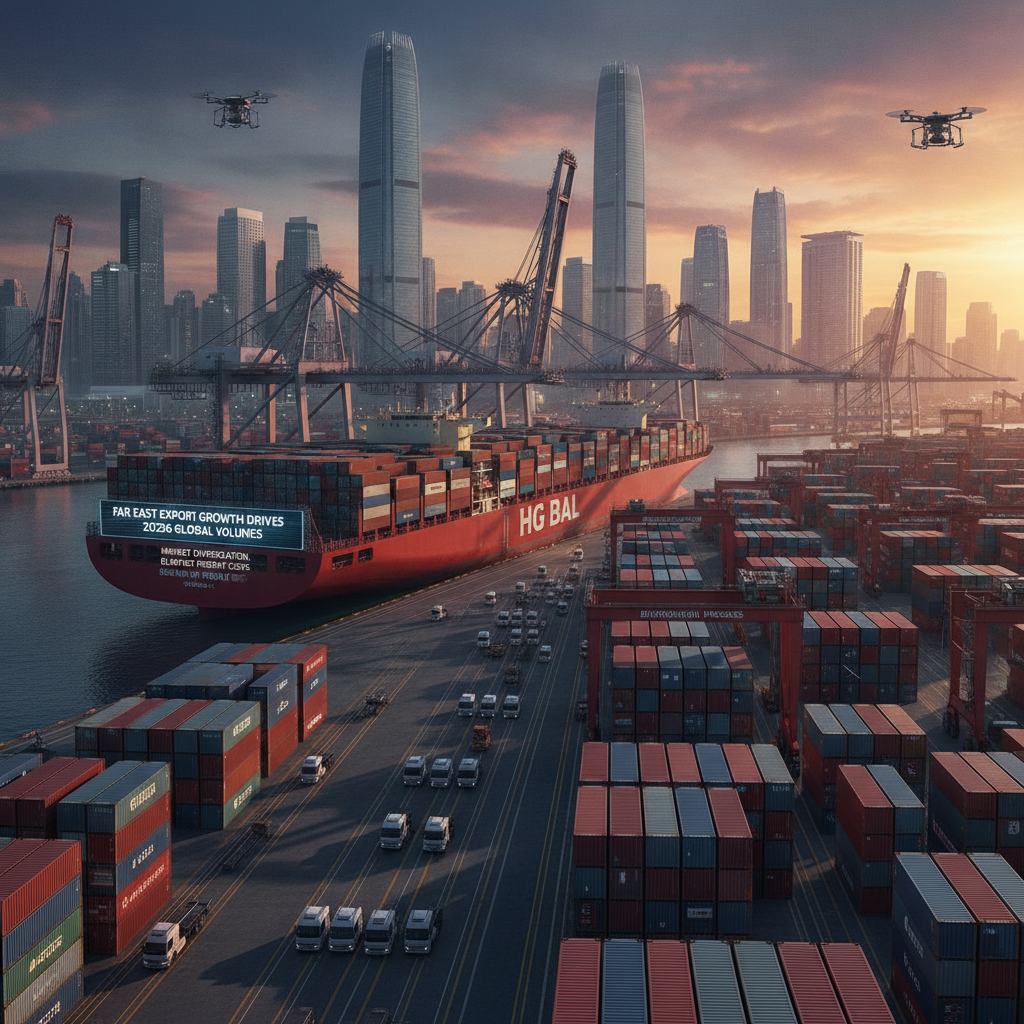
The shipping industry is undergoing a transformation driven by resilient Far East Export Growth. Despite geopolitical headwinds like the Strait of Hormuz closures and US tariff escalations, Asian markets maintain remarkable momentum. In 2025, global container volumes reached an extraordinary 192.9 million TEUs, with the Far East adding nearly 7 million TEUs in export volume. This momentum carried into 2026, with May global volumes hitting 17.35 million TEUs, a 6.7% monthly increase.
The persistence of Far East Export Growth is largely due to rapid market diversification. While direct China-US trade faced tariff-induced fluctuations, manufacturers successfully pivoted to emerging markets. Consequently, the Far East to Europe trade lane absorbed 36% of newly added global fleet capacity between May 2025 and May 2026. Southeast Asian hubs like Vietnam and Malaysia are also experiencing manufacturing booms, contributing heavily to regional export density.
This relentless export activity puts immense pressure on infrastructure. Port congestion and prolonged Cape of Good Hope detours have constrained capacity, causing freight rates to spike. The Global Price Index surged 8% in May 2026 to 95 points. As peak season demand clashes with localized equipment shortages, logistics experts must prepare for sustained elevated costs. Resilience now depends on navigating surging Asian exports and fragmented trade routes.
References
PortCalls Asia: Global container volumes report. CTS Ltd: December 2025 Release. Global Maritime Hub: Fleet growth data.