
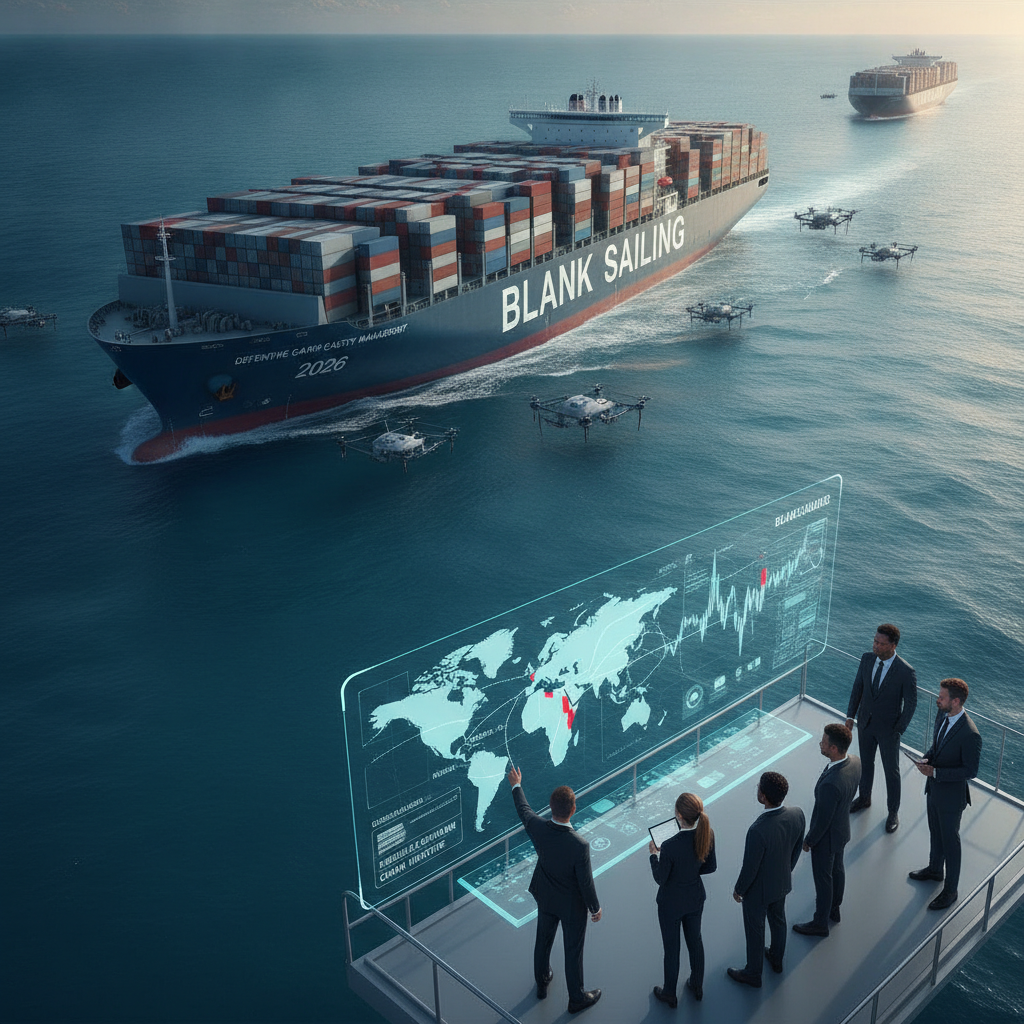
In 2026, the global logistics sector is witnessing a massive strategic shift as shipping lines embrace Defensive Carrier Capacity Management to navigate market volatility. Driven by an influx of new ultra-large vessels ordered during the pandemic, the maritime industry currently faces a stark oversupply crisis. Analysts report that global fleet capacity is expected to grow by 3.6% throughout 2026, while actual transport demand will only see a marginal 3% increase. To prevent severe freight rate collapses, major carriers are aggressively prioritizing profitability over volume.
Unlike previous years where market share dictated strategy, today’s Defensive Carrier Capacity Management relies heavily on tactical supply restrictions. The most prominent methods observed in 2025 and 2026 include:
- Blank Sailings: Strategic cancellation of scheduled voyages to artificially tighten regional supply and elevate rates.
- Speed Optimization: Implementing slow steaming protocols to delay capacity absorption and reduce excess fuel costs.
- Feeder Shifts: Moving away from long-haul giant vessels in favor of mid-sized or feeder fleets that possess stronger defensive pricing characteristics.
The persistence of Defensive Carrier Capacity Management means that shippers must abandon outdated, rigid volume strategies. Although overcapacity technically exists, the actual shipping space you need might be deliberately unavailable when required. Logistics managers must proactively secure multi-carrier contracts, integrate real-time market intelligence, and diversify routing options to mitigate the risk of sudden capacity withdrawals. Relying on spot markets is increasingly dangerous when carriers act defensively to manipulate supply flow.
References
BTX Market Intelligence Report, June 30, 2026.
Port & Maritime Transport Outlook Sector Report, Dec 2025.
The Next Bottleneck: Capacity Management 2025, Adnavem.